Could you operate your company with half the people?
Jack Dorsey’s announcement yesterday1, reducing Block’s headcount from 10,000 to 6,000, should provoke this question in every management team. The stock surged 24%. Dorsey’s memo framed it as inevitable :
Within the next year, I believe the majority of companies will reach the same conclusion & make similar structural changes. I’d rather get there honestly & on our own terms than be forced into it reactively.
Block isn’t alone. Through February, tech companies have laid off 23,000 employees.2 Annualized, that projects to 153,000, exceeding 2023’s peak.
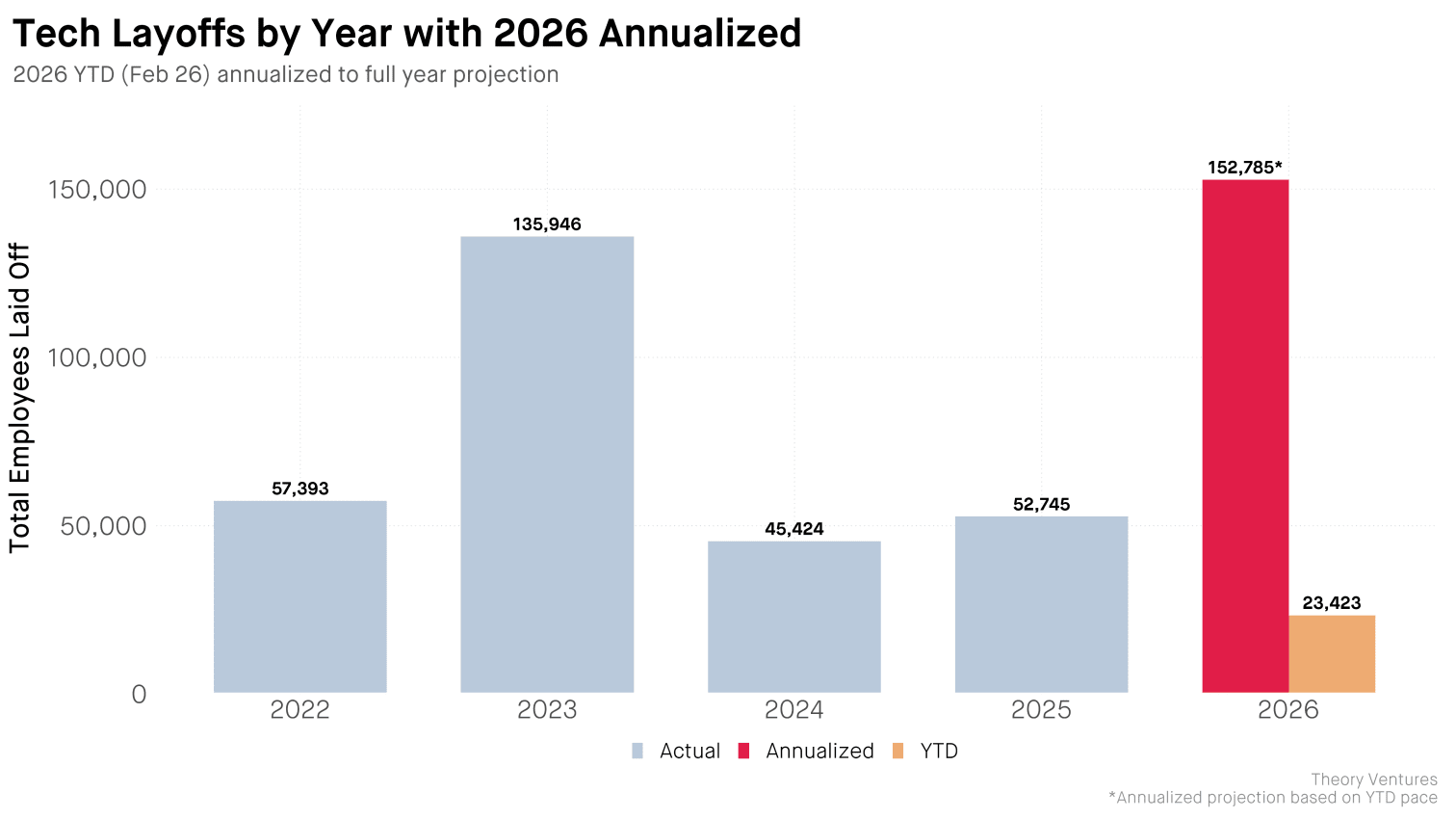
What makes 2026 different is who’s cutting. These aren’t distressed companies. They’re modestly growing businesses concluding they can operate with fewer people.
| Company | Total Employees | 2026 Layoffs | % Cut | Revenue Growth YoY |
|---|---|---|---|---|
| Amazon | 1,576,000 | 16,000 | 1% | +14% |
| Block | 10,000 | 4,000 | 40% | +12% |
| Autodesk | 15,300 | 1,000 | 7% | +12% |
| 4,700 | 700 | 15% | +14% | |
| Workday | 20,400 | 400 | 2% | +15% |
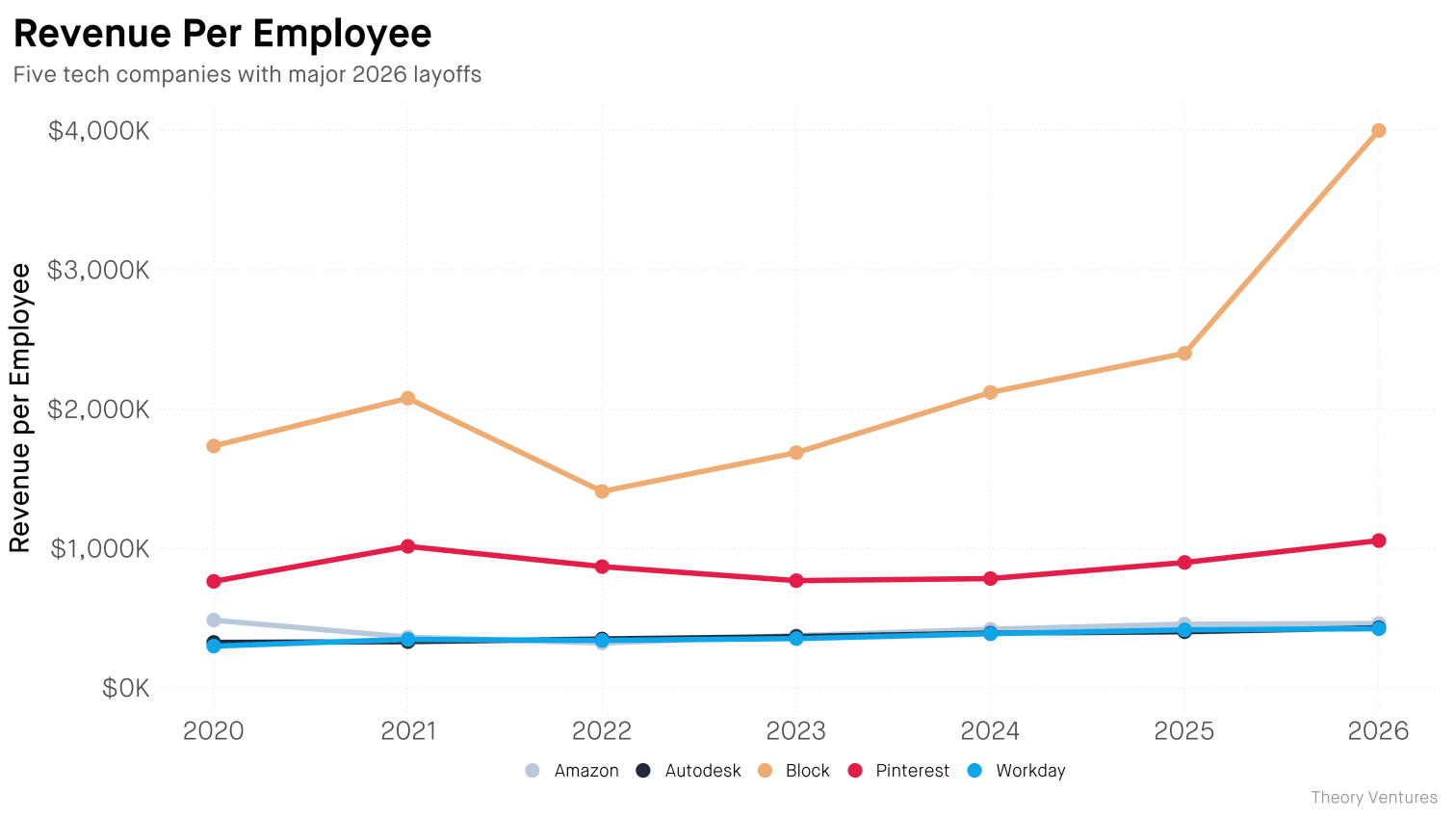
The revenue per employee gains are tremendous.3 Block’s jumps 67% post-layoff, from $2.4M to $4M per person. Once competitors demonstrate this efficiency, it’s untenable not to match it.
This changes efficiency expectations for investors. Five years ago, $100K ARR per employee was standard for SaaS startups.4 Today, AI-native companies like Cursor & Gamma hit $2-4M. Cursor runs $3.3M. Gamma hits $2M. An order of magnitude difference.
Management teams now expect twice the productivity. For employees, there’s never been a better opportunity to meaningfully impact a company through the leverage of AI. The game on the field has changed.