Databricks started later. It built a more complex architecture. It focused on unstructured data; images, documents, logs, audio. Though vast within the enterprise, this data had historically produced little insight. Too hard to process. Too messy to query. Too expensive to store in formats that mattered.
Snowflake took the opposite bet. Structured data. Clean tables. SQL queries that ran fast & returned answers executives could read. The market agreed. Snowflake went public at a $70 billion valuation. Databricks raised private rounds at half that.
Then AI arrived. Suddenly the data that was too messy to query became the data that models needed to train. Unstructured data wasn’t a liability. It was the asset.
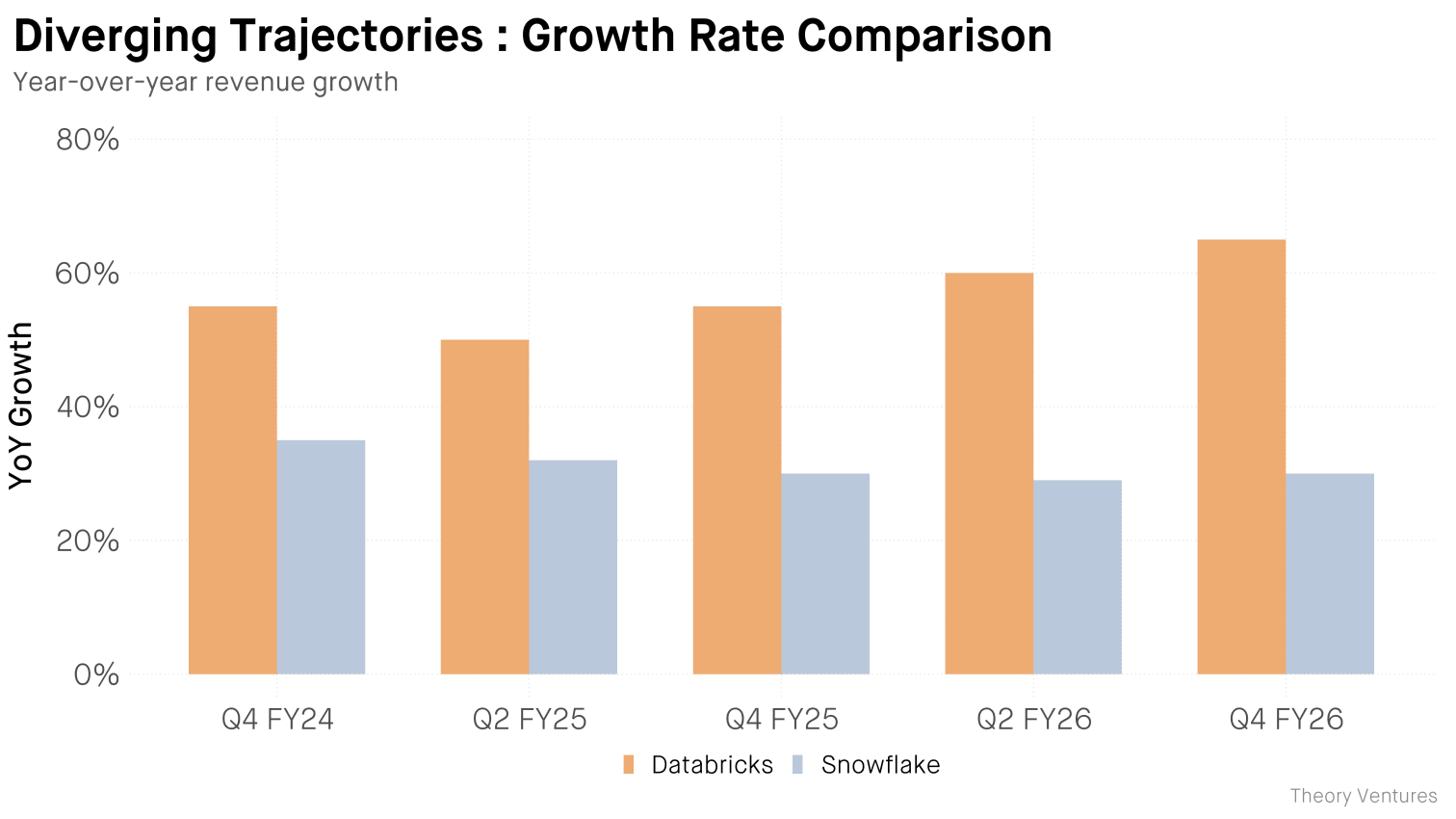
Databricks has overtaken Snowflake in revenue. Two years ago, Snowflake led by $220 million per quarter. Today, Databricks leads by $120 million. Databricks’ growth rate is accelerating at scale, from 50% to 55% to 65% year over year. Growth rates don’t accelerate at $5 billion in revenue.
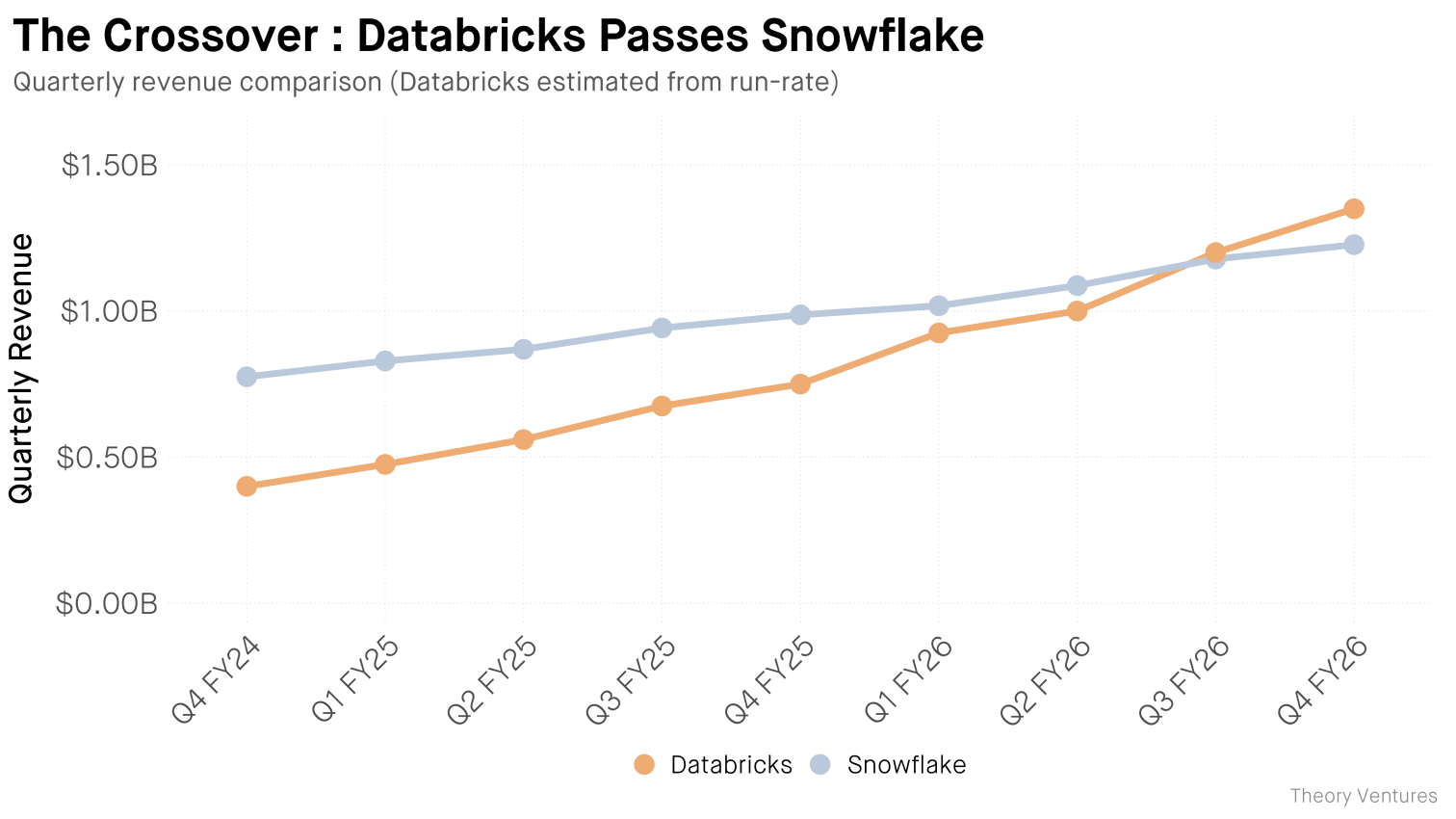
The crossover happened because AI is an architectural transition, not a feature addition.
Most enterprise data never made it into Snowflake. It sat in object storage, unstructured, waiting. Databricks built tools to use it there. No migration required.
Databricks SQL, their direct assault on Snowflake’s core business, grew from $100 million to $1 billion in under three years. AI products are growing faster still. Lakebase, their serverless database for AI agents, is six months old & already growing twice as fast as data warehousing.
Snowflake sees the threat. They’ve launched Intelligence, signed thousands of customers, inked $200 million in partnerships with OpenAI & Anthropic. CEO Sridhar Ramaswamy is betting the company can catch up.
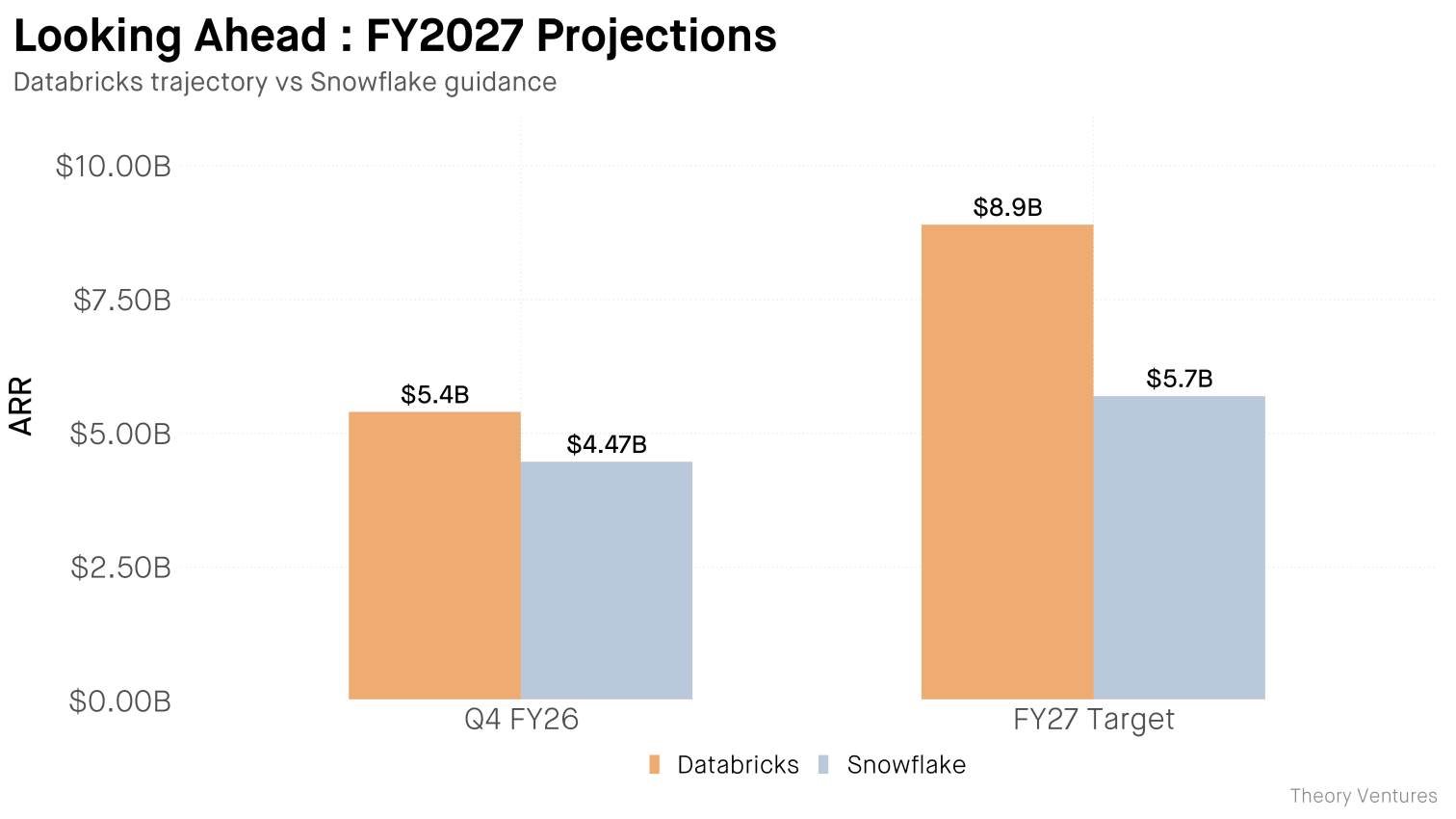
By FY27, the gap widens further. Databricks projects $8.9 billion. Snowflake guides to $5.7 billion.