The Importance of Mindfulness When Managing a Startup

Crisis in startups is inevitable. Products break, deadlines are missed, legal issues arise, customers raise issue, employees quit, bad press circulates. To survive, founders and management teams have to respond well and quickly. In Managing the Unexpected, two University of Michigan Professors examine the characteristics and behaviors of great teams during crisis. Factory workers, miners, fire fighters, aircraft carrier flight deck hands, railroad operators and many others.

The authors call these teams HROs for High Reliability Organizations. HROs are distinguished by an ability to handle novel, risky situations. HROs combine distinct values and a certain type of leadership.

Read more

Benchmarking Box's Updated S-1 - How 7 Key SaaS Metrics Stack Up

This post is part of a continuing series evaluating the S-1s of publicly traded SaaS companies in order to better understand the core business and build a library of benchmarks that might be useful to founders.

Box is a 1000+ person company providing collaboration and document sharing software. We had previously analyzed the business when the company filed their first S-1. Yesterday, the company filed an updated version of their S-1. In the past two quarters, some of the key financial characteristics trajectory have improved materially.

Read more

The Acquisition Environment for Startups in 2015

image

Growth is king in today’s public markets. Most of the SaaS IPOs we’ve analyzed have traded growth for profitability and they have been rewarded handsomely for it. For the large tech companies, this trend is no different. The public market prizes growth.

Some public tech companies sustain growth through internal efforts, but many use their cash reserves to acquire fast-growing startups. These public market cash reserves total $430B or so across the top 250 or so public tech companies, a massive war chest that will fuel startup M&A in 2015.

Read more

The Technology Sectors that Create the Most Value

image

In which sectors have software companies created the most financial value? I asked myself this question over the weekend. I categorized the top 250 IT companies which spans $675B in market cap (AAPL) to $3B in market cap (ASOS) and created the chart above. B2B Software, which includes Microsoft, Oracle, IBM, and SAP among others represents about 30% of the total IT market cap today. The consumer web (GOOG, FB, Baidu, eBay) is second at 20% of market cap. Semiconductors and Consumer Hardware (led by Apple), tie at 17% each.

Read more

When Will the Tech Bull Market End?

When will the tech bull market end? It’s a question that I’m asked with some frequency. There are three fundamental reasons for the bull market. First, technology is changing nearly every part of the economy. Consequently, there are many huge opportunities for entrepreneurs to seize. Our internal analysis shows that only 2% of IT budgets are spent on cloud today. Second, the capital startups require to pursue those opportunities is plentiful. 2014 will be the third largest year in VC fundraising since 2000. Third, the exit market is vibrant and rewards market leaders with massive outcomes. In other words, there is a lot of strength in the fundamentals of the tech ecosystem.

Read more

The 2014 Class of SaaS IPOs

image

2014 has been a great year for SaaS companies. By my count, 9 of them will have gone public. Meanwhile, SaaS companies in both the public and private markets continue to fetch premium valuations.

To illustrate the rapid appreciation in the value of these SaaS companies, I’ve plotted the share price by round of each business. The color bars in the chart represent Series A, B… through to IPO. The last bar, called Q414, is yesterday’s share price (if the company has already IPO’ed).

Read more

Brutal Intellectual Honesty

I’ve been reading a book called Legacy Of Ashes, which is an exhaustive history of the CIA since its founding more than 50 years ago through to 2007. Reading spy stories is always enthralling, but surprisingly, the book is a fascinating case study in management.

The major theme of the book is the value of intellectual honesty, a principle which was often forgotten according to the research compiled by the author. In case after case, from the Korean War to the Bay of Pigs invasion to the second Gulf War, there were consistent organizational failures to present candid assessments of data and a consistent pattern of deception to further political motives.

Read more

Nailing Your Startup's Value Proposition

What are the pains and aspirations of your customer? Does your product truly solve your customers problems? And fulfill its promise of doing something in a better way?

Most startups wrestle with these questions at their outset, when they are in the customer discovery and customer validation phases of the lean startup cycle. But all startups should reevaluate these questions periodically. After all, a company’s customers evolve with time and so do their jobs. The product-market fit assumptions that held true six months or year ago or three years ago may no longer be valid.

Read more

The Fundamental Unit of SaaS Growth

image

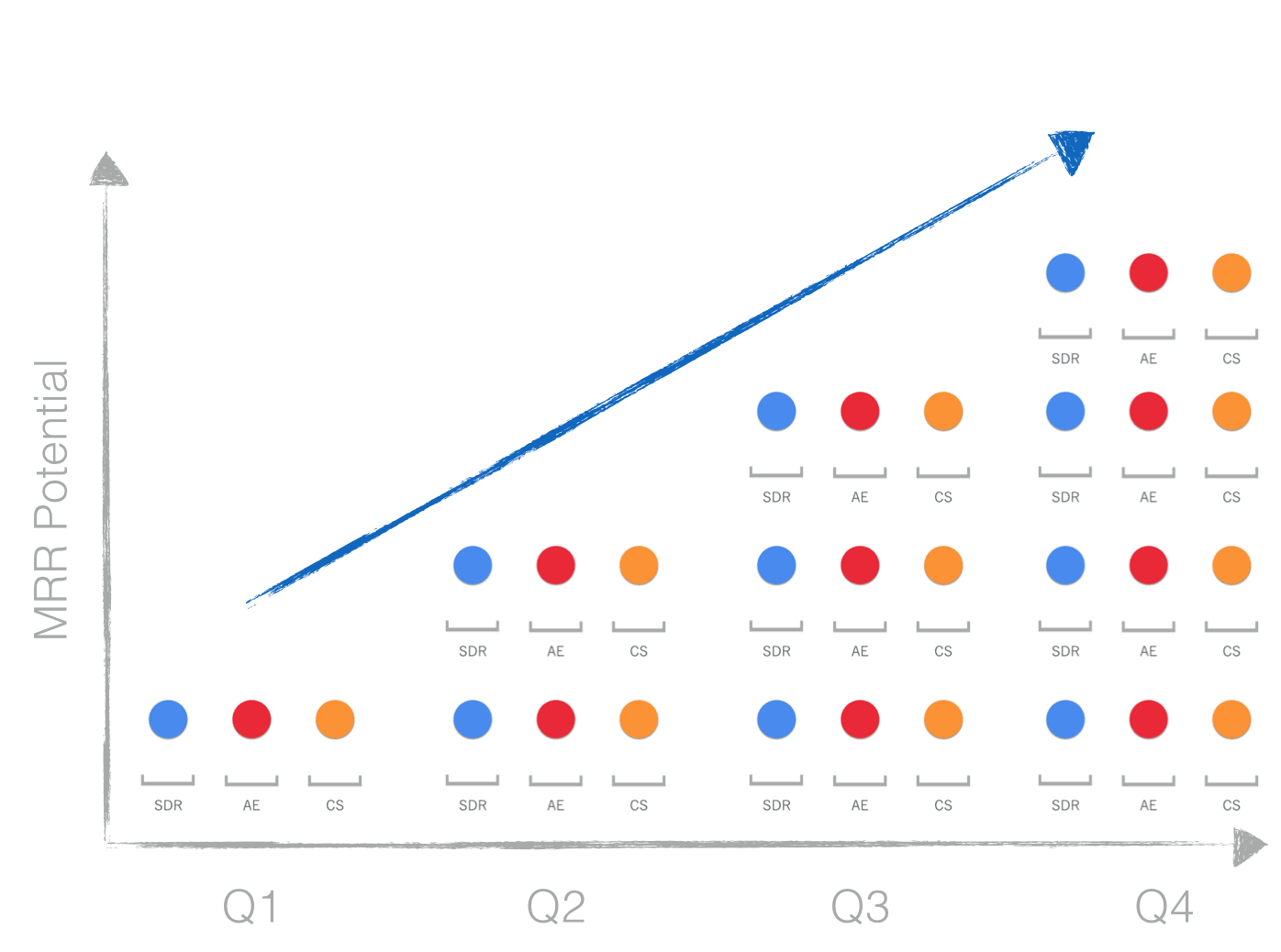
After your SaaS startup has found product market fit, the next evolution of the business is to discover the fundamental unit of SaaS growth. A fundamental unit is the atomic go-to-market team: the minimum number of people in the marketing, sales and support roles to be able to support X customers and generate Y in revenue.

At the point that a startup has discovered their fundamental unit, time, cash and execution become the limiting factors of the business. Most of the other risks in a company’s path have been mitigated. In other words, it’s time to raise a growth round to scale the business.

Read more

How Much Should Your Startup Spend on Customer Account Expansion?

image

It’s hard to overstate how powerful negative churn is for a SaaS company. Both New Relic and Zendesk have grown to billion-dollar-plus publicly traded businesses by achieving fantastic negative churn figures: 114% and 120% respectively. in other words, each year existing customers pay these businesses 14 and 20% more than last year.

The recent 2014 SaaS benchmark survey aggregated by Pacific Crest and Matrix indicates that expansion revenue accounts for between 8-26% of total annual bookings, increasing as the company scales.

Read more