Benchmarking SaaS Startup Efficiency with Revenue per Employee Metrics

image

In the past, we have benchmarked the revenue per employee of large publicly traded SaaS companies and determined that the average is about $200k of revenue per person. But, that analysis examined revenue per employee that only one point in time.

As Jesse Hulsing pointed out to me, examining this figure over five years reveals quite a bit about the health of the business. Jesse was kind enough to provide data on a handful of category defining enterprise companies, which I’ve used in this analysis.

Read more

The Four Key Trends of the Startup Acquisition Market

image

The startup acquisition market is poised to have its best year in nearly a decade. If acquirers maintain the same pace from the first nine months of the year through Q4, more than 450 venture-backed startups will have been acquired, generating more than $25B in proceeds.

Given this state of affairs, it’s a good time to take stock of the major trends in the startup market. I’ve observed four:

Read more

Benchmarking WorkDay's S-1 - How 7 Key SaaS Metrics Stack Up

This post is part of a continuing series evaluating the S-1s of publicly traded SaaS companies in order to better understand the core business and build a library of benchmarks that might be useful to founders.

Today, we’ll explore one of the enterprise behemoths, both in market cap and average revenue per customer: WorkDay. WorkDay envisions being the place of record for all Human Resources data for companies with more than 5,000 employees. WorkDay has grown explosively, but in a very different manner than any of the previous companies we’ve analyzed (Veeva, Hubspot, Zendesk, Tableau, MobileIron or Box). Unlike these other companies, WorkDay has employed a huge professional services team in addition in investing massively in their R&D to create a broad suite of products.

Read more

The Key Financing Attributes of Startups in the Billion Dollar Club

image

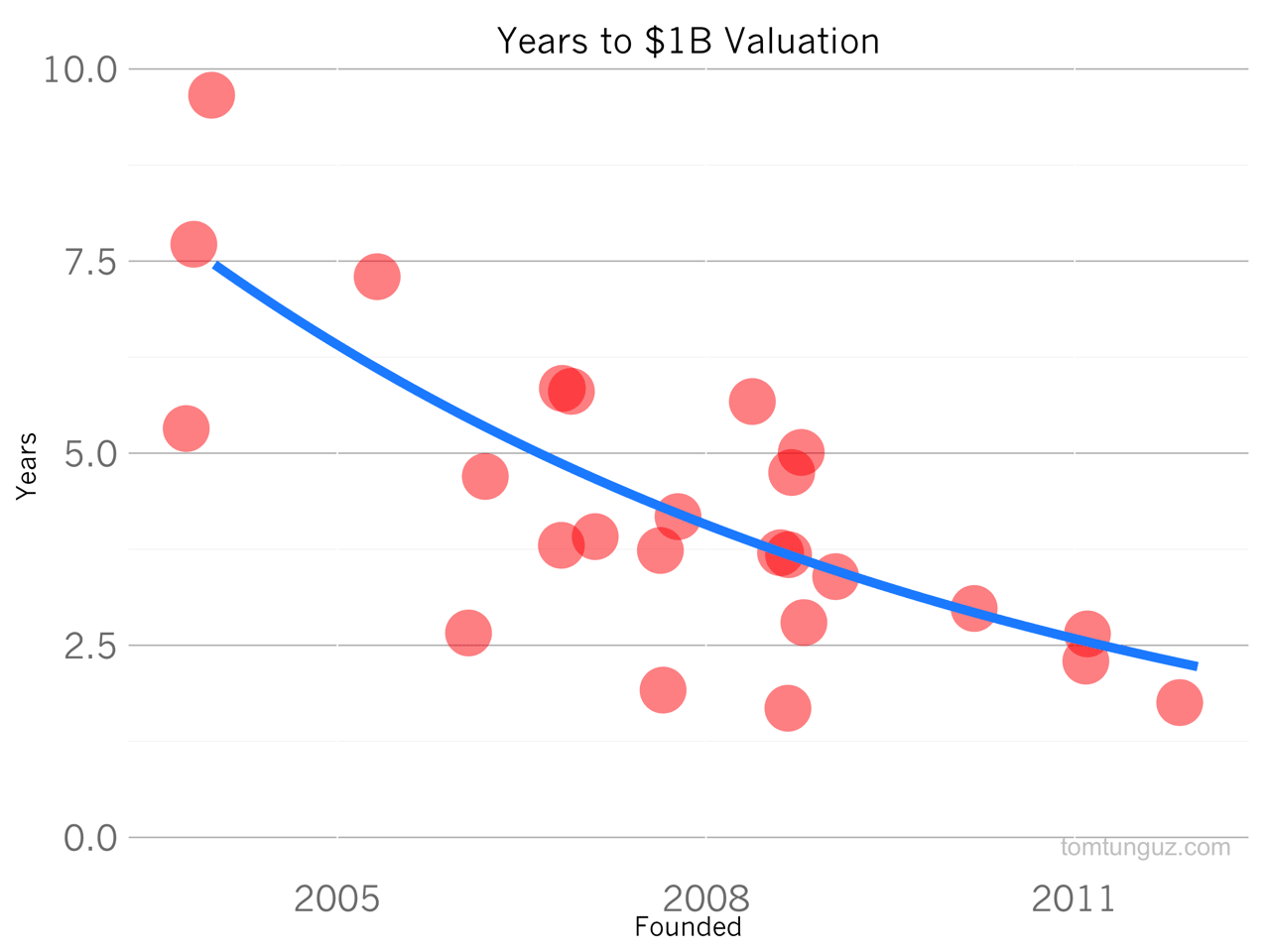
The WSJ published a recent chart of the 49 startups with billion dollar valuations. According to their research, there have never been as many privately held companies with such high valuations ever. The absolute number of these massively valuable companies alone is amazing. Ten years ago, most of them would have gone public by now. But what other insights can we tease from the data about these very special businesses?

Read more

Why Personas Are Critical Product Development and Go To Market Tools for Startups

Yesterday, I attended an event held by the IT team of a major bank. When the data analytics team took the stage, I listened with great interest as the chief of the group described their internal struggles with data and the areas where startups might help them achieve their goals. He articulated his team’s needs and goals in a very concise way by bucketing his users into three personas. I’ve summarized these personas below:

Read more

The Unexpected and Uneven Evolution of the Startup Fundraising Market

image

I started working in venture capital three months before Lehman imploded. After the bankruptcy, the fundraising market contracted as investors internalized the new normal of the public markets. Over the past six years, the fundraising markets flipped from quite bearish to mildly bullish to extremely bullish. Or at least, that’s the way it feels to me.

I’ve often struggled to convey the magnitude of the change and its unevenness. So I thought I could do it with data. Above, I’ve plotted the mean and median investment amounts for Series As, Bs, and Cs from 2006 to through September of 2014 in the US, as reported by Crunchbase data.

Read more

Second Seed Rounds: How They Impact a Startup's Ability to Raise a Series A

image

The market for startups raising capital has changed dramatically over the past few years. Round sizes have ballooned: startups raise 50%+ larger rounds than a few years ago. The looming Series A crunch never occurred. Instead, we’ve seen the bifurcation of the Series B market. Series Bs are the spring of hope for some startups who raise megarounds and the winter of despair for others who must compete for increasingly scarce Series B dollars.

Read more

Come Work on the Redpoint Software Team!

image

Come work at Redpoint! The Redpoint Software team would like to add a new associate to the software team in our Menlo Park office.

We’re looking for someone to work alongside the small, tightly-knit group managing Redpoint’s early stage software practice. This person will work shoulder-to-shoulder with all the members of the team, discovering new startups, evaluating their market opportunities, working with portfolio companies, expanding the firm’s network and contributing to investment decisions.

Read more

The Valuable Startup Equity That's Not Captured in Your Cap Table

image

I met a founder a few days ago who captured the idea of building brand equity really well. He said something along the lines of, “Every time we provide a magical experience to a customer, we invest in our brand equity. Each time we do something that disappoints them or overtly extracts value from our users, we expend brand equity.” This founder prided himself on continuously investing in and increasing his business’s brand equity over long periods of time.

Read more

Benchmarking MobileIron's S-1 - How 7 Key SaaS Metrics Stack Up

This post is part of a continuing series evaluating the S-1s of publicly traded SaaS companies in order to better understand the core business and build a library of benchmarks that might be useful to founders.

Founded in 2007, MobileIron is a leader in the Mobile Device Management sector. MDM provides enterprises software to manage the mobile phones and tablets of their employees. MobileIron provides three different products: a server product called Core to define and deploy security policies, a client product named Client that enforces these policies on each device and a gateway called Sentry that secures traffic from the device to the enterprise’s servers.

Read more