A Surprisingly Powerful Mechanism for Growing a SaaS Startup

image

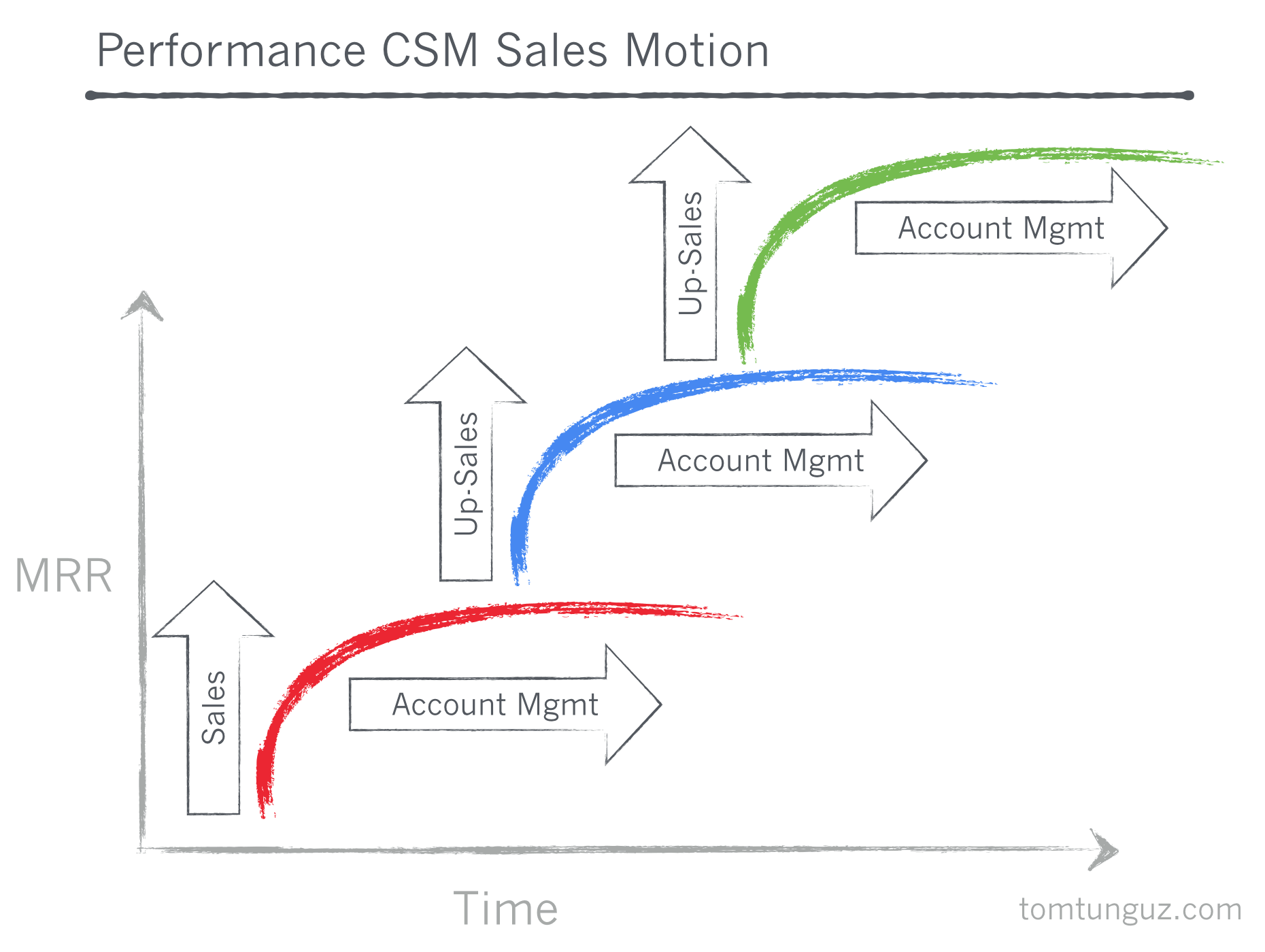
One of the single most effective tools SaaS companies can use in order to grow faster isn’t tweaking the product in a particular way or implementing an AB optimization framework or adopting new marketing tactic. Rather, it’s financial judo for structuring contracts and cash collection.

Cash is the lifeblood of startups. Cash empowers management teams to invest in all kinds of growth mechanisms. So, it’s no surprise that maximizing a company’s cash to invest in growth is a good thing.

Read more

What's Wrong with the Internet of Things

At an Internet of Things conference last week, I took part in a panel in which we discussed the future of connected devices. Will simple products win or will complex products dominate in the IoT?, we were asked. I think the question misses the point and raises another problem about the Internet of Things more broadly. It’s not about Things. It’s about Services. Software-as-a-Service and Platform-as-a-Service.

Simplicity and complexity are two sides of the same coin. Great products are simple on the surface, but devote tremendous energy under the surface to handle complexity on behalf of the user. Great products are like ducks. Ducks are calm above the water despite paddling furiously below it.

Read more

How the Fund Raising Market Will Evolve in 2014

image

Fenwick’s report on the state of the venture market and I came across these three data points that summarise one facet of the market in Silicon Valley succinctly:

  1. 11 venture backed companies raised funds at a valuation of over $1 billion in Q114, more than did so in all of 2013.
  2. Hedge and mutual funds participated in 23 venture deals through mid-April, compared to 41 in all of 2013
  3. Investment in later stage comprised 47% of all dollars invested in Q1, while Series A investment fell to a five quarter low at 15%.

The late stage venture market has been booming spectacularly in Silicon Valley. This source of capital enabling companies to remain private longer and become larger before an IPO or sale.

Read more

The Workplace of the Future

image

In this week’s New Yorker, Jill Lepore reviews Cubed: A Secret History of the Workplace, a book whose author asks the question, what is the work place of the future?

The information worker is a relatively new concept. Peter Drucker coined the term in the 50s. By then companies had already developed new ways of housing information workers. The very first information workers were accountants hunched over “Bob Crachit” desks in the back rooms of factories. Booming railroad companies demanded more organization and created offices within the new skyscrapers along the Chicago skyline. With these new offices came stacks of paper and folios, and cabinets in which to file them. Then, the Mad Men wrought an era of typewriters and mahogany corner offices. Next, Bell Labs invented the suburban office park, moving offices from the city as part of post-war suburbanization and in the 70s, Herman Miller crafted the now-ubiquitous cubicle, which was called the “Action Office” when it launched. Oh, the irony.

Read more

The 4 Challenges Facing Customer Success Teams in SaaS Startups

image Yesterday, I spoke on a panel at the Gainsight Pulse conference with Aaron Ross, the author of Predictable Revenue, Jason Lemkin of Storm Ventures who authors SaaStr, and Brian Stafford, a customer success expert from McKinsey. It was great fun to be on the panel and discuss how customer success is transforming SaaS companies by increasing revenue growth, decreasing capital needs, building better products and consequently retaining more customers. I’ve embedded my slides below.

Read more

Ruthlessness and Grit in Startups

Startups are in a state of perpetual change. During a startup’s first few years of establishing product market and winning the first set of customers, this state of change is obvious. But as a startup scales, the company must adapt by learning and reinventing. Whether it’s building the processes to grow the team, creating new sales and marketing initiatives to pursue adjacent customers, developing customer success teams or handling an unforseen crisis, this process of reacting to the market and evolving the company happens at every level in each function.

Read more

Startup Best Practices 7 - How to Use Andy Grove's Stagger Chart to Build Predictability

Predictability is sexy. Startups that have tuned their growth engines well enough to accurately forecast their growth, presuming these growth rates are attractive, will command much higher valuations in the market, simply because there is less risk in the company. As a result, investors prize these companies disproportionately.

The challenge with predictability is predictability isn’t an end state. A business doesn’t become predictable one day and remain in that state in perpetuity. Rather, predictability is a discipline that must be practiced by managers and management teams within startups.

Read more

The Worst Time of Year to Raise A Seed Round

image

Has there been optimal time of year to raise a seed round? The chart above shows the number of seed rounds by quarter of the year from 2009-2013. At first blush, it would seem that the first quarter of the year is the most attractive period to raise a seed round. But that’s a faulty conclusion.

First, there’s no statistical difference between the number of rounds raised in each quarter, according to a t-test on the four years of Crunchbase data I tested. Second, there is a meaningful difference in the size of rounds by quarter. The chart below depicts the mean and median size of seed rounds by quarter.

Read more

9 Books Every Entrepreneur Should Read

Some of the best content to be found about startups is locked in books. Thomas Kjemperud asked me yesterday for a 140 character recommendation of one book for founders. Reducing my list to just one and condensing an argument for why founders ought to read it in just 117 characters was just too great a challenge for me. Instead I’ve written a blog post about the nine favorite books I’ve read over the last five years have helped me understand startups and the processes that make them successful.

Read more

The Current State of the Consumer Internet Market

image

Last week, we reviewed the state of the public SaaS market and observed the average company had lost 33% of its value from their highs. How have newly public consumer companies fared in the same environment and what does that mean for the tech industry broadly?

I created a basket of most of the venture-backed consumer IPOs since 2010 and added bellwethers Facebook and Google. Above is a chart of these companies enterprise value (market cap minus cash) over the past six months. In that time period, the average public consumer company has fallen 25%.

Read more