How to Hire a Head of Customer Success for Your Startup

I was lucky enough to spend some time with Monica Adractas, a former McKinsey partner who is now Churn Czar at Box. She and I chatted about the challenges in managing churn and her view on how to handle it. I thought she had some terrific insights and a clear understanding of the methods to reduce churn from her experiences. These are my notes from that conversation:

Managing churn is a complicated problem because everyone in the company can impact it. The product and engineering teams must build a product that meets customer needs. Sales must find and close the right kinds of customers. Support must educate, inform and cross-sell customers properly, and marketing must price and message the product effectively. If any one of these teams makes a misstep, churn rises.

Read more

How to Grow Huge: Proprietary Distribution Channels

image

Sam Altman argues in How to Grow Huge that the only way for a startup to grow really large is to create products that people love and promote. As the user base grows, users attract ever larger numbers of users to the product, producing compounding growth.

The point is a terrific one and I think it can be generalized. To grow really large, startups have to create proprietary distribution channels. The one Sam champions, word of mouth marketing intrinsic to a strong brand, is one example of a proprietary distribution channel.

Read more

Startup Best Practices 3 - How to Structure a Sales and Marketing Team

image

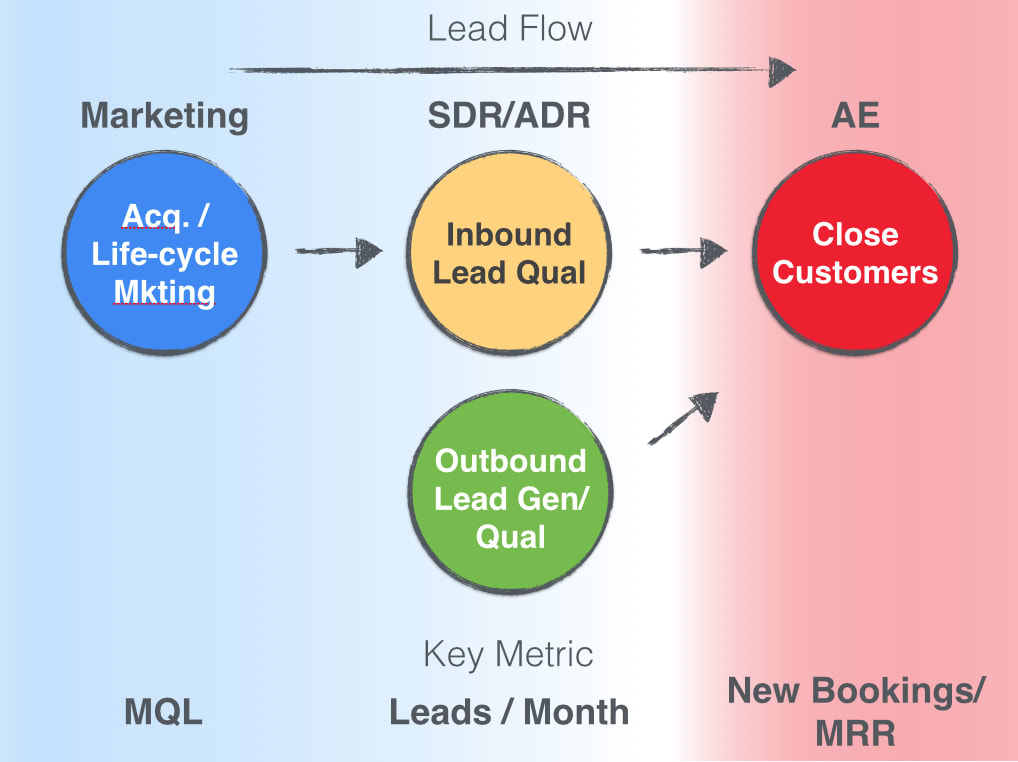
A key component in a startup’s formula for success is educating customers about the product and driving sales. The sales and marketing teams of a startup are responsible for this. There are many ways to structure sales and marketing teams.

The diagram above outlines a sales and marketing team structure that I’ve observed across many startups. It is consistent with the organizational design Salesforce used to drive revenue from $0 to $100M, described Aaron Ross’s book, Predictable Revenue. Jon Miller, CMO of Marketo, has also written an important blog post on the subject, The Definitive Guide to Sales Development.

Read more

The Tablet-First Retail Startup

image

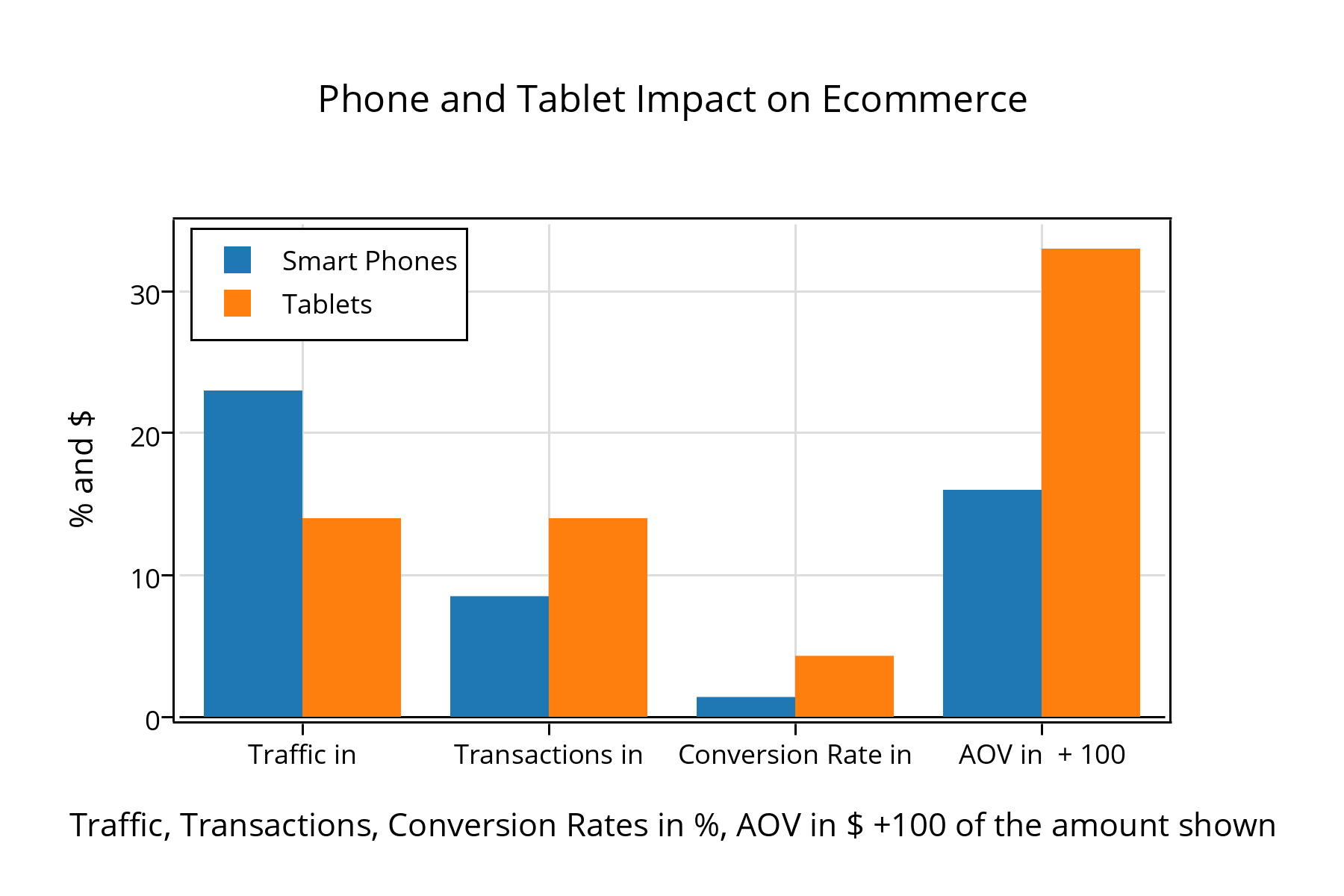
For retailers of any size from startup to Fortune 50, the tablet application has become more important than the mobile application. IBM’s annual Black Friday ecommerce report, which tracks 800 internet retailers proves the point.

Tablet users buy at a conversion rate which is 300% greater than mobile phones and despite generating only 60% of smart phone traffic, drive 65% more transactions at 14% larger basket sizes. Ultimately, the average tablet user is worth 3.5x the average mobile phone user. This is true even though the download ranks of the top 4 retail applications in the iTunes store are nearly identical.

Read more

The Most Effective Way of Visualizing Funnels

image

I first learned about Sankey diagrams in my thermodynamics class and they’ve since become one of my favorite data visualizations and analysis tools. Sankey diagrams, like the one above of visitors to this blog, show the flow of things. Originally created for measuring the flow of energy through powerplants, they are incredibly useful for content marketing analysis, visitor analysis or any other kind of funnel analysis.

Read more

The Next Big Opportunity in Mobile Advertising

The typical mobile phone’s home screen is occupied by more than 30 applications. A digital tragedy of the commons, each additional mobile application a user downloads decreases the odds of an average application re-engaging a user. After all, the time spent on mobile isn’t increasing fast enough to cover the marginal application.

Developers have used push notifications effectively to re-engage users, but push overload drives more and more users to opt out of push.

Read more

Startup Best Practices 2 - Startup Team Sizes

At its core, a startup’s advantage in the market is the speed created by focus. When a team is well orchestrated, they can accomplish amazing things. Creating an environment that fosters communication best is therefore an essential part of startup management. But how best to do it? Founders have to balance span-of-control with span-of-managerial-responsibility.

In an article this week’s New Yorker, Amazon’s founder/CEO Jeff Bezos is quoted on the subject with a contrarian point of view:

Read more

The Language of the Web

image

When I first started programming at a startup, I were proud even snobbish about the language we used: Java. I derided JavaScript. I couldn’t have been more wrong.

JavaScript has become the dominant language of the web. Every browser, PC and mobile, understands Javascript. It is a lingua franca among computers. Some hardware even speaks JavaScript.

Because of its universality, JavaScript’s growth has compounded. The chart above shows the number of code repositories by language on GitHub, as analyzed by RedMonk. JavaScript’s share has tripled in 5 years and the number of job requisitions seeking Javascript has grown in parallel.

Read more

How Much Cash Does Your Startup Need To Go Public?

burn_rates_by_year.png

How much cash does a tech venture-backed company burn through before IPO? The median 2013 VC-backed tech IPO burned $33M and the average company burned $76M. The chart above shows the net income/burn rate of 2013 tech IPO by years since founding.

Four categories of companies jump out in the chart: the profit leaders, the middle-of-the-pack, the negative hockey stick, and the go-for-broke. The profit leaders, Veeva(VEEV) and RetailMeNot(SALE), have generated tremendous profits from the outset. The middle-of-the-pack companies, including Rally(RALY) and Tableau(DATA), burn no more than $25M annually. Some like Chegg(CHGG), RingCentral(RNG), Marketo(MKTO) and FireEye(FEYE) show reverse hockey-sticks - their burn is increasing at an increasing rate. And the go-for-broke contingent of WorkDay(WDAY), Twitter(TWTR), Gogo(GOGO), Violin(VMEM) and SilverSpring(SSNI) have exceeded the $100M burned in one year mark.

Read more

This Message Will Self-Destruct in 48 Seconds

If you’re building a startup, content marketing is a powerful tool to build a brand, develop customer relationships, and develop a a hiring pipeline. Blogging requires diligence and a few tricks to build a following.

I’ve been writing for about 3 years and I’ve analyzed a few hundred of my posts to better understand what makes for effective content marketing. These are my lessons learned:

  1. I have 48 seconds to get my message across in this post. No pretty images, no increase or decrease in word count, no amount of retweets or favorites will convince the reader to linger.
  2. Giving any indication to the reader that they are about to read a long post is death. Paragraph headings are the best indication of that a post will be long and these posts have 20% higher bounce rates, when a user immediately hits the back button after landing on page.
  3. The reader doesn’t care about images. Images don’t impact any metric I tracked: page views, time on site, retweets, favorites, or bounce rate. Images may attract users to click when they are browsing, but anyone who lands directly on a blog post is ambivalent about them.
  4. If the reader likes what they read, they will poke around the site some more. The relationship between time on page and time on site is very strong. Writing good content matters and surfacing related material pays off.
  5. Social proof works and its huge. Social drives about 45% of visitors to the blog. Importantly, there is no degradation in traffic quality from social networks. Visitors who arrive at the blog through retweets spend the same amount of time and have similar bounce rates to other visitors.

In short, when you start your content marketing strategy, be brief, get to the point and write great stuff. The rest will take care of itself.

Read more