AI is a Terrible Ghostwriter
“Is this AI written? … I’m sure this is AI written. … This is a different tone from your usual.”
I receive notes like this with increasing frequency. At first, I thought they were a playful game of cat & Claude.
“Is this AI written? … I’m sure this is AI written. … This is a different tone from your usual.”
I receive notes like this with increasing frequency. At first, I thought they were a playful game of cat & Claude.
Andy Jassy said AWS has “the potential to be a $1 trillion revenue business.”1
Where Amazon once thought the ceiling was a few hundred billion, it now believes the business “will be at least double that.” AWS finished the quarter at a $169b annualized run rate.
Amazon’s torrid growth fuels the capitalist dream. AWS grew 36.7%, the fastest in 18 quarters & the fifth consecutive quarter of acceleration.2 Five quarters ago it grew 17%; today, 37%.
Azure grew 43% last quarter, closing a fiscal year in which it passed $100b of revenue at 41% growth.1 Google Cloud grew 82%.
Eighteen months ago the three grew within a few points of each other.2 The smallest now compounds at nearly twice Azure’s rate & almost three times AWS’s.
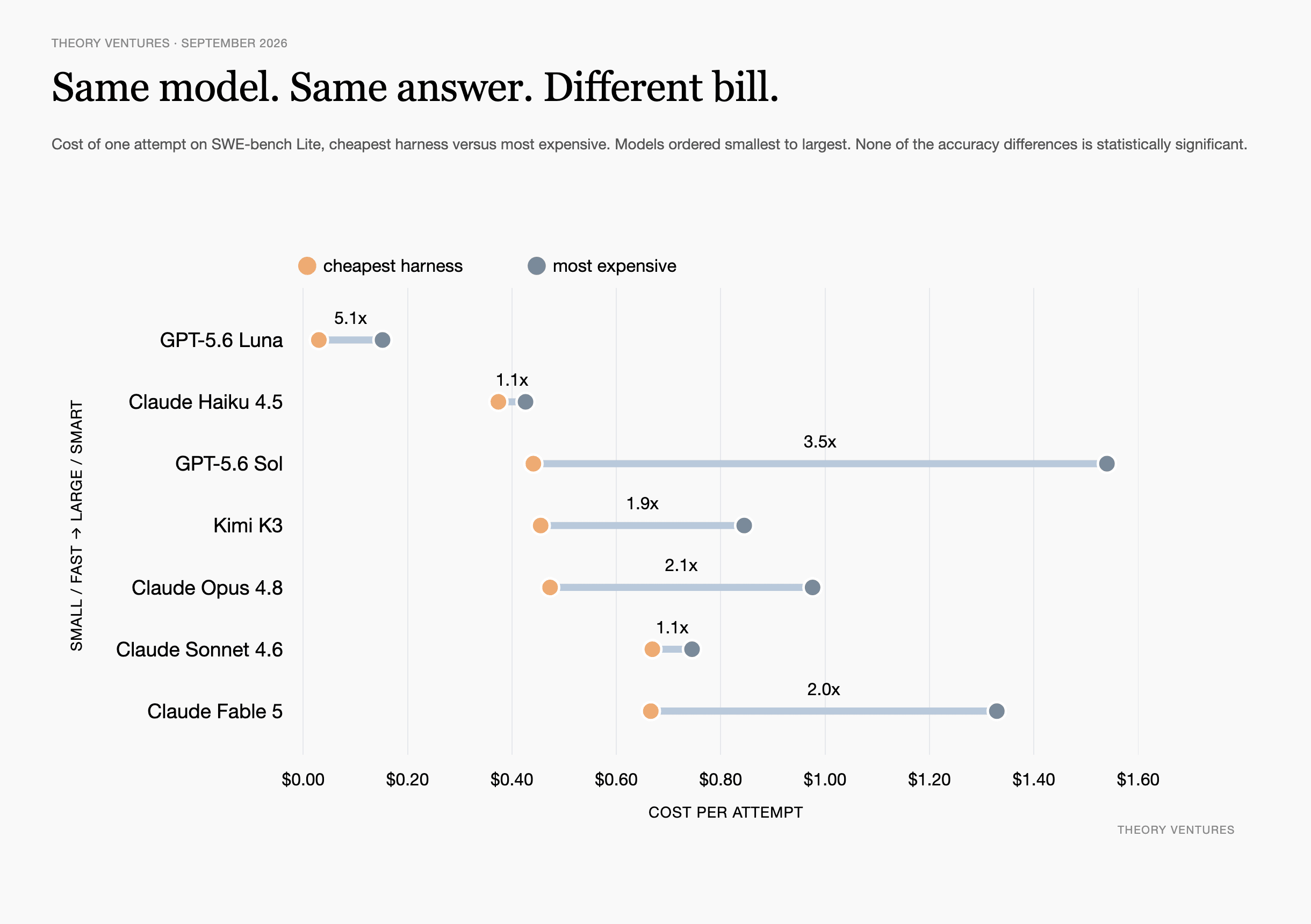
AI harnesses have more impact on performance than the models.
Endor Labs ran the same models through two harnesses in the same week. OpenAI’s GPT-5.5 scored 61.5% functional correctness in its native Codex harness & 87.2% in Cursor’s, a 25.7-point swing from the runtime alone. Anthropic’s Opus 4.7 scored 87.2% in Claude Code & 91.1% in Cursor.1
Both frontier models performed better in a competitor’s harness than in the one their maker ships.
In 1989 Boris Yeltsin stopped at a Randalls supermarket in Houston, stunned by the variety of ice cream.1 OpenRouter is that supermarket aisle for AI.
And shoppers make surprising choices : OpenAI’s year-old open-source model GPT-OSS 120b2 commands 36% of Anthropic’s Opus 4.8 volume.3
Why does a model from August 2025 still hold a third of the traffic of a frontier model that shipped weeks ago?
The market for tokens has segmented.
Google Cloud grew 82% year-over-year to $24.8b in Q2 2026, beating the $22.3b consensus. The number alone would headline any earnings report. The more important signal is what it converges toward: Google Cloud’s growth rate now mirrors NVIDIA’s.
Google did start selling hardware this quarter. CFO Anat Ashkenazi told investors Google “began to recognize revenues from TPU system sales, which we delivered to customer data centers for the first time in Q2.”1 But she was clear the dollars were small: cloud growth “accelerated meaningfully even after excluding the impact of TPU system sales,” with the bulk of TPU revenue landing in 2027. The convergence has a different source. Google Cloud rents AI compute by the hour, NVIDIA sells the chips outright, & both revenue lines are downstream of the same demand to train & run AI models.
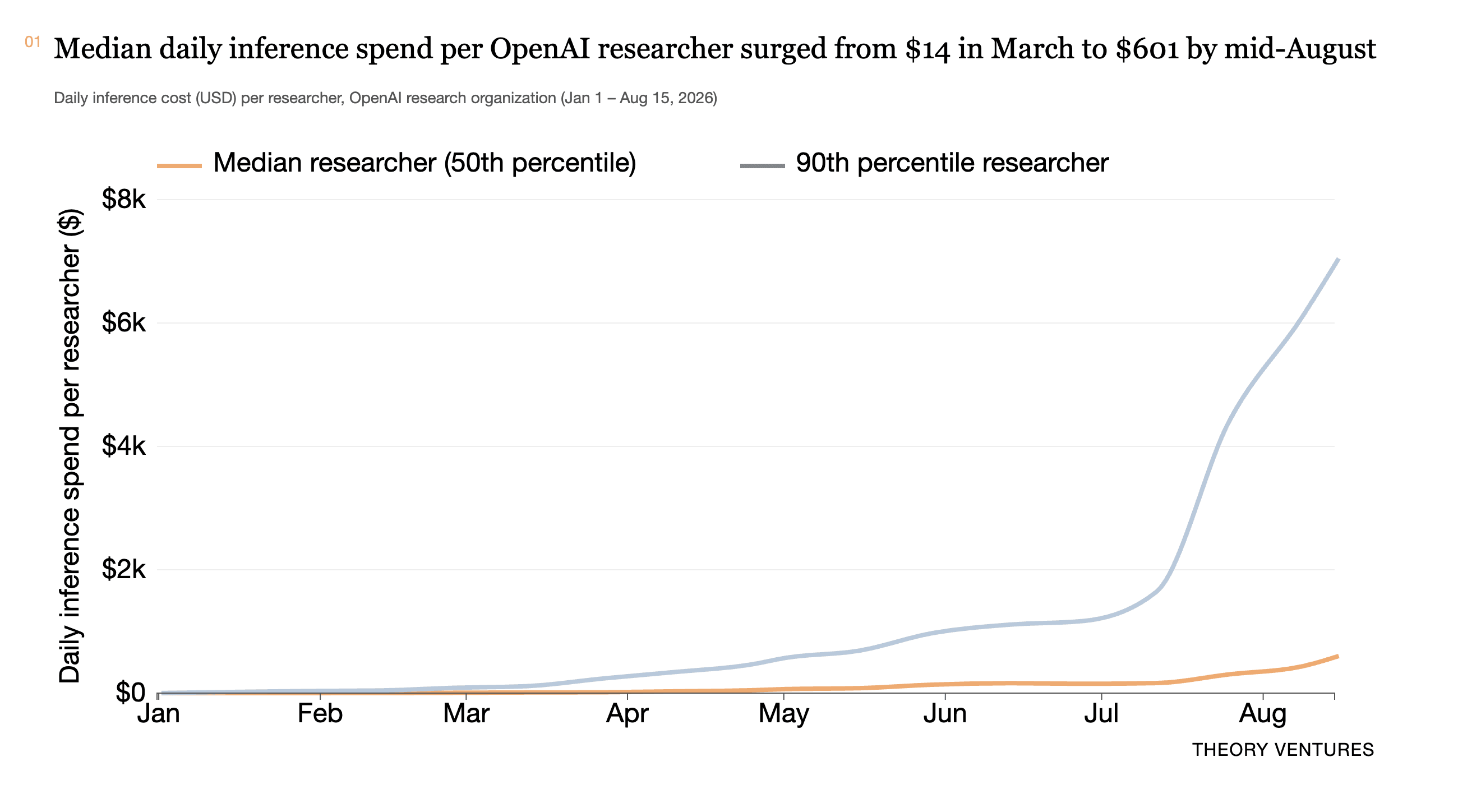
We are now in an era where we should expect 3x more from each other.
Over the last six months, one data point has followed another :
The chart above sorts the ecosystem into three unequal tranches, each defined by how much of the model’s power the company captures.5
Like two sailboats in a marathon race, open & closed AI labs are tacking & jibing in San Francisco Bay.
In 2023, closed source models led by an enormous margin on Chatbot Arena Elo1. Two years later, the DeepSeek R1 moment arrived, the open-source answer to the ChatGPT moment. The two boats raced side-by-side for nearly a year.
What does a bare-bones pickup truck have in common with a state-of-the-art AI lab?
Both share a disruptive idea.
In June, Slate Auto revealed the Blank Slate : a $24,950 electric pickup with hand-crank windows, no stereo, no speakers, no touchscreen, & no paint.1 A blank canvas inviting inspired customization.
The SaaS era broke precedent : for the first time, enterprises stored their data on vendors’ clouds, rather than servers in their buildings. Will this 20 year trend persist in the world of AI? The question is evocative & the debate of the moment.