Cutting R&D to Grow GTM Spend : Is it Happening Across Software Companies?

During Office Hours with Lee Kirkpatrick, Lee recalled managing a startup through a downturn. The business cut R&D spend to conserve cash. By prioritizing sales & marketing, the company successfully lengthened runway to increase revenue, which eased the subsequent fundraising.

I wondered if a similar pattern existed in the public software markets. Actually, the opposite is true: software companies spend more on R&D (research & development) & less on Sales & Marketing (S&M) as a percent of revenue today than six years ago.
Read more

Sales Efficiency through Covid : Reading the Tea Leaves for Startups

In 2017, SaaS companies reported their cost of customer acquisition had increased by 65% in the previous five year period.

What happened to these figures during Covid? We can examine the sales efficiency of public software companies to get a sense.

image

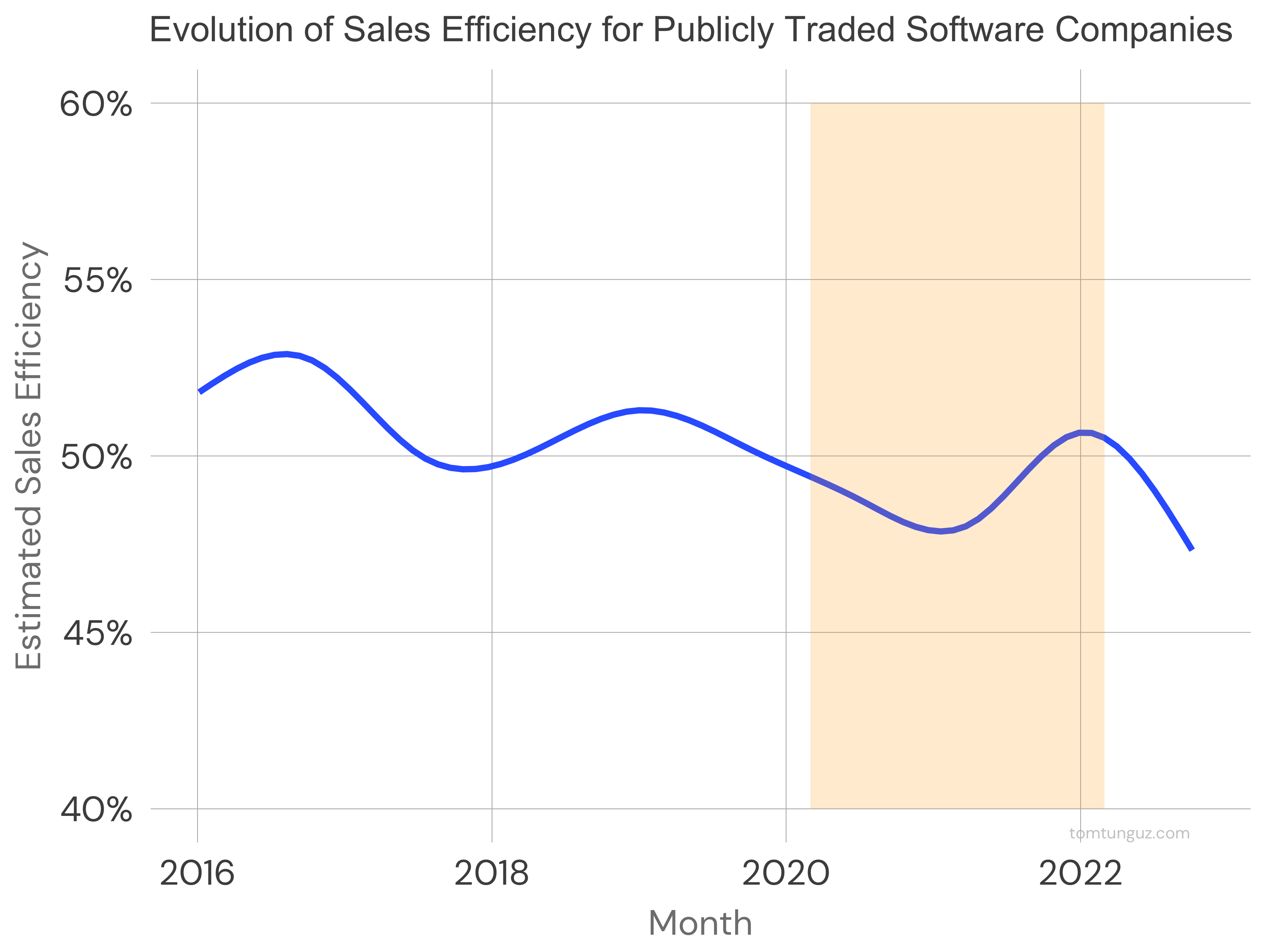
Since 2016, the average public software witnessed its sales efficiency winnowed from 52% to 47%, a decline of about 10%. Covid, marked in the orange rectangle, didn’t impact sales efficiency initially.

Read more

Grey Skies in Cloud Earnings

I’m watching public company earnings to identify early weaknesses in the software market. This week Microsoft, Google/ Alphabet, & Amazon reported their third quarter figures.

Company Q-5 CAGR Q-4 CAGR Q-3 CAGR Q-2 CAGR Q-1 CAGR Q0 CAGR
Microsoft Azure 50% 51% 46% 46% 40% 35%
Google Cloud Platform 46% 54% 45% 51% 35% 38%
Amazon Web Services 37% 39% 40% 40% 33% 27%

The meaningful decline in growth rates started four quarters ago is hard to ignore.

Read more

9 Predictions for Data in 2023

Yesterday, at the Monte Carlo Impact Summit I shared my 9 Predictions for Data in 2023. Here are the slides & I’ve embedded them below. The video is here.

These are my 9 predictions. A year from now, I’ll score them to see how I did.

  1. Cloud data warehouses (CDW) will process 75% of workloads by 2024. In the last five years, CDWs have grown from 20% of the workloads to 50%, with on-prem databases constituting the remainder. Meanwhile, the industry has grown from $36b to $80b during that time.
  2. Data workloads will segment by use case into three groups. First, in-memory databases like DuckDB will grow to dominate local analysis even for massive files. CDWs will retain classic BI & exploration uses. Cloud data lakehouses will serve jobs operating on massive data & jobs that don’t require the fastest latency - and do it at half the storage price.
  3. Metrics layers will unify the data stack. Today, there are two different forks in data. The first fork uses ETL to pump data into a CDW, then to a BI or data exploration tool. The second fork, the machine learning stack, is identical save for the outputs: model serving & model training. The metric layer will become the single place metrics & features are defined, unifying the stack & potentially moving model serving & training into the database.
  4. Large language machine learning models will change the role of data engineers. I recorded a video of myself writing code to produce charts & embedded it in the presentation. The video shows Github Copilot magically creating a chart for the DuckDB star growth. Copilot ingests a comment, writes the code, even adds my custom theme function. When I execute the code, it works. Technologies like this will push data engineering work to a higher plane of abstraction.
  5. WebAssembly or WASM will become an essential part of end-user facing data apps. WASM is a technology that accelerates browser software. Pages load faster, data processing is speedier & users are happier. Every major browser supports WASM & consequently, anyone producing a data app for an end user will use it.
  6. Notebooks will win 20% of Excel users. Of the 1b global Excel users, 20% will become prosumers, writing Python/SQL to analyze data. They will do it in notebooks like Jupyter, which are easily shared, reproducible & version controlled. Those notebooks will become data apps used by end users inside companies, replacing brittle Excel & Google Sheets.
  7. SaaS applications will use the CDW as a backend for both reading & writing. Today, sales, marketing, & finance data exist in disparate systems. ETL systems use APIs to push that data into the CDW for analysis. In the future, software products will build their apps on top of the CDW to take advantage of centralized security, faster procurement processes, & adjacent data. These systems will also write back to the CDW.
  8. Data Observability becomes a Must Have. Software engineers measure the success of their efforts through up-time. 99.9% or three-nines of up-time means only 1 incident per 1000 hours. Today’s data teams see 70 incidents per 1000 tables. Data teams will align on data uptime/accuracy metrics & drive to the three-nines equivalent, using data observability tools to measure their performance.
  9. The Decade of Data Continues. Data startups raised more than $60b in total in 2021 more than 20% of all venture dollars raised. We’re still in the early innings of this foundational movement.

Thank you to the Monte Carlo team for the opportunity & the audience for the great questions at the end.

Read more

Would You Leave the Cloud to Improve Sales Efficiency by 11%?

Last week, David Heinemeier Hansson explained why his company, Basecamp, is leaving the cloud. They will manage their own servers to reduce the $3m annual AWS bill by 60%.

Setting aside the technical questions around such a migration for a paragraph or two, this move will improve Basecamp’s efficiency materially.

For a hypothetical startup, a 60% reduction in infrastructure costs boosts sales efficiency by 11% & net income margin by at least 12%. That means reducing the payback period from 21 to 18 months. These simple calculations ignore the additional margin improvements arising from depreciating the servers which should add a few more percentage points to the bottom line.

Read more

Five Pillars of PLG with Carilu Dietrich

Yesterday, Office Hours hosted Carilu Dietrich, marketer at Atlassian & advisor to many iconic product-led growth companies (PLG). She’s seen many different types of businesses from startups to massive publicly traded software companies.

Her unique vantage point on the tension facing the companies pursuing both PLG & classic selling formed the basis of most of our conversation. Here are some notes from the session.

Carilu shared her Five Pillars of PLG Success.

Read more

Antifragility as a Competitive Advantage in 2022

“Antifragility is beyond resilience or robustness. The resilient resists shocks and stays the same; the antifragile gets better.”

A friend recommended rereading Nassim Taleb’s Antifragile given the macroeconomic backdrop, which I did this weekend. How does a software company become stronger throughout this volatility?

One way is to ensure a healthy customer base. image

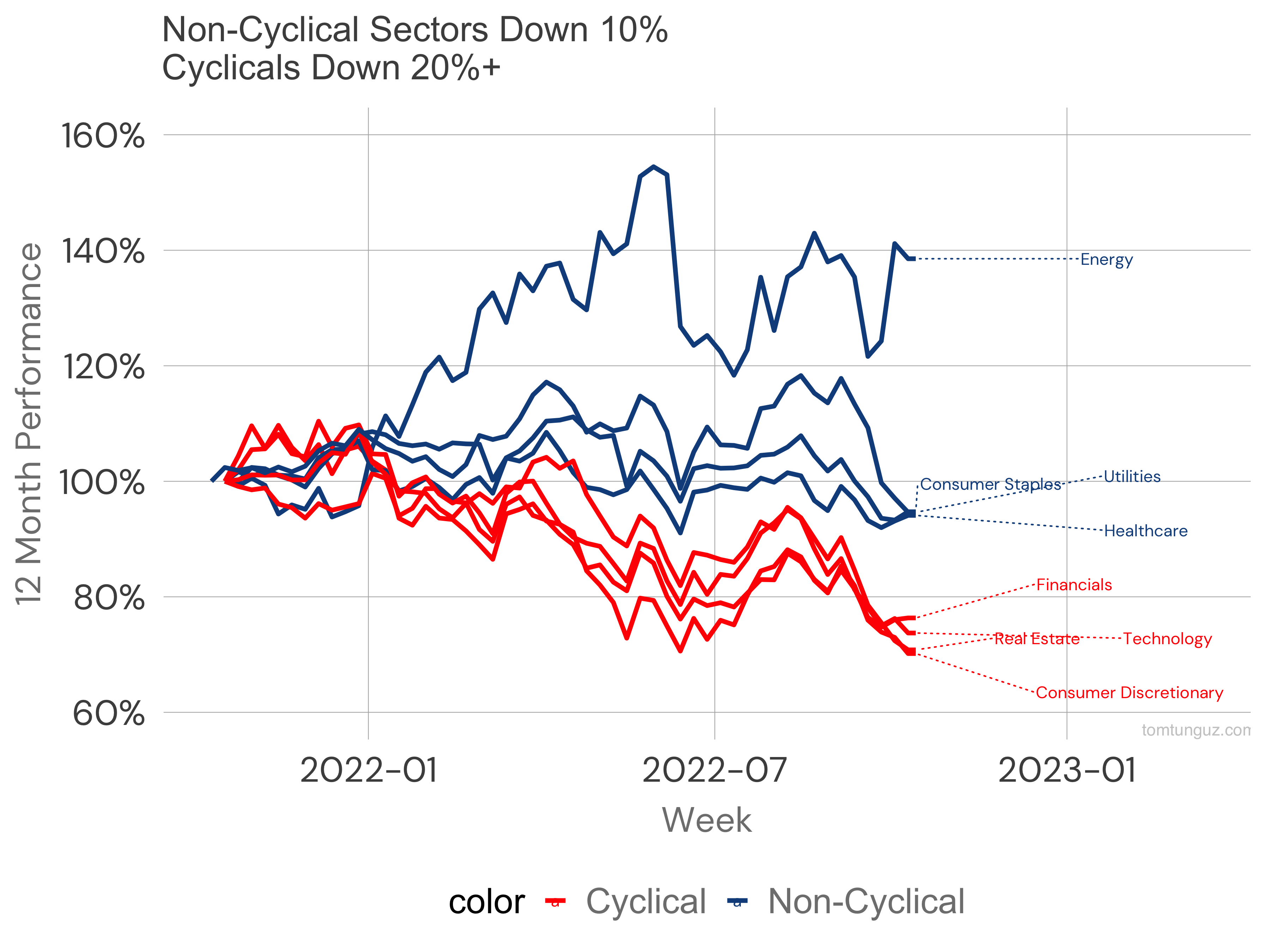
Cyclical companies boom when the economy thrives, but suffer during recessions. They are the hare of Aesop’s footrace. Non-cyclicals are the tortoises advancing inch-by-inch.

Read more

How Low Could Valuations Go?

The public software market continues to compress. Enterprise-value-to-forward-revenue multiples are now below 2016 levels for the first time in 6 in years.

image

The 25th percentile of companies trade at 3.3x today compared to 4.0x in 2016. The median or 50th percentile trade at 4.9x vs 5.6x. The 75th percentile have resisted the downward pull & retain their premium: 7.3x vs 5.8x.

Read more

Office Hours with Carilu Dietrich - Marketing for Hypergrowth Companies

image

On October 18th at 10am Pacific, Office Hours will host Carilu Dietrich. Carilu headed corporate marketing for Atlassian from $150m to $450m in revenue & through their massively successful IPO.

Since then, she’s advised Segment, Kong, Miro, Bill.com & 1Password, among many others. Needless to say, her vista across many leading SaaS companies marketing practices is exceptional.

During the Office Hours, we’ll discuss:

Read more

Just How Troubled is the Bay Area Startup Scene?

There’s a prevailing narrative that the health of the Bay Area startup ecosystem faces challenges. San Francisco’s share of startup rounds by count has fallen from its perch ten years ago. But that’s not the full story.

In 2021, San Francisco Bay Area startups raised $126b. In 2019, US startups raised $126.4b. In the span of two years, a region’s startups raised as much capital as all of the US.

Read more