Lessons Learned from 20 Years at the Leading Edge of SaaS

Over the weekend, I read Tien Tzuo’s book, Subscribed. Tien is the founder and CEO of Zuora, and former CSO/CMO at Salesforce, where he started in 1999. He has been working in SaaS for nearly 20 years. He’s a thought leader in the world of subscriptions, and I learned a tremendous amount from his book.

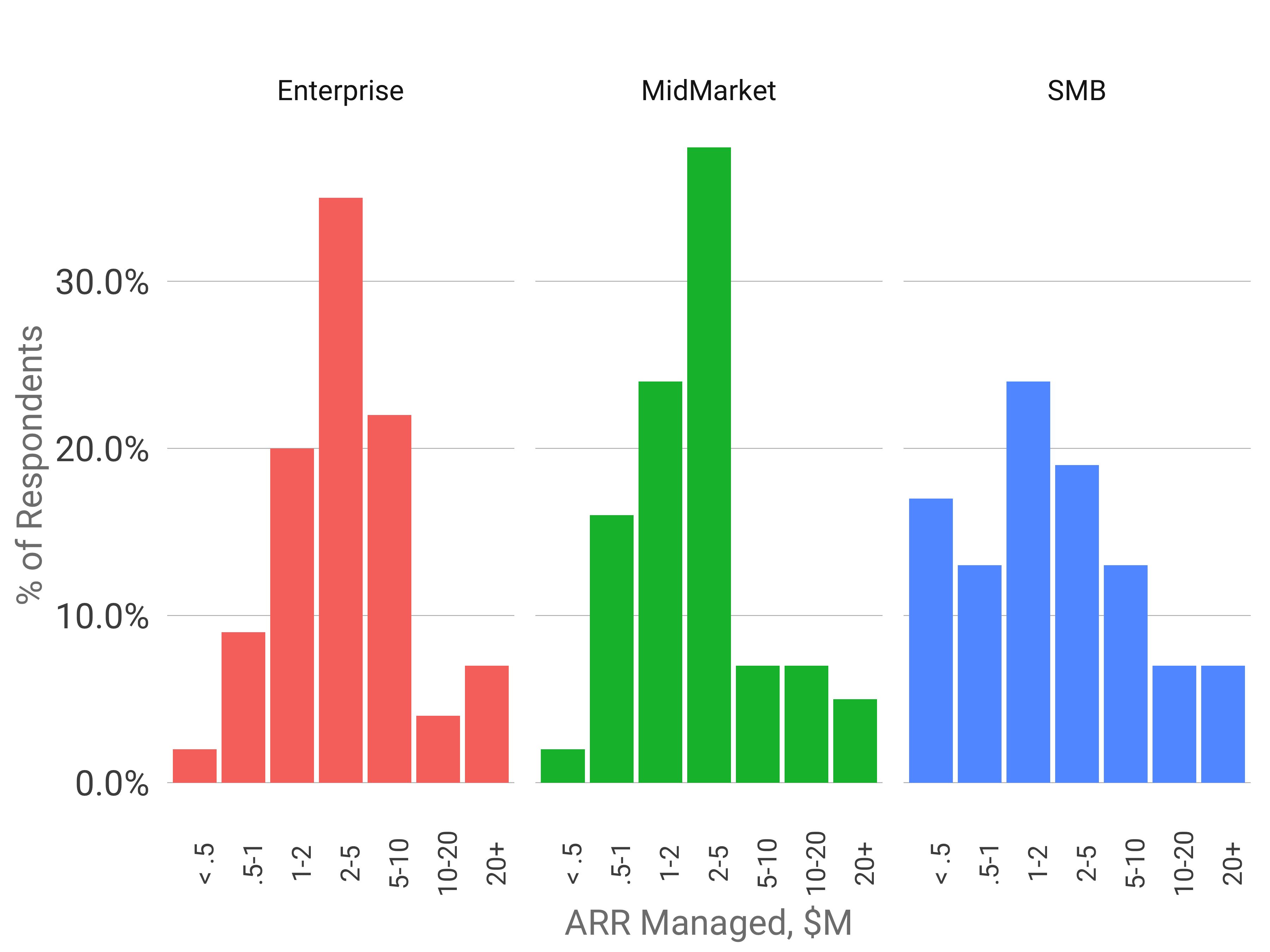
There were three key themes that resonated with me. First, the shift to a subscription business model reinforces customer centricity. Second, pricing is one of the most powerful growth levers subscription companies have. Third, balancing customer mix across three-tier plans is critical to long-term success, and there is a right way to think about it.

Read more

Does Winner Take Most in SaaS?

image

There’s a theory to the idea that winner takes most in Startupland. The startup that grows a bit faster at the beginning demonstrates more momentum. The startup raises capital sooner, hires people, builds the product, markets and sells the product, grows more, and raises capital. Repeat the process for each round of capital. Is it borne out in reality?

This theory suggests that irrespective of the category, the winner should capture most of the market value. Reality is far more complicated than this simple idea. After all, most startups face turbulence in their journey. Venture capitalists finance competitors to pursue a market opportunity. M&A environments ebb and flow. Undisclosed private sales or private valuations aren’t considered. Plus, survivorship bias plagues this analysis.

Read more

A Deeper Dive into the Dynamics of the Seed Market

image Earlier this week, I wrote about the collapse in the number of seed investments. I received many questions about the data, all the same. Why is this happening? This is a deeper dive into the data.

First, there are fewer seed investors participating in the market than in 2015, about 40% fewer.

image

Second, many of the most active seed investors and institutional seed funds are investing in fewer companies. The largest accelerators in the US buck the trend, however. The lines in gray trace the investment counts by firm. The red sketches a smoothed aggregation.

Read more

Why Series As are Much Easier to Raise in 2018 than the Past 5 Years

image

In the last six years, the median time between seed and Series A has more than tripled from about 200 days to about 750 days. Why? The seed market is in the midst of some secular changes. Seed rounds have declined 63% from their peak. Total dollars invested have fallen by 37%. But the median round size is up 3x in the same time period. In other words, investors are concentrating capital in fewer startups.

Read more

What I'm Grateful For

Earlier this week, Redpoint announced its [7th stage fund](https: //medium.com/redpoint-ventures/redpoint7-49e0b817f251) of $400M. Over the past 10 years that I’ve been Redpoint, I have seen our firm learn, evolve and grow in many different ways - important ways - that fill me with gratitude and pride.

First, [we have and will continue to plant trees we will not see](http: //tomtunguz.com/plant-a-tree-youll-never-see/). Our founders who started the firm about 20 years ago built the firm to endure for decades. They taught us the business and invested consistently in the future of firm. We plant trees outside the firm by contributing knowledge and connections through events, publishing and networking.

Read more

The Three Layers of Management

image

Imagine you come across three builders working on the same project. You ask each the same question: what are you working on? The first says, “I lay one brick after the other.” The second says, “I’m building a wall.” The third, “I’m erecting a cathedral.” What is the moral of this aphorism?

I see two.

The first is to keep the greater vision of our work in mind. Said another way, “If you wish to build a ship, do not divide the men into teams and send them to the forest to cut wood. Instead, teach them to long for the vast and endless sea.”

Read more

Our Investment in Kustomer

image

We’re excited to announce our partnership with and investment in Kustomer. Kustomer is a New York City-based company building the next-generation of customer support platform.

In my first role at Google, I provided account management and customer support to internet publishers.

I remember trying to understand the context around a particular customer case. How large is the customer? What recent interactions have we had with the customer? How satisfied are they? Who is the point of contact? Which products are they using? The information was found in five or six different systems.

Read more

The Blockbuster Software M&A Market of 2018

image

2018 is a blockbuster year for software M&A multiples. The prices companies fetch relative to their revenues surpass any of those in the past 7 years. Billion-dollar plus acquisitions in 2018 have commanded a median 17.7x trailing enterprise value to revenue multiple. Nothing in the past seven years is close. In fact, there is not a single acquisition in that range.

image

In 2018, three acquirers have paid greater than 14x trailing multiples, and two have paid greater than 20x trailing. The vibrant M&A market we expected is fructifying.

Read more

Seven Strategic Rationales for the Microsoft/Github Acquisition

image

Last week, Microsoft acquired Github for $7.5B. It’s a massive acquisition at a massive price relative to other software acquisitions. Why is Microsoft willing to pay so much?

  1. Developer identity. Identity has been critical to Microsoft success. Active Directory (AD) forms nexus of the Microsoft enterprise ecosystem. AD contains all the users, their roles, and their rights. The Skype acquisition was also about identity, consumer identity. Github brings identity of a third important demographic: developers.
  2. Hard left toward open source. Satya Nadella has pivoted Microsoft toward open source since he became CEO. These are some of the efforts. Microsoft supports Ubuntu on Windows 10. Microsoft has published Linux and FreeBSD for Azure. Microsoft bought Xamarin to help open source .NET. That’s the beginning. There are plenty more open source initiatives here. This acquisition capstones the commitment.
  3. Box-out Amazon and Google in the Cloud Wars. “Every” business is moving to the cloud. They will migrate applications, data and code. Microsoft now owns the largest repository of open source software, and the most popular version control system. To migrate enterprise on-prem code to Azure is a huge competitive advantage. It will be easier than any alternative.
  4. Cross-sell Github enterprise. Enterprises pay millions of dollars for Github enterprise. Microsoft has one of the largest enterprise customer bases globally. Mix the two, chill, and shake, and you have a new billion dollar revenue business unit for Microsoft.
  5. Anticipate the serverless and function-as-a-Service (FaaS) wave. Serverless is a movement in the developer ecosystem. For the past 15 years, developers have shared open source applications and libraries. Today, developers have begun to publish and share individual functions. Imagine pushing a button on Github to instantiate a function or an application. Elegant on-ramp for a developer to become a paying Azure customer.
  6. M**&A Intelligence.** Microsoft will observe which open source projects gain momentum. With that first party data set, they can acquire or compete with the teams building those technologies.
  7. Network effects. There are very few enterprise companies with network effects. Github is one. They should enjoy winner-take-most dynamics within the developer ecosystem.

Microsoft’s acquisition of Github is a bold strategic bet that will position Microsoft at the forefront of open-source and reinforce their strength in the Cloud Wars.

Read more

When You Hire an Executive, You're Hiring a Network

You’ve just raised a round of financing. Your next step is to build your management team. There are several criteria for finding the right executive. Competency in the field, cultural fit, communication skills, management experience. All of those should be obvious. There is one that is often overlooked. Network.

Recruiting is one of the most important responsibilities for a head of a department. That head will need to scale the team to meet the objectives of the company. Within the first 3 to 6 months, the executive will likely hire several people, maybe 4 maybe 10.

Read more