The Latent Purchasing Power in the SaaS Acquisition Market

The startup acquisition market is off by roughly 35% year-over-year. Why the decline? One consistent response from potential acquirers is that they are waiting for tax reform to happen. If it does happen, and when acquirers do decide to pursue acquisitions, I suspect we will enter a very acquisitive environment for three reasons.

image First, the cash available to finance acquisitions on the balance sheets of public companies has grown by 20 X over the last 10 years and now totals more than $8.5 billion.

Read more

Just How Disruptive Are ICOs to the Classic VC Model?

image

Initial Coin Offerings, a fundraising mechanism for companies using cryptocurrencies as a mechanism to buy their service, seem to be upending the world of venture capital. Filecoin raised $250M through an ICO. Tezos raised $232M. Bancor raised $153M. These are massive amounts of money. Recently, I’ve been wondering how prevalent ICOs are and whether they could potentially be a substitute for venture capital.

The chart above shows the number and size of ICOs since the beginning of this year. Though November 6, 130 ICOs have raised $2.7B. 18 have raised more than $100M, while 120 have raised up to $50M. That’s an enormous amount of money.

Read more

The Implication of Secular Increases in SaaS CAC

image

One of the major trends facing SaaS companies today is the rising cost of customer acquisition. Data on this trend has been difficult to find. Fortunately, Patrick at ProfitWell sent me his survey results across about 800 companies. The chart above shows the increasing cost of customer acquisition on a per company basis. Those surveyed have observed a ~65% increase in cost of customer acquisition over the last five years.

Read more

The AI Agency - A Novel GTM for Machine Learning SaaS Startups

In 2015, I wrote about the trade-off facing vertical SaaS companies. Vertical SaaS companies focus their efforts on a particular group of customers. Procore targets construction with their software and Veeva targets pharmaceuticals with their CRM. This concentration limits the market size, but improves product market fit. Both of those businesses are now worth more than $3B. There is a new twist in SaaS with a parallel dynamic.

I’ve started to call them AI Agencies. AI Agencies use machine learning to disrupt a market dominated by agencies. Often, these startups begin as software companies selling machine learning software into agencies.

Read more

Important Changes in Revenue and Profitability Definitions for SaaS Companies

Starting in January, public software companies will report their financials using ASC 606. Normally, accounting changes are not that interesting, but ASC 606 will change several of the key attributes and benchmarks SaaS startups use. The two most important changes are changes to revenue and profitability.

Today, all software revenue is recognized ratably over the contract period. If a business finds a 12 month contract for $12,000, the company record $1000 of revenue for each month. Under ASC 606, hosted revenue recognition doesn’t change.

Read more

The Rising Stakes in SaaS

image

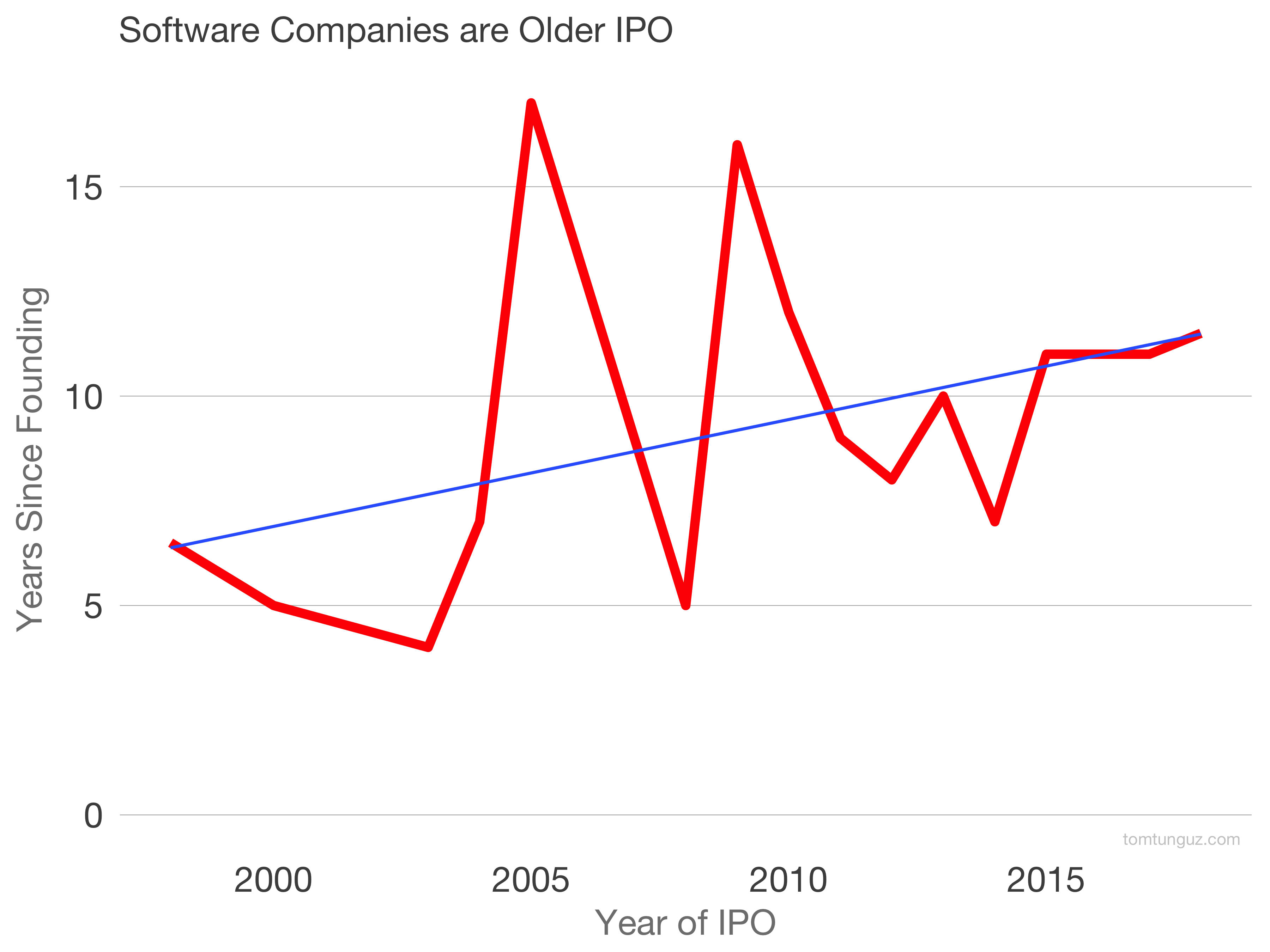
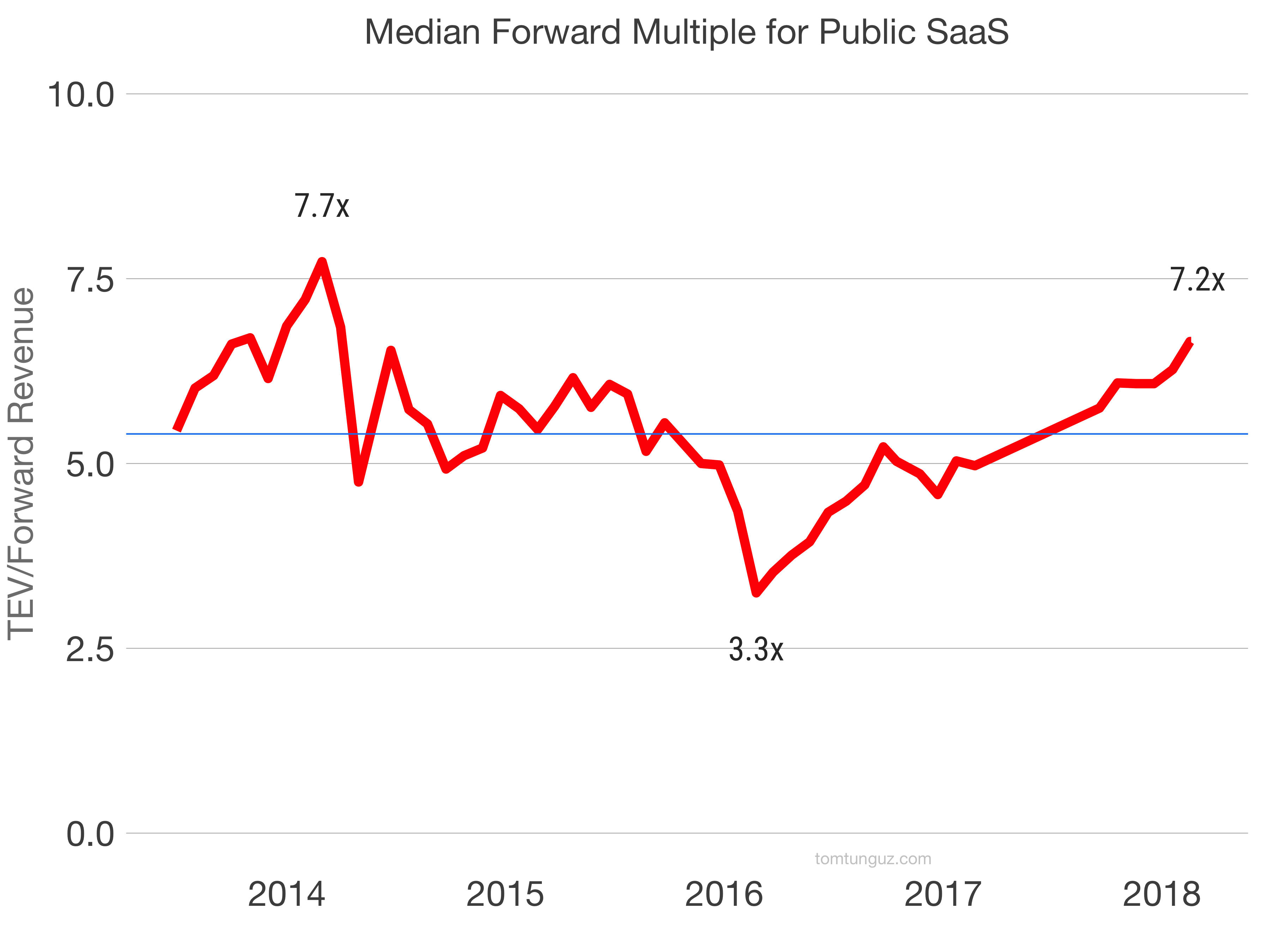
Last week, I participated in two discussions about the changes in the SaaS world. I believe they are fundamental. The most important force shaping the industry today is competition. The level of competition in many core SaaS segments is intense.

Why? The SaaS era is about 20 years old. Salesforce was founded in 1999. Since then, many major categories of software have been saasified. Venture capitalists have financed many of those businesses. Over that 20 year period, annual SaaS investment has increased 20x, peaking in 2014 at $7B.

Read more

How to Decide With Speed and Conviction

A startup’s competitive advantage is execution speed. That quickness stems from a CEO’s ability to decide and this ability separates the great from the good. According to a recently published Harvard Business Review article, one of the four key behaviors distinguishing exceptional CEOs is deciding with speed and conviction.

[We] discovered that high-performing CEOs do not necessarily stand out for making great decisions all the time; rather, they stand out for being more decisive. They make decisions earlier, faster, and with greater conviction.

Read more

Monte Carlo Simulations of Inside and Outside Sales Teams in a SaaS Startup

image

Recently, a VP of sales told me about the way he views the dynamic between inside and outside sales. Inside sales is the drumbeat, a highly predictable sales organization whose consistency enables outside sales to swing for the fences. I never heard it expressed quite this way, but I do think there’s some truth to it. To prove it to myself, I ran a Monte Carlo simulation for hypothetical startup.

Read more

Shopify S-1 Analysis - Smiling All the Way to $10B

image

Shopify is an exceptional business. There are not many software companies who can nearly quadruple their enterprise value in two years. But Shopify has grown from $2.7B in enterprise value to more than $10B. What are the metrics behind this behemoth?

First, let’s describe the company a bit. Shopify provides e-commerce infrastructure to merchants. They generate revenue in two ways: subscriptions and merchant services. Merchants pay subscription to rent the software. They pay merchant services for payment fees and other costs that increases the function of the amount of stuff they sell, or Gross Merchandise Value (GMV).

Read more

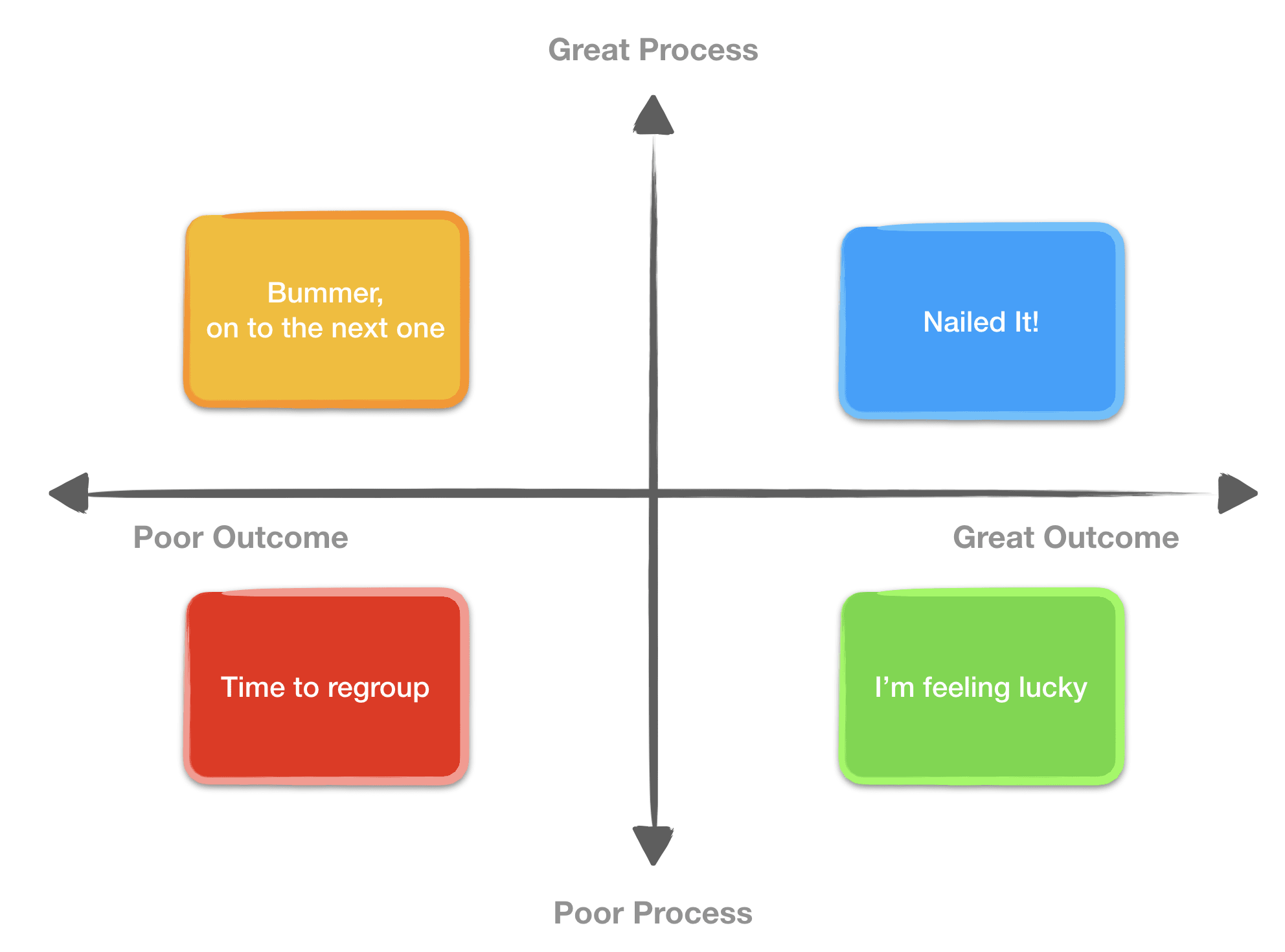
Decision-Making Auditing

image

How do you help someone when that person knows substantially more about the question than you do? This is one of the most fundamental and frequent questions in management. I came across it first as a product manager. Then as a manager of teams. And last as a board member. In each of these situations, have interacted with people who knew substantially more about their area of expertise.

There are lots of pitfalls when answering the question, “what do you think?” I know, because I’ve suffered through all of them. Whether it’s arguing by analogy, talking about a bike rack, or arguing with a false sense of confidence based purely on opinion/instinct, each of these reponses has a critical flaw.

Read more