The Intense Power of a Strong Company Culture

image

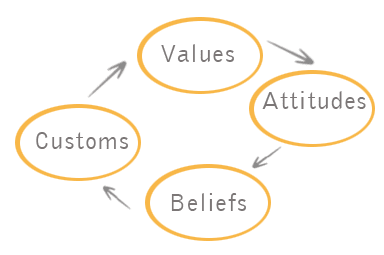
Earlier this week, I spoke at 2U’s annual employee conference. Redpoint partnered with 2U at the Series A, and they are now a $2B publicly traded education company that powers online degree programs for Georgetown, USC, Syracuse, Berkeley, and Yale, among others. It was an inspirational moment for me because I observed the intense power of developing strong company culture.

Read more

SaaS Fundraising in 2017

image

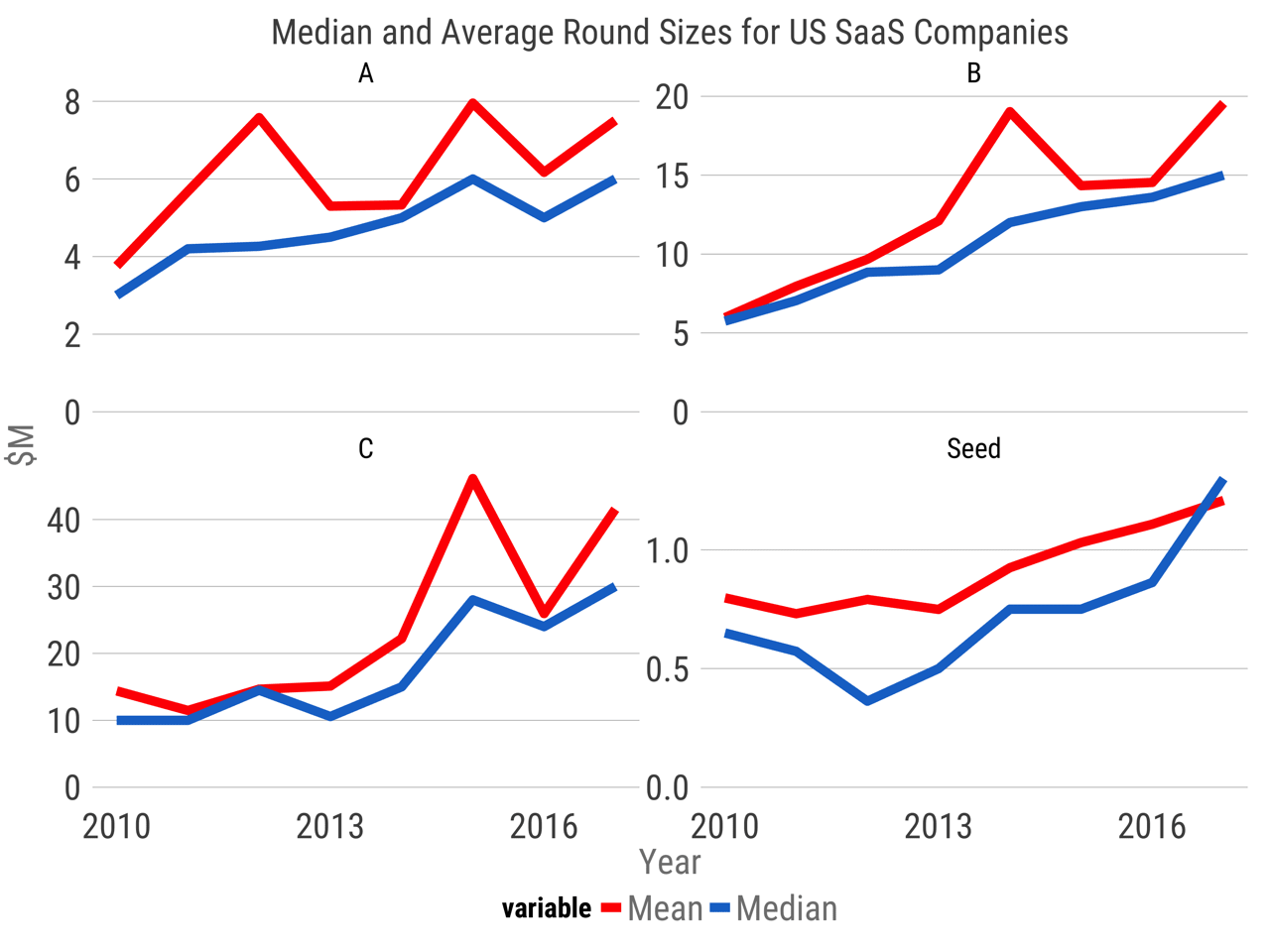
When I analyzed the SaaS fundraising market in 2016, three trends emerged. The number of SaaS companies raising rounds had stalled, while the total number of dollars plateaued. Meanwhile, round sizes swelled. In other words, there was a concentration of capital in an increasingly small number of names. A year later, those trends have continued to converge, and SaaS valuations have resurged, reaching their highs of the 2014-2015 boom.

Read more

Apprenticeship

I am most grateful for my work experiences that were apprenticeships. Whether it was Philip who taught me how to write a proper Java function (10 lines or less), or Kim and Scott who are great managers, or the partners at Redpoint who invested a huge amount of time to educate me, those collections of experiences have taught me far more than I could’ve expected.

Worklife is nuanced. Reading a blog article here or in HBR article there, a business book or an academic paper only goes so far because these summaries of knowledge lack one key ingredient. Judgment.

Read more

Plant Trees You'll Never See

The New Zealand All Blacks are the most successful athletic team perhaps of all time. A rugby outfit whose name originates from the solid black uniforms, they have won 79% of their international matches spanning 68 years. James Kerr followed the All Blacks, interviewed them and distilled his learnings into a book, Legacy. Kerr organizes the book into 15 life lessons, three of which stood out to me.

Humility is the first. After each match, the All Blacks, among the greatest rugby players in the world, sweep up after themselves. They clean up their locker room after all the celebration of a victory or the disappointment of defeat.

Read more

The "Hiring The Buyer's Role to Sell" Fallacy

image

What could be more natural than a marketer selling a product to other marketers? Or an engineer pushing a new devops tool to other developers? Or a customer success person pitching CS tools? After all, they both speak the same language, come from the same domain, will develop trust quickly. Consequently, they will sell faster and more efficiently. This might seem like a very logical argument for differentiating on sales processes, but it’s a fallacy.

Read more

Ethics in Machine Learning - An Opportunity for Startups to Lead

We’ve entered an era when computers can understand speech, computers can synthesize speech, computers can develop music, author encryption algorithms, create novel art, respond to customer support questions, and even generate new summaries and reports from data. Increasingly, humans will struggle to distinguish between computer-generated and human generated. Consequently, here’s an opportunity for startups to lead, not just technologically, but more broadly.

DT is a creative digital agency business based in Australia that developed a prototype that distinguishes between human speech and synthetic speech. Shaped like a hearing aid, the Anti AI AI chills the listener behind the ear using a Peltier device when the onboard TensorFlow model detects computer-generated speech. It’s one of undoubtedly many technologies which will use one machine learning model to detect another machine learning model.
Read more

Startup Best Practices 26 - Choosing Your Startup's Competitive Strategy

image

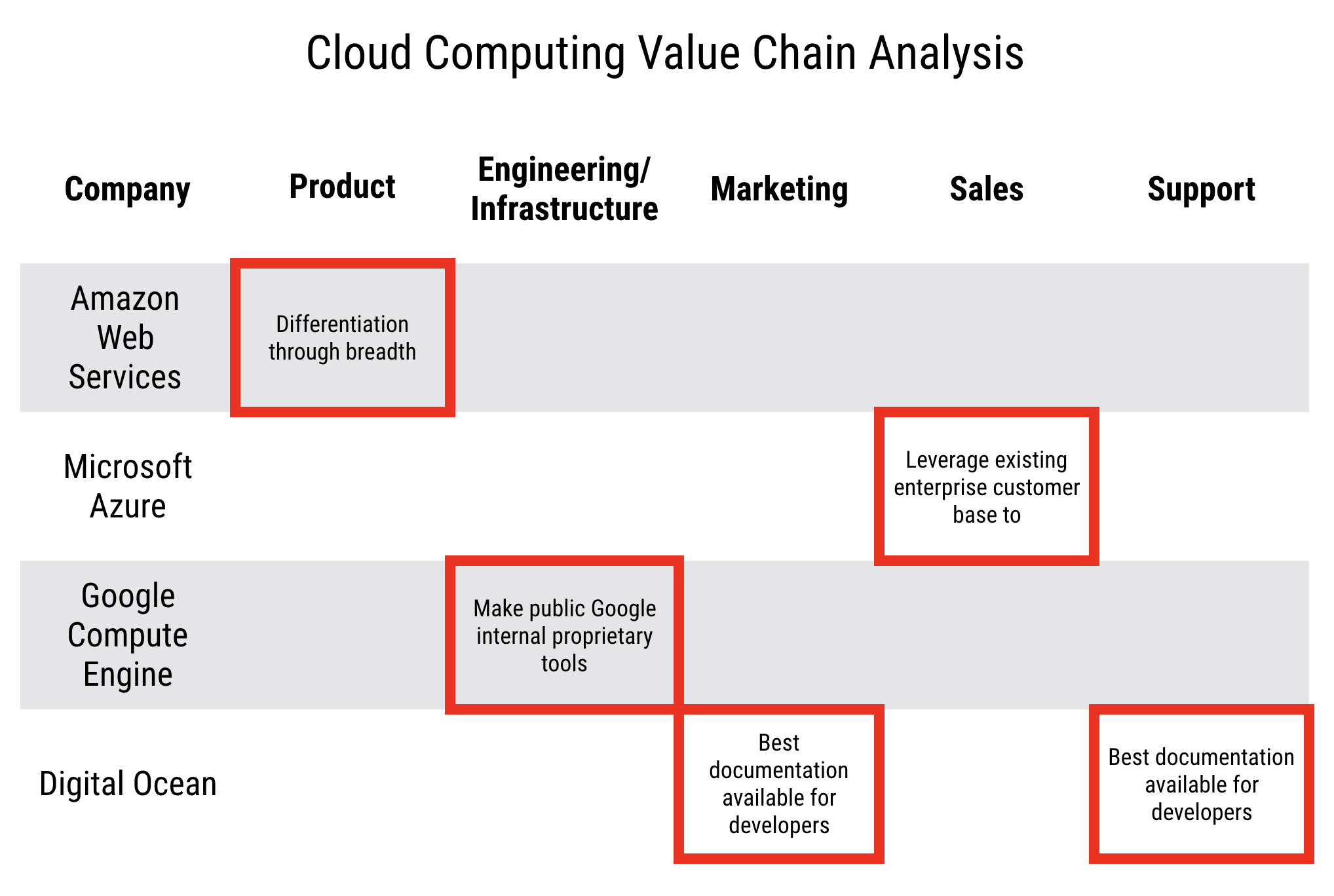
When I was taught Michael Porter’s value chain analysis, I learned to analyze at the industry level. A beer supplier sells to wholesaler sells to distributor sales to retailers sells to customer. But as I went back last night and reread Porter’s Competitive Strategy, I was surprised to learn that Porter’s intended value chain analysis to be used also at the business unit and at the company level.

Read more

The Unbundling of Excel

image

In January 2010, Andrew Parker wrote a post called the Spawn of Craigslist. Andrew identified companies that had built businesses by unbundling Craigslist. The vacation rentals link gave rise to AirBnB and HomeAway. Etsy dominated the arts and crafts for sale. This same unbundling is occurring to Excel.

Microsoft Office has more than 1 billion users globally. Assuming a 33% penetration of Excel, that’s a user population 300M users. Like Craigslist in the consumer world, Excel became the tool for nearly everyone to get stuff done at work.

Read more

Bias Against Creativity

In Bias Against Creativity, a team of researchers at Cornell discuss the bias against creativity they revealed in their study. Originally published in 2010, the article resurfaced yesterday on Hacker News. It raises the question of how to evaluate creative ideas and how to engender internal incentives to support creativity.

From the Cornell paper:

People often reject creative ideas even when espousing creativity as a desired goal. To explain this paradox, we propose that people can hold a bias against creativity that is not necessarily overt, and which is activated when people experience a motivation to reduce uncertainty.

Read more

Data Middleware - The SaaS Ecosystem's Response to Fragmentation

image

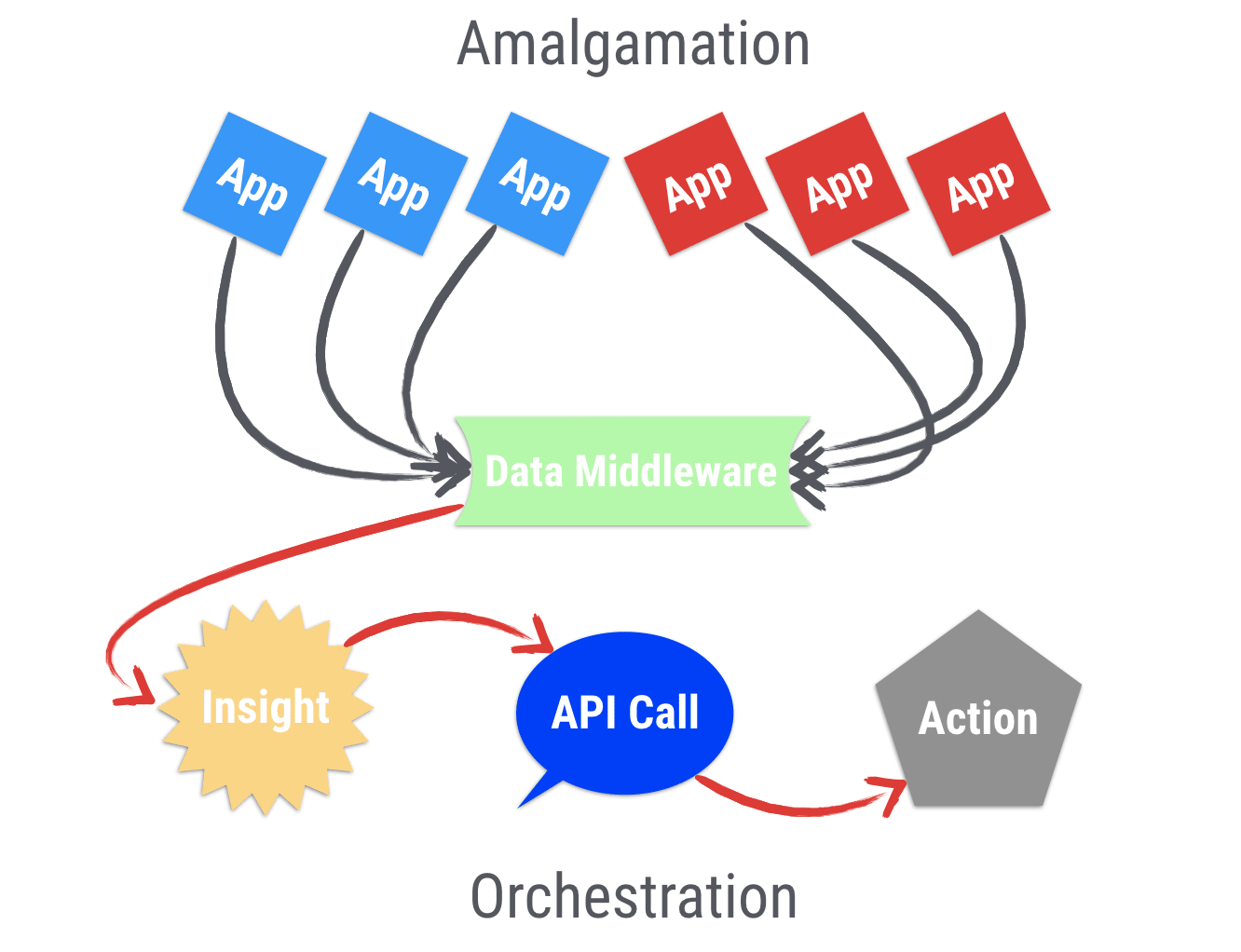
As the number of SaaS applications has exploded, the SaaS ecosystem is responding to data fragmentation with middleware. This isn’t the middleware of the early 2000s, which was focused on helping developers build software. This is middleware that is focused on helping end-users unify data from the vast numbers of data repositories now existent.

Ten years ago, sales teams captured basic data on customers and prospects. Names, addresses, budget, time frame. All of it collected over the phone.

Read more