Using Statements of Work to Accelerate Sales Cycle and Align Sales, Customer Success and Marketing

I met a really smart vice president of sales a few weeks ago working in a company with mid-market customer values in the $10-100k per year range. When I asked her about her sales process, she described how her team employs statements of work (SOW), which isn’t something I hear about very frequently in startups, despite the fact they are very powerful sales tools.

Statements of work describe the proposed working relationship between a vendor and customer. These are common in government contracts and in the advertising agency world where they are called creative briefs, among other places. But I don’t run across them very often in SaaS.
Read more

The Obscure Economic Idea Behind SaaS Pricing Challenges

image

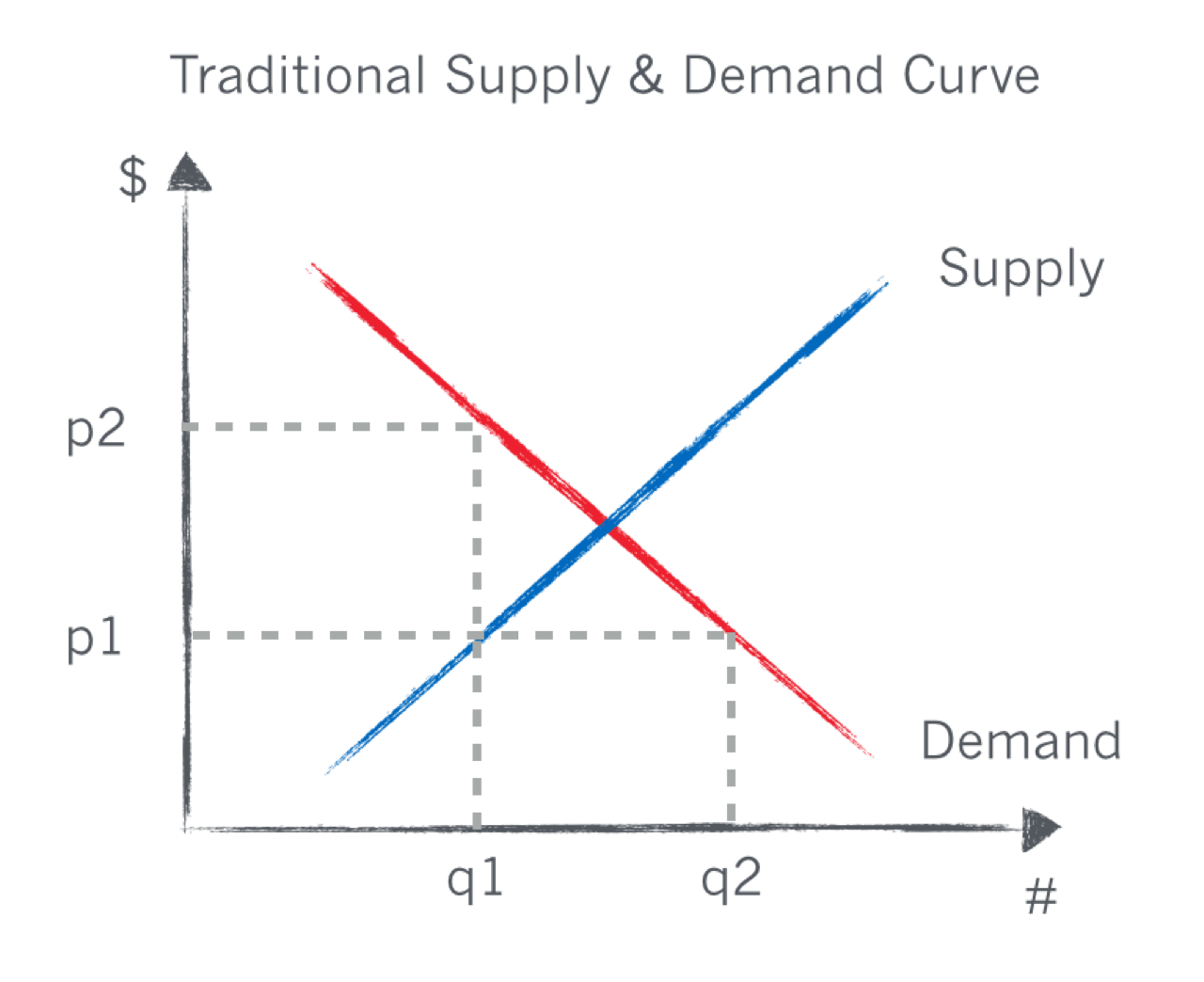
Startups struggle to set the right price for their products because pricing dynamics in the field don’t obey the laws taught in the classroom. The standard supply and demand curves, drawn above, imply that as price increases demand decreases; that buyers act rationally and that this law is immutable. But this simply isn’t the case. Buyers in the market place violate the traditional supply and demand model all the time.

Read more

The 9 Marketing Disciplines of Great SaaS Companies

image

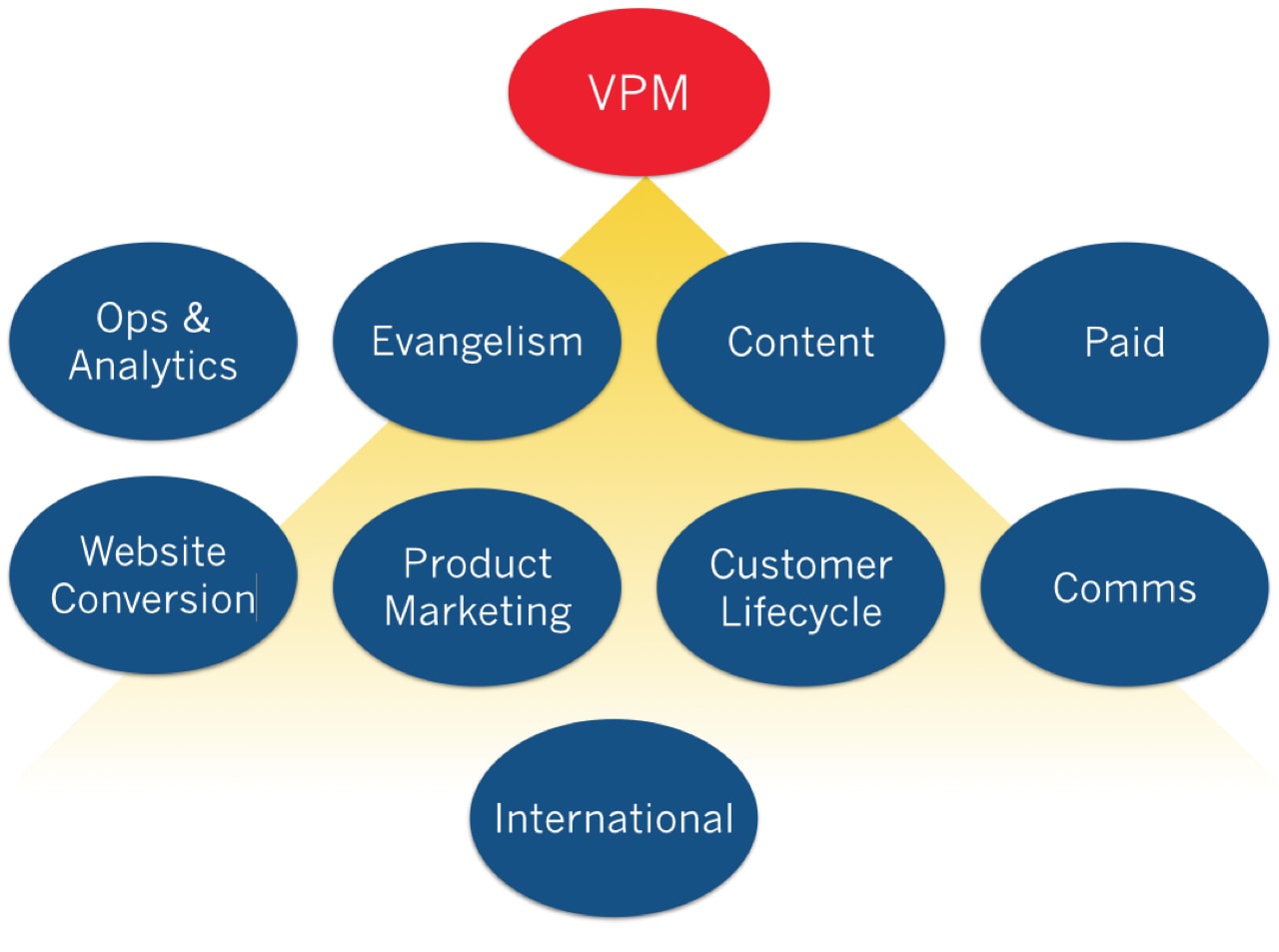
Bill Macaitis, the former CMO of Zendesk, articulates how a SaaS marketing team should operate better than anybody else I’ve met. At a recent Point9 conference, Bill outlined the 9 marketing disciplines of great SaaS companies and how they fit together to create a marketing powerhouse. I’ve copied my notes from Bill’s talk below.

Ops & Analytics Team
The operations and analytics teams is the first marketing team every SaaS company should build because this team erects the experimental infrastructure for determining which marketing tactics are viable. Over time, it also becomes the largest team.

Read more

Why Revenue Isn't the Most Important Financial Metric for Startups

image

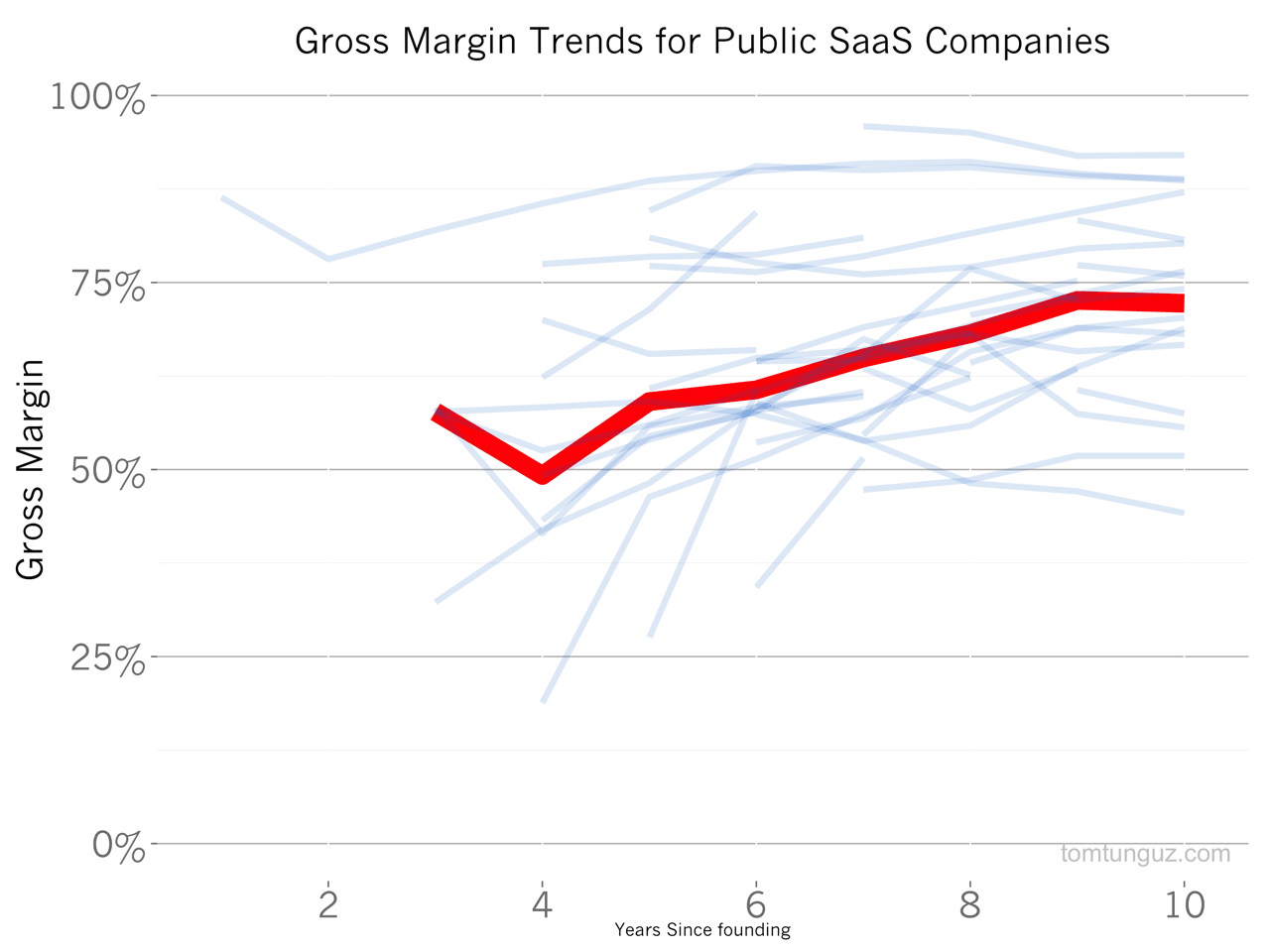
Of the ten most important metrics on a startup’s financial statements, revenue might seem to be the most important. But it isn’t. Gross margin matters more because it is directly tied to a company’s ability spend to grow and achieve profitability.

Imagine two startups, both selling products at $1M price points. The first has 5% gross margins and the second has 95% gross margins. The first company will be able to spend about $50k per sale on Sales & Marketing, Research & Development and general operational costs. The second company will deploy $950k across those departments.

Read more

The Fastest User Interface

image

In “Time to Hang Up on Voice,” Sam Lessin argues voice isn’t the interface of the future for three reasons. First, voice is hard to use in public places because background noise complicates interpretation, and because many people are in earshot, voice isn’t private. Second, speaking to computers is less efficient than typing or using gestures. Third, keyboards are better tools for editing text than voice.

Read more

Benchmarking SaaS Startup Efficiency with Revenue per Employee Metrics

image

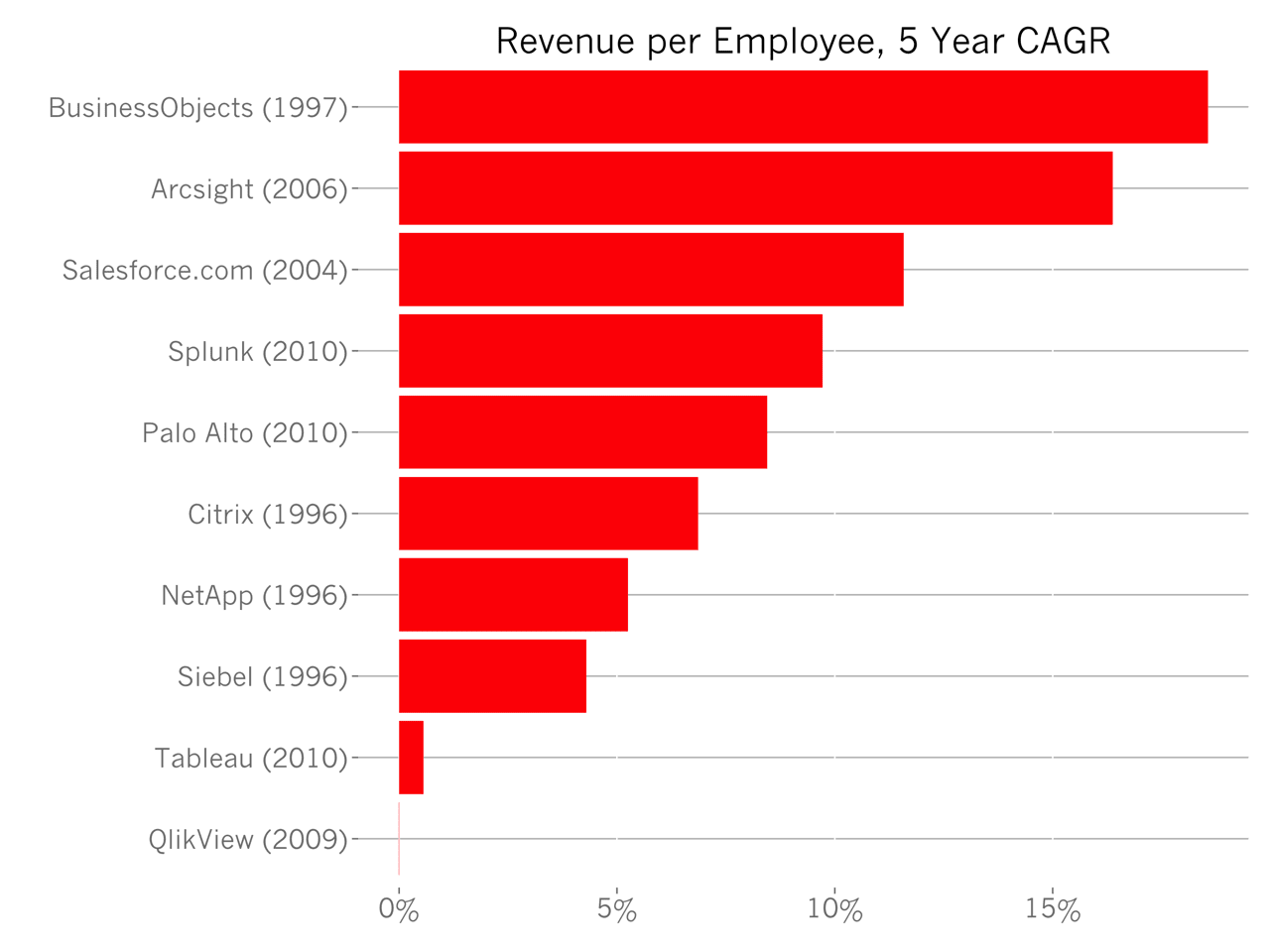
In the past, we have benchmarked the revenue per employee of large publicly traded SaaS companies and determined that the average is about $200k of revenue per person. But, that analysis examined revenue per employee that only one point in time.

As Jesse Hulsing pointed out to me, examining this figure over five years reveals quite a bit about the health of the business. Jesse was kind enough to provide data on a handful of category defining enterprise companies, which I’ve used in this analysis.

Read more

The Four Key Trends of the Startup Acquisition Market

image

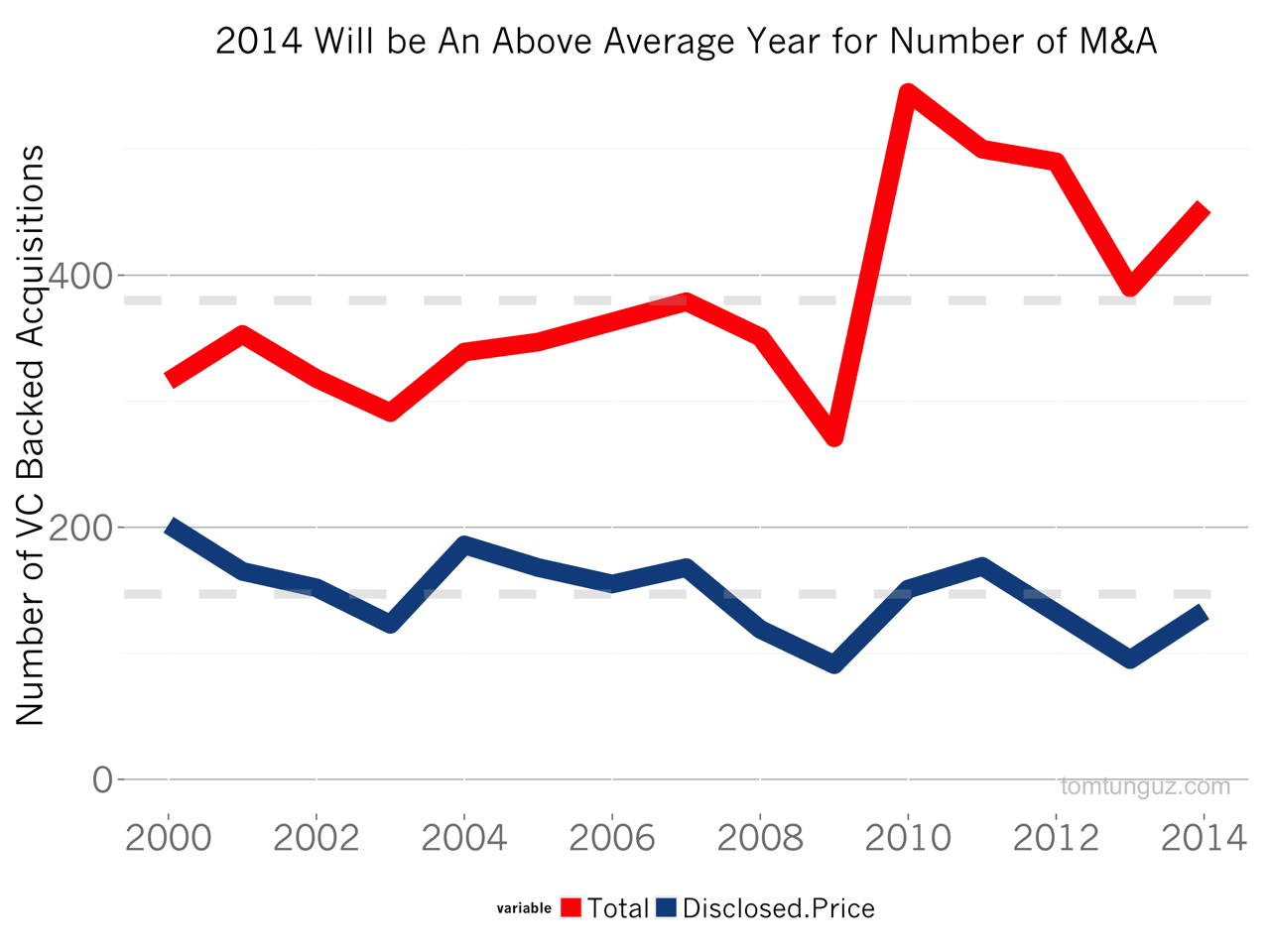
The startup acquisition market is poised to have its best year in nearly a decade. If acquirers maintain the same pace from the first nine months of the year through Q4, more than 450 venture-backed startups will have been acquired, generating more than $25B in proceeds.

Given this state of affairs, it’s a good time to take stock of the major trends in the startup market. I’ve observed four:

Read more

Benchmarking WorkDay's S-1 - How 7 Key SaaS Metrics Stack Up

This post is part of a continuing series evaluating the S-1s of publicly traded SaaS companies in order to better understand the core business and build a library of benchmarks that might be useful to founders.

Today, we’ll explore one of the enterprise behemoths, both in market cap and average revenue per customer: WorkDay. WorkDay envisions being the place of record for all Human Resources data for companies with more than 5,000 employees. WorkDay has grown explosively, but in a very different manner than any of the previous companies we’ve analyzed (Veeva, Hubspot, Zendesk, Tableau, MobileIron or Box). Unlike these other companies, WorkDay has employed a huge professional services team in addition in investing massively in their R&D to create a broad suite of products.

Read more

The Key Financing Attributes of Startups in the Billion Dollar Club

image

The WSJ published a recent chart of the 49 startups with billion dollar valuations. According to their research, there have never been as many privately held companies with such high valuations ever. The absolute number of these massively valuable companies alone is amazing. Ten years ago, most of them would have gone public by now. But what other insights can we tease from the data about these very special businesses?

Read more

Why Personas Are Critical Product Development and Go To Market Tools for Startups

Yesterday, I attended an event held by the IT team of a major bank. When the data analytics team took the stage, I listened with great interest as the chief of the group described their internal struggles with data and the areas where startups might help them achieve their goals. He articulated his team’s needs and goals in a very concise way by bucketing his users into three personas. I’ve summarized these personas below:

Read more