The Importance of Hometown Investors for Startups

image

I was eight years old and running with a dime in my hand
Into the bus stop to pick up a paper for my old man
I’d sit on his lap in that big old Buick and steer as we drove through town
He’d tousle my hair and say son take a good look around. This is your hometown

My Hometown by Bruce Springsteen

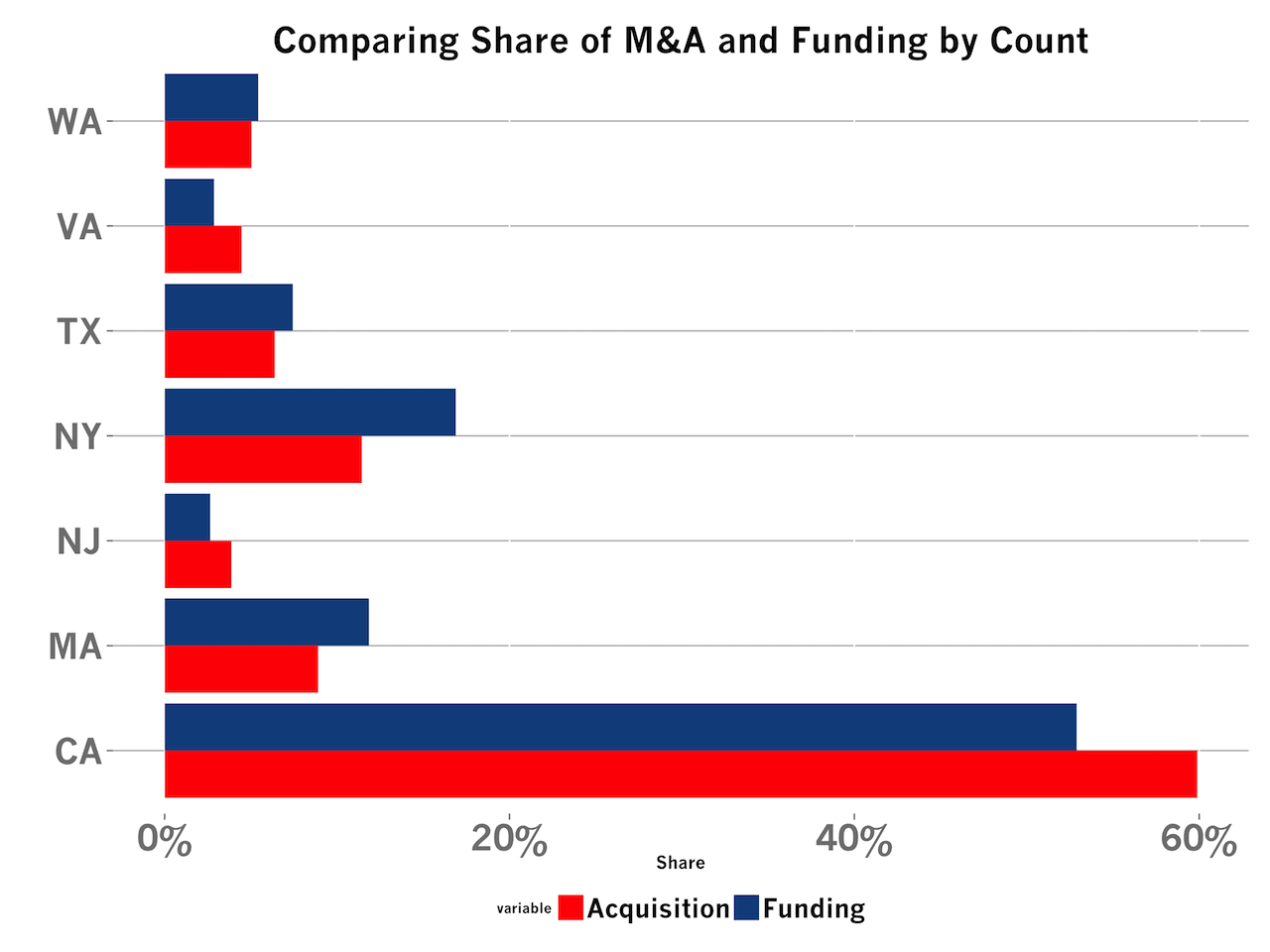
Hometown investors, the local group of angels and VCs within a startup community, are an essential part of startup ecosystems. They can be great connectors, providers of advice and most importantly, suppliers of the venture capital to enable startups to grow. I was curious if hometown investment patterns differ across the 10 major cities in the US.

Read more

The Marketing Math Behind Scaling a SaaS Salesforce

A terrific SaaS VP of Marketing once told me, “If the sales team is focused on hitting this quarter’s revenue target, then the marketing team ought to be focused on next quarter and the following quarter.” In SaaS companies, one of the marketing department’s primary responsibilities is generating sufficient customer interest to enable the company to achieve their revenue targets.

If that’s the case, determining how and when to scale a sales team in a SaaS company is contingent upon the marketing team’s metrics. It would be a mistake to hire a swath of salespeople, assign them quotas and then fail to provide them with enough inbound lead flow to succeed. In that case, marketing would be the limiting factor in the business.

Read more

The Insularity of Silicon Valley

image

Earlier this week, the Commerce Department announced US GDP in Q1 2014 fell by 3%, the most in a quarter since the recession. I’ve linked to the WSJ’s chart depicting the trend above. The decline was 3x greater than forecasted. Silicon Valley seems unfazed.

As I wrote about earlier this year, we’ve seen a decline in the public markets of about 25% in consumer stocks and 45% in enterprise stocks. But since that time, public tech companies have witnessed a small recovery. Both enterprise and consumer companies are up 18% from their 10 month lows.

Read more

Why Smart Watches Could be a Huge Trend in Mobile

Google revealed many novel projects and products at yesterday’s Google IO Conference. At the moment, I’m most curious about the development of Android Wear, in part because of the beautiful Motorola 360 watch and in part because I suspect connected watches bring substantial change to the mobile device market.

It’s easy to write off watches as a niche product. But the addressable market of Android users is now large enough that even a single digit market penetration means tens of millions of users and a potentially interesting new platform for startups to build applications upon. Android counts 1B monthly active users on the platform. A 5% marketshare implies 50M watch users. The total mobile market is now sufficiently large that even niche segments amass substantial user bases. For example, phablets, phones with 5 inch screens or larger which are frequently scoffed at, now represent 21% of Android sales.

Read more

The Five Forces Shaping the Fundraising Market

Last week, the team at Wharton in San Francisco invited me to speak at the Entrepreneurs Workshop. I chose the topic of the “Five Forces Shaping the Fundraising Market” and prepared a Mary Meeker style presentation, with a chart and a bullet point on each slide, to illustrate the forces in tension. It was great fun.

I’ve embedded the slides from the presentation above and will link to the video once it’s live. To help provide some context to charts, I’ve summarized the five forces below. These are the five major forces shaping the fundraising market today:

Read more

The Hottest Startup Sectors

image

There’s a cyclicality to fundraising. Certain sectors rise quickly and become competitive while others decline. I’ve been wondering about the state of the market. First, which sectors are in vogue now in Seed investing and Series A investing? Second, is there a delay between the sectors attracting seed capital and Series A capital? In other words, do seed investors see trends before VCs do?

The chart above shows the trends in the seed investment market. This data is Crunchbase data filtered for the largest 20 or so sectors from 2010-2013. Each graph shows the fraction of relevant seeds in a particular segment over time.

Read more

The Disruption Debate is Focused on the Wrong Ideas

Jill LePore’s New Yorker polemic “The Disruption Machine” attempts to debunk the incredibly popular Innovator’s Dilemma, a theory written by HBS professor Clayton Christensen. I’ve been reading the debate around it with some interest. It’s becoming a really interesting conversation but I think the debate is focused on the wrong thing - whether or not these ideas are absolutely correct, even axiomatic. They aren’t always true. But that doesn’t mean these concepts are useless. Quite the opposite.

Read more

The 3 Minute Technique for Brainstorming Your Startup's Product Roadmap

Recently I met a startup founder who explained a technique for building his product roadmap in a novel way. “We research what our users are doing three minutes before they start using our product and the three minutes after.” I like the idea because it is a simple and ingenious mechanism for brainstorming product ideas, and this type of product development exploration evokes empathy from a product team, which is a the first step of the Stanford d.School and IDEO’s Design Thinking Processes.

Read more

The Great Unbundling of Email

Since it was first written in 1982, the Simple Mail Transfer Protocol, the mechanism for sending emails, has remained largely remained unchanged. Today SMTP delivers 70 trillion emails to 5B inboxes each year. Overwhelmed by tens of thousands of emails, most of us can sympathize with Nick Bilton, who said:

There is no escape: Email is probably most invasive form of communication yet devised.

Unlike SMTP, email is changing very quickly. In particular, email is undergoing a great unbundling, similar to Craigslist’s, in which startups are seizing upon important use cases of a generic service and building a better, dedicated version of it as a stand-alone company/product. This is happening to a certain extent in consumer products like ephemeral messaging (SnapChat) and location sharing (Glympse).

Read more

How Much Should Your Startup Spend to Grow?

Several weeks ago, I wrote a post about the Optimal Contract Value for a SaaS company. I wondered whether startups serving enterprises might be more or less valuable than those serving small-to-medium businesses (SMBs). Interestingly, the data showed there was no optimal customer value to build a publicly traded SaaS company.

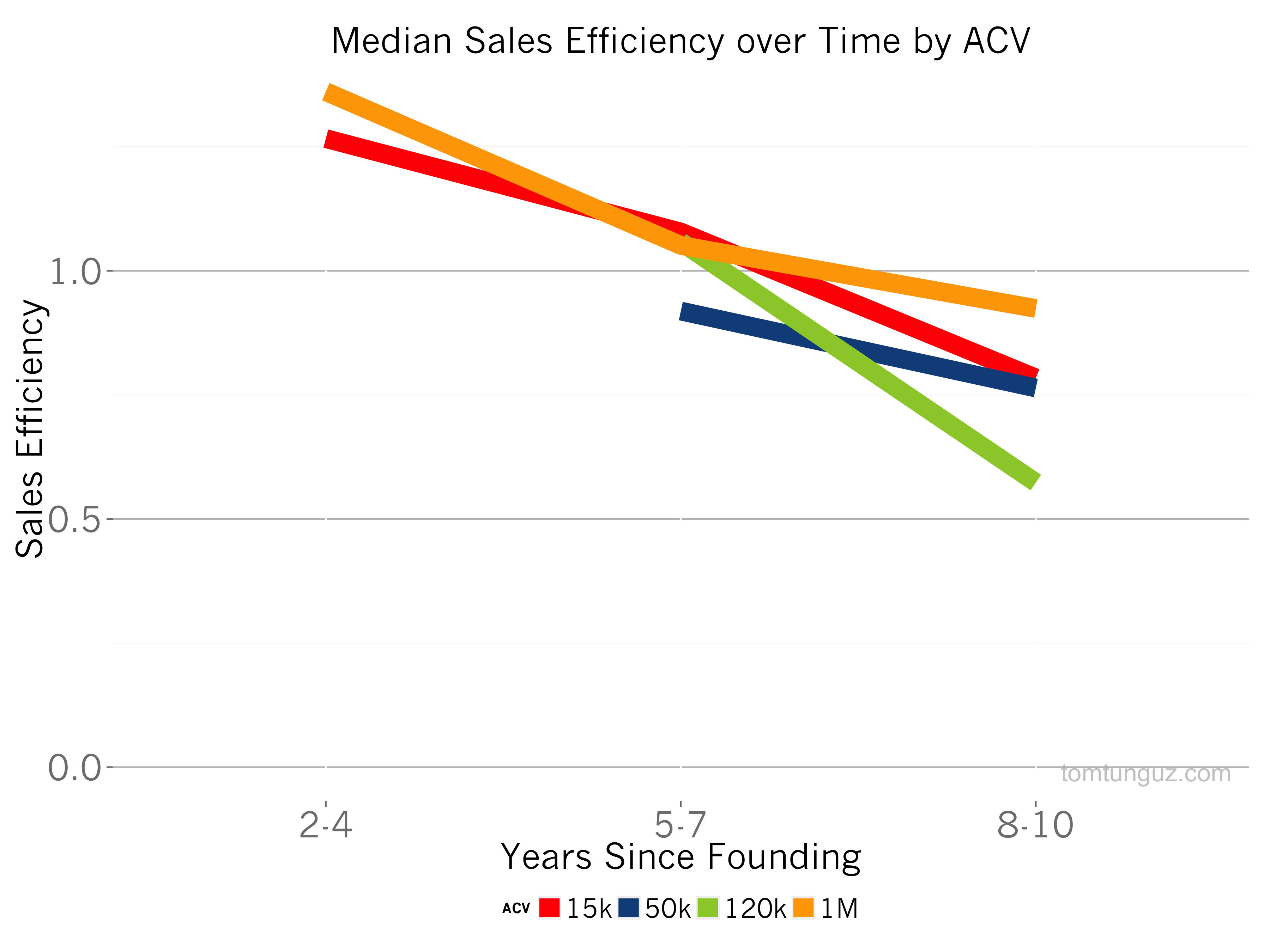
Having written that post, I began to wonder about other differences between different types of SaaS companies. In particular, do SaaS startups serving SMBs spend more or less than their counterparts in the mid-market and enterprise? And which type of SaaS startup grows the fastest?

Read more