Startup Best Practices 7 - How to Use Andy Grove's Stagger Chart to Build Predictability

Predictability is sexy. Startups that have tuned their growth engines well enough to accurately forecast their growth, presuming these growth rates are attractive, will command much higher valuations in the market, simply because there is less risk in the company. As a result, investors prize these companies disproportionately.

The challenge with predictability is predictability isn’t an end state. A business doesn’t become predictable one day and remain in that state in perpetuity. Rather, predictability is a discipline that must be practiced by managers and management teams within startups.
Read more

The Worst Time of Year to Raise A Seed Round

image

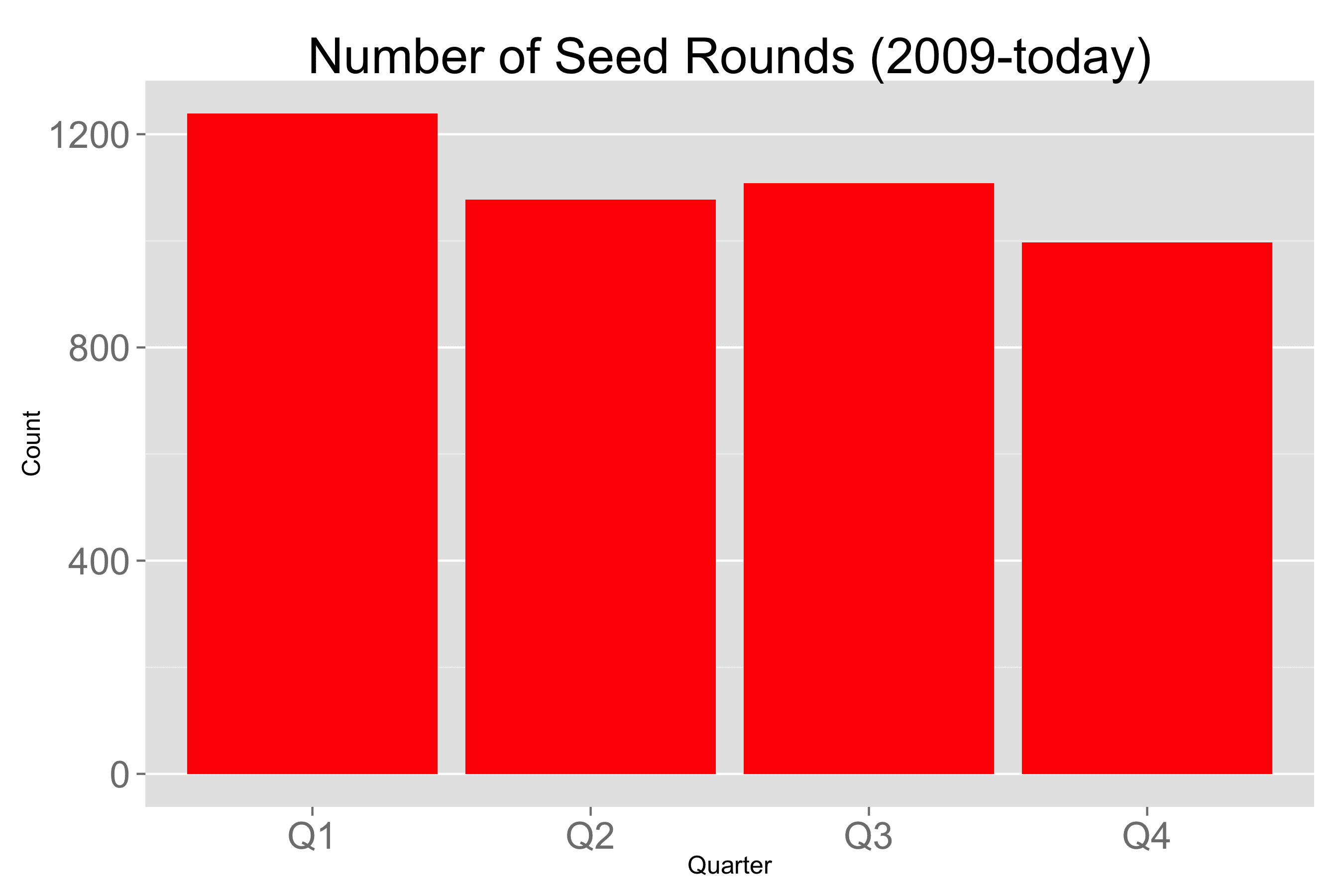
Has there been optimal time of year to raise a seed round? The chart above shows the number of seed rounds by quarter of the year from 2009-2013. At first blush, it would seem that the first quarter of the year is the most attractive period to raise a seed round. But that’s a faulty conclusion.

First, there’s no statistical difference between the number of rounds raised in each quarter, according to a t-test on the four years of Crunchbase data I tested. Second, there is a meaningful difference in the size of rounds by quarter. The chart below depicts the mean and median size of seed rounds by quarter.

Read more

9 Books Every Entrepreneur Should Read

Some of the best content to be found about startups is locked in books. Thomas Kjemperud asked me yesterday for a 140 character recommendation of one book for founders. Reducing my list to just one and condensing an argument for why founders ought to read it in just 117 characters was just too great a challenge for me. Instead I’ve written a blog post about the nine favorite books I’ve read over the last five years have helped me understand startups and the processes that make them successful.

Read more

The Current State of the Consumer Internet Market

image

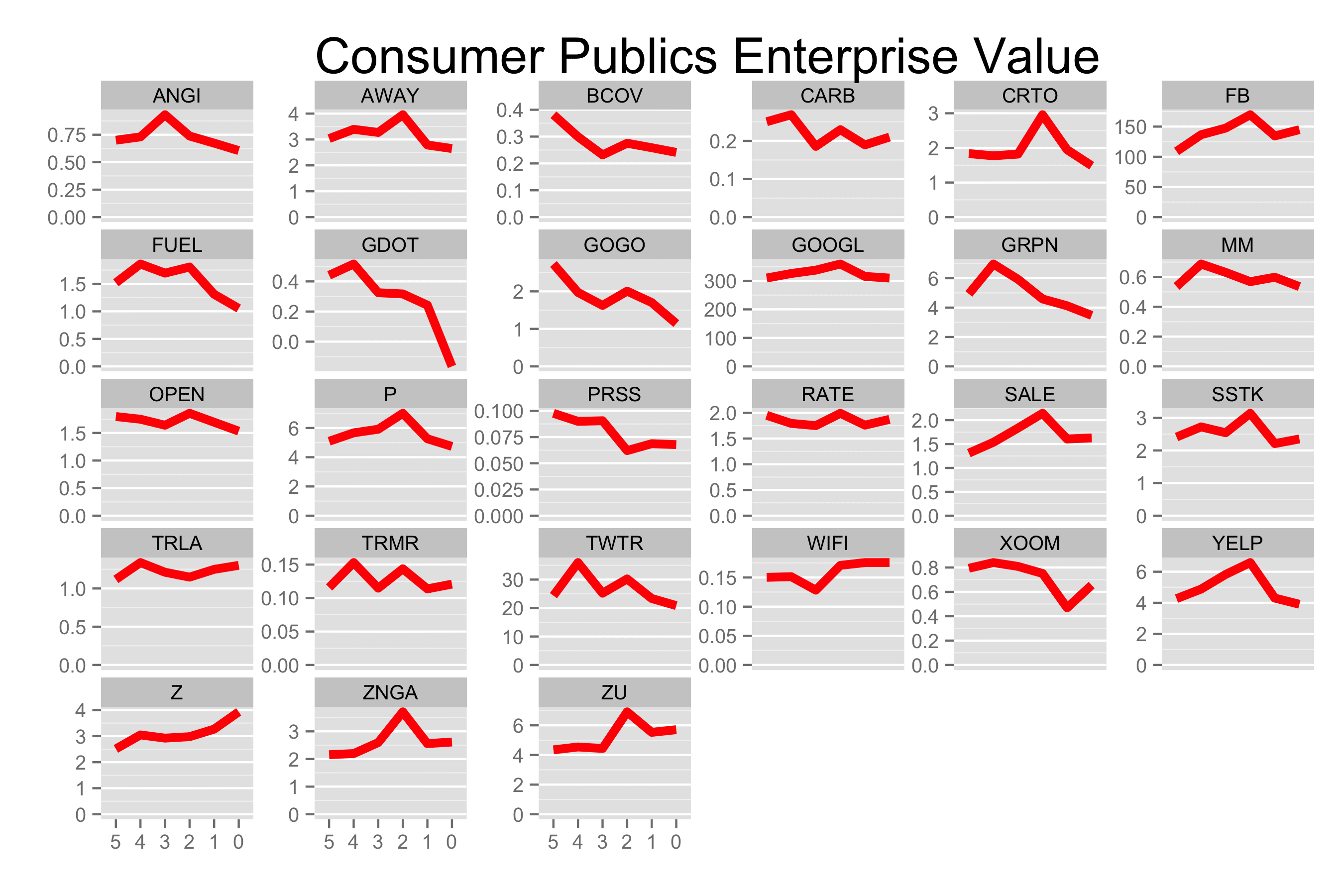
Last week, we reviewed the state of the public SaaS market and observed the average company had lost 33% of its value from their highs. How have newly public consumer companies fared in the same environment and what does that mean for the tech industry broadly?

I created a basket of most of the venture-backed consumer IPOs since 2010 and added bellwethers Facebook and Google. Above is a chart of these companies enterprise value (market cap minus cash) over the past six months. In that time period, the average public consumer company has fallen 25%.

Read more

A Framework for Maximizing Startup Marketing Effectiveness

image

At a board meeting last week, one of the VPs of Marketing I’m lucky to work with presented a brilliantly simple way of explaining the evolution of a startup’s marketing tactics. I’ve drawn a diagram of the idea above, which borrows heavily from McKinsey’s 3 horizons.

Startups have many different marketing options at their disposal: SEO/SEM, print, radio, TV, mail, affiliate, content marketing…The list goes on and on. Faced with this litany of options, how does a startup maximize their marketing effectiveness?

Read more

Surprising Trends in Startup Founder Equity Stakes

image

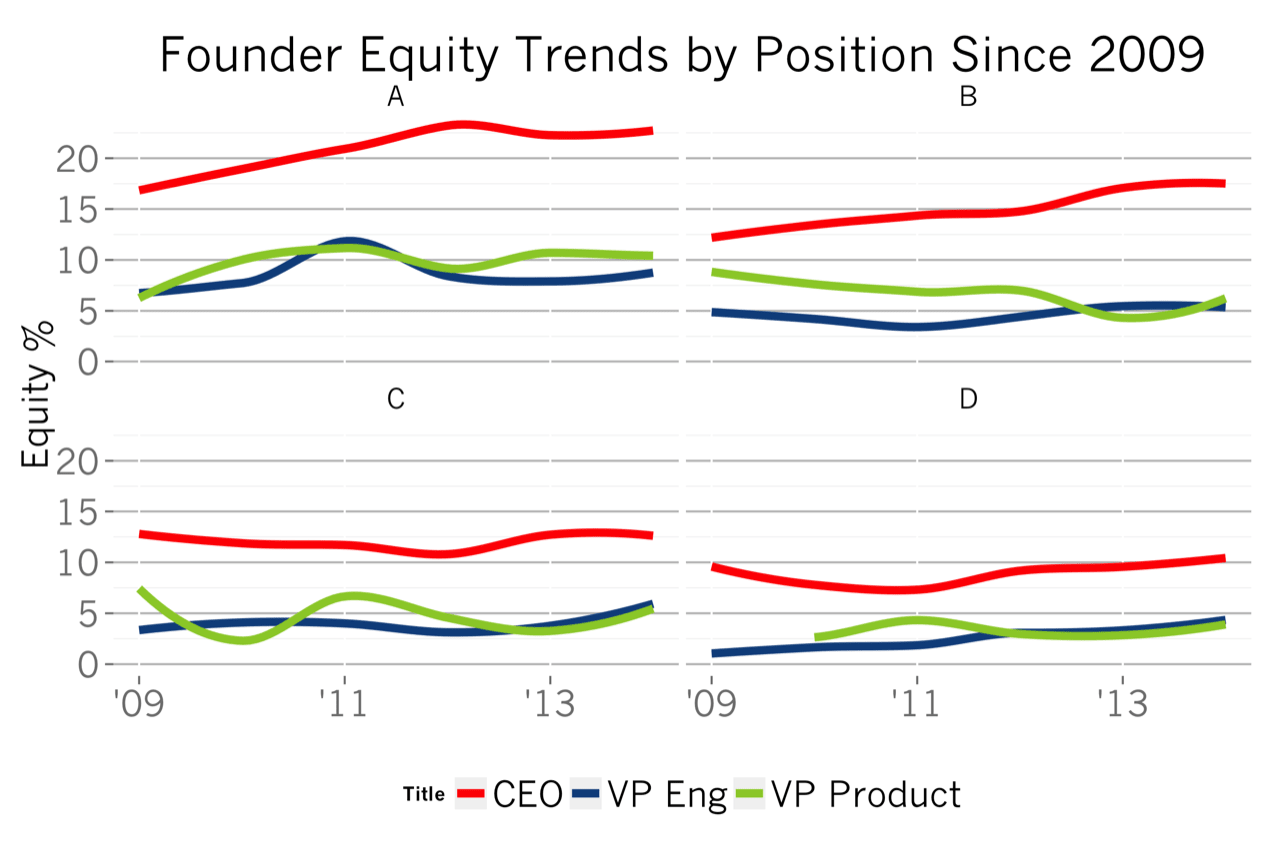
Earlier this week, I wrote about the increase in cash compensation and decline in equity grants to VPs of Engineering and Product in startups. I received a lot of comments about the analysis, and in particular hypotheses to explain the data. I dug a bit deeper into the data set to find an explanation.

Founding employees keep more equity today than ever through the Series A and Series B. On average, founders retain 30-33% more equity than 4 years ago through those first two rounds of institutional investment. For the statisticians out there, this change is statistically significant with greater than 99% confidence on an average yearly sample size about 200+ data points per year per role.

Read more

What's Happening to the SaaS Market?

image

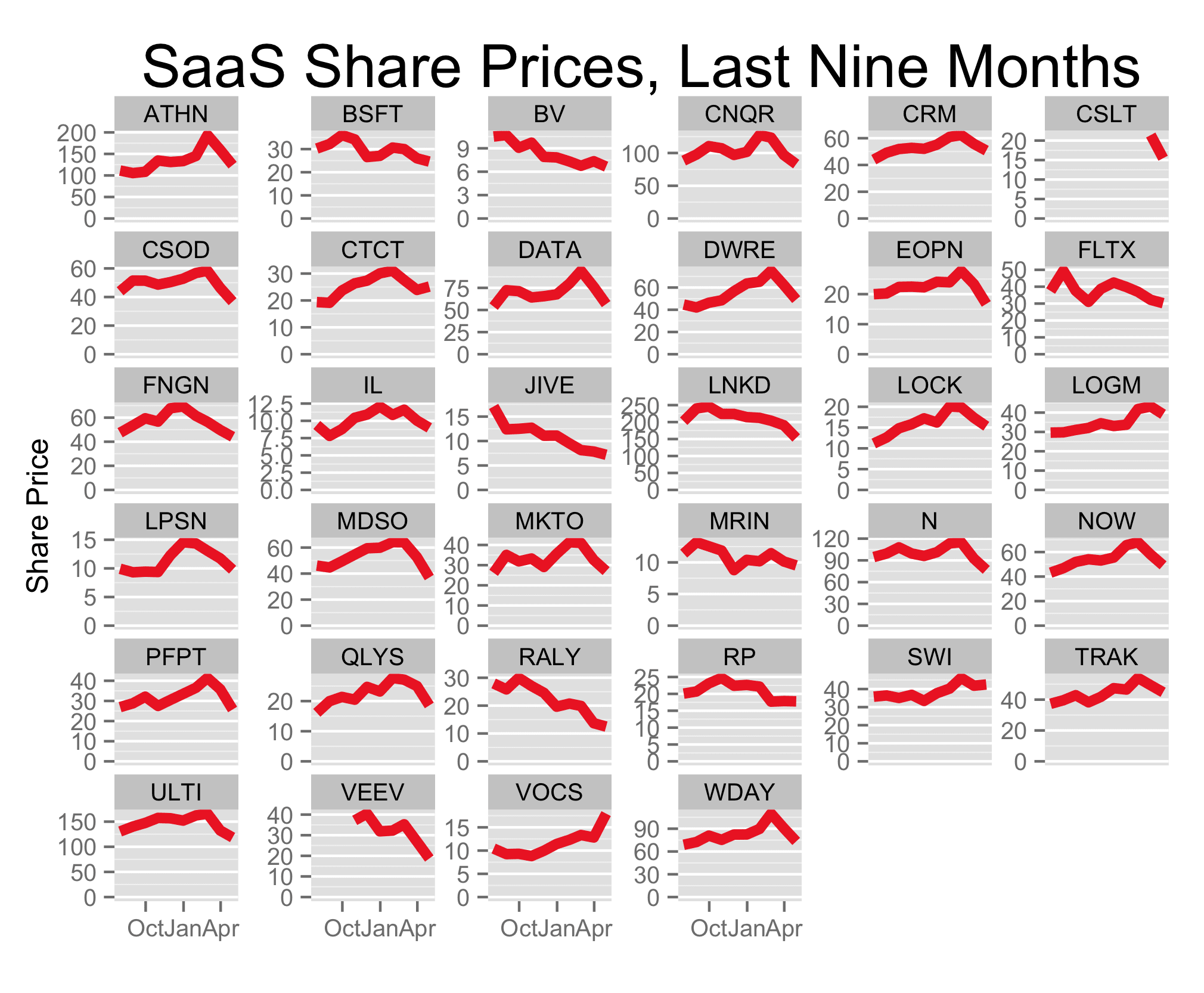
What a difference three weeks make! Since I wrote “The Correction in SaaS Company Valuations”, SaaS company valuations have continued to fall. As a basket, SaaS companies have fallen 33% from their highs (median), wiping all the gains for the last year.

To make that point more explicit, below I’ve charted the total value of public SaaS companies over the last ten months. In that time period, the aggreggate enterprise value has fallen from greater than $150B to $117B today.

Read more

The Surprising Compensation Trends of Startup Executives

Since 2008, there has been a secular trend to increase cash compensation and decrease equity to startup management teams. Tho two tables below tell the story for VPs of Engineering (VPE) and VPs of Product (VPP) across the US broadly and in the SF Bay Area.

VPEUSSF
Cash+10%+16%
Equity-19%-17%
VPPUSSF
Cash+26%+8%
Equity-31%-25%

In the past 5 years, VPEs have benefitted from a 10 to 16% increase in their cash compensation, but have seen their equity grants fall by 17-19%. The same pattern holds true for VPPs: an 8-26% increas in cash and a 25-30% drop in equity grants.

Read more

Quantifying the Cost of a Bad Hire

image

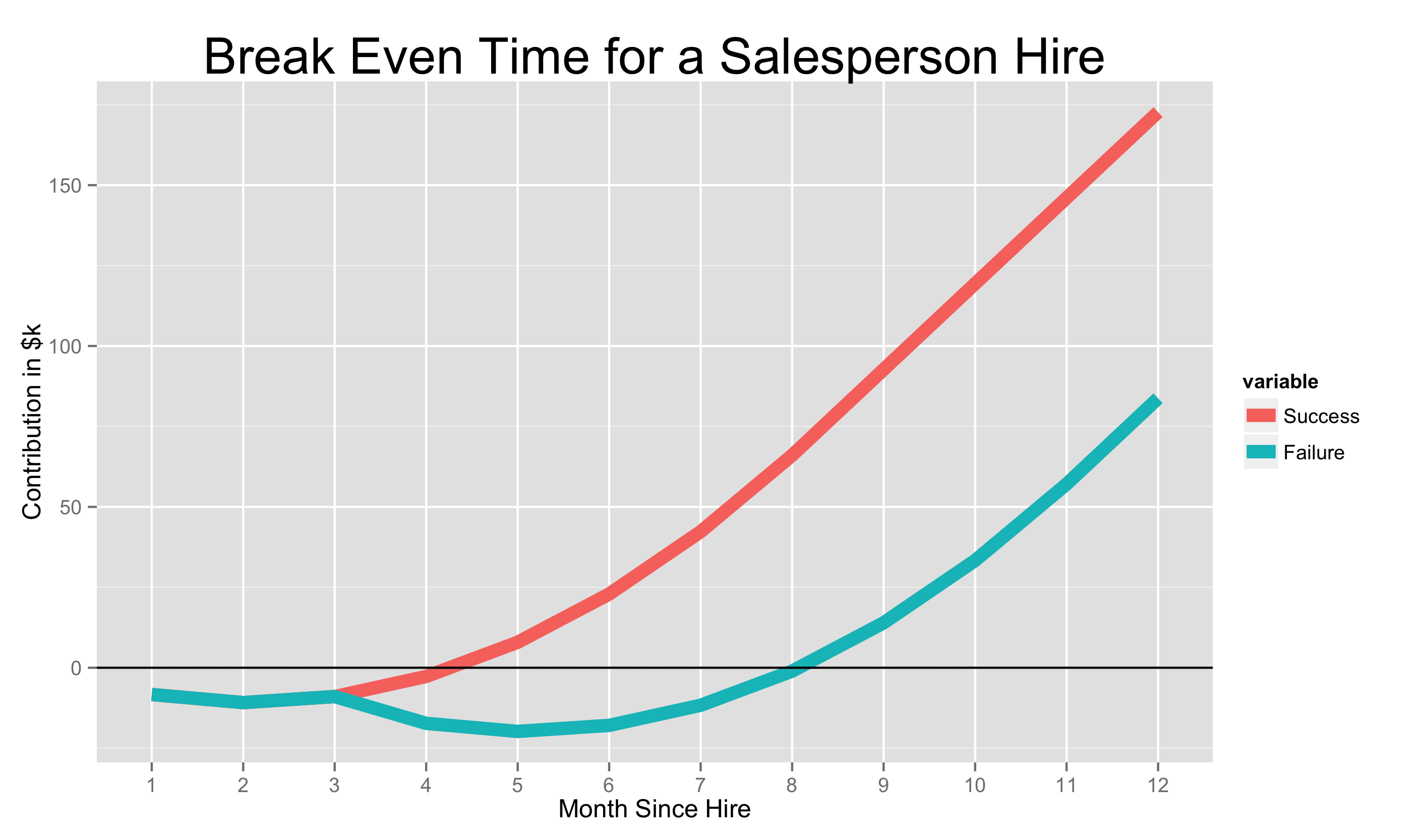
The chart above compares the contribution of two hypothetical inside sales people with $400,000 quotas to an early-stage startup’s finances. In this case, contribution is the 18 month revenue of sold customers tallied cumulatively minus the salary costs of $100k annualized of the sales person. I’ve modeled a six month linear ramp for the sales person to reach 100% of quota.

Read more

Quantifying a SaaS Startup's Revenue at Risk

One of the key metrics that I don’t think gets enough notice when reviewing the health of a SaaS business is revenue-at-risk or RaR. For SaaS businesses with quarterly or annual contracts, each month some subset of the customer base’s contracts must be renewed. The RaR is the sum of the revenue from these customers in a given month or quarter. RaR is a useful measure because it captures the company’s opportunity to minimize lost customer revenue. Identifying customers at risk and proactively engaging them, cultivating a relationship and providing them account support can meaningfully improve a SaaS company’s churn rates.

Read more