Fighting for Context

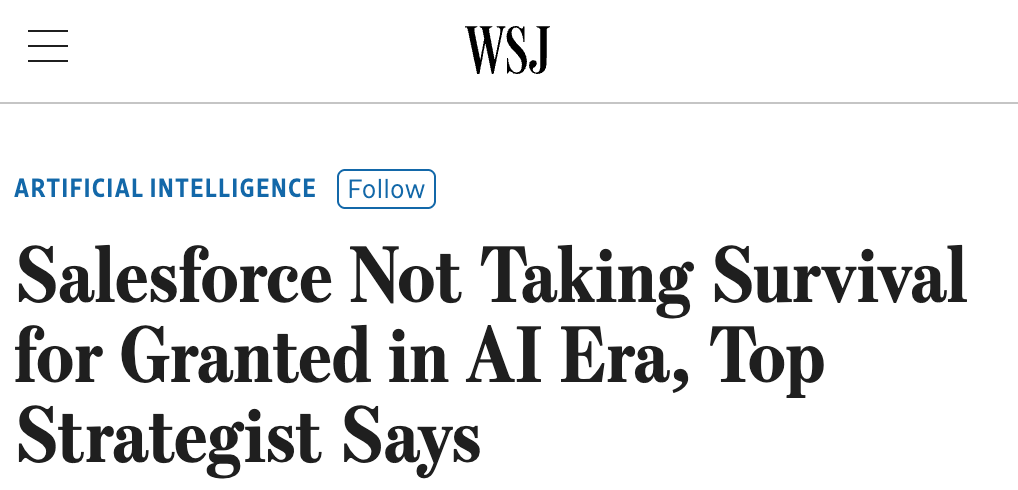
Systems of record are recognizing they cannot “take their survival for granted.”

One strategy is to acquire : the rationale Salesforce gives for the Informatica acquisition.
image

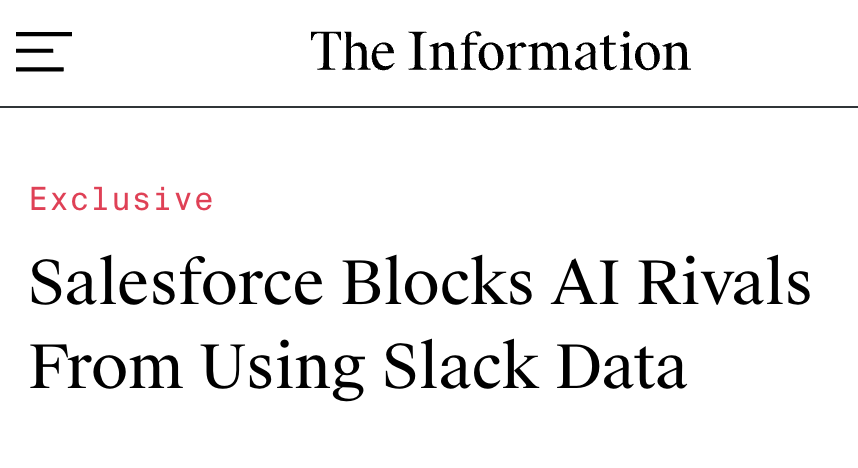
Another strategy is more defensive - hampering access to the data within the systems of record (SOR).
image

Unlike the previous software era where SORs built platforms on top of themselves to develop broader ecosystems (in Salesforce’s case Veeva & Vlocity), the AI shift does seem to be more defensive.
Read more

DuckLake - Subsecond Latency on a Petabyte

DuckLake is one of the most exciting technologies in data.

While data lakes are powerful, the formats that manage them have become notoriously difficult to work with.

“I think one of the things in DuckLake that we managed to do is to cut, I want to say like 15 technologies out of this stack.”

How does it achieve this? Instead of building a custom catalog server, DuckLake uses a simple, elegant idea: a standard database to manage metadata. It uses a database for what it’s good at. This clean architecture allows DuckLake to manage huge data lakes—with millions or even billions of files—across AWS S3 or Google Cloud Storage.

Read more

The Data Decacorn Derby

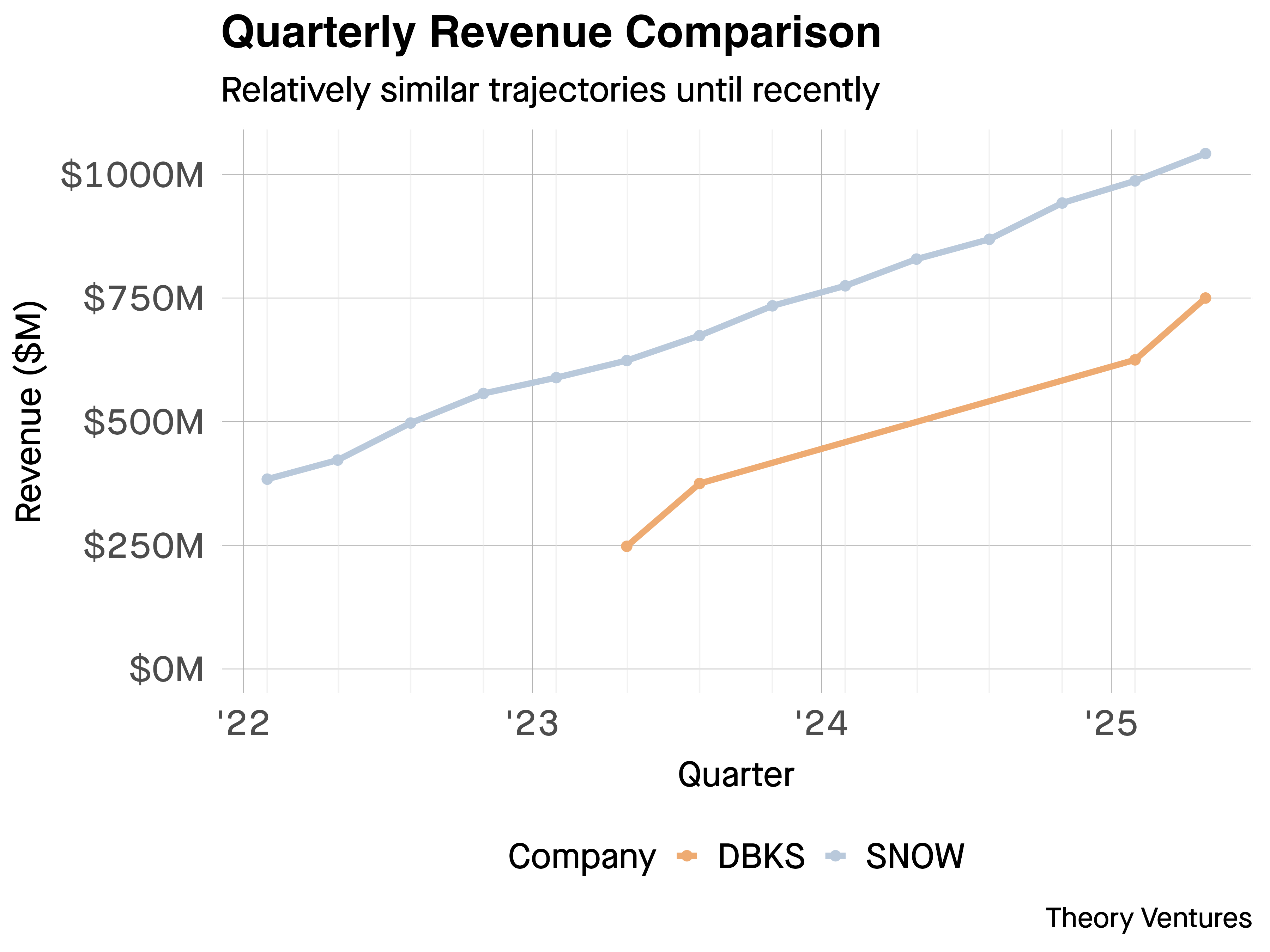
Databricks seems to be closing the gap on Snowflake faster than expected.

Last week Databricks shared some important updates on their business which allows us to compare the progress of the two companies.

image Quarterly revenue between the two company shows nearly identical slope, two parallel lines. Snowflake recently exceeded $1b in quarterly revenue mark while Databricks just touched $750m and is targeting $925m for the next quarter.
Read more

The Coming Wave of Acquihires

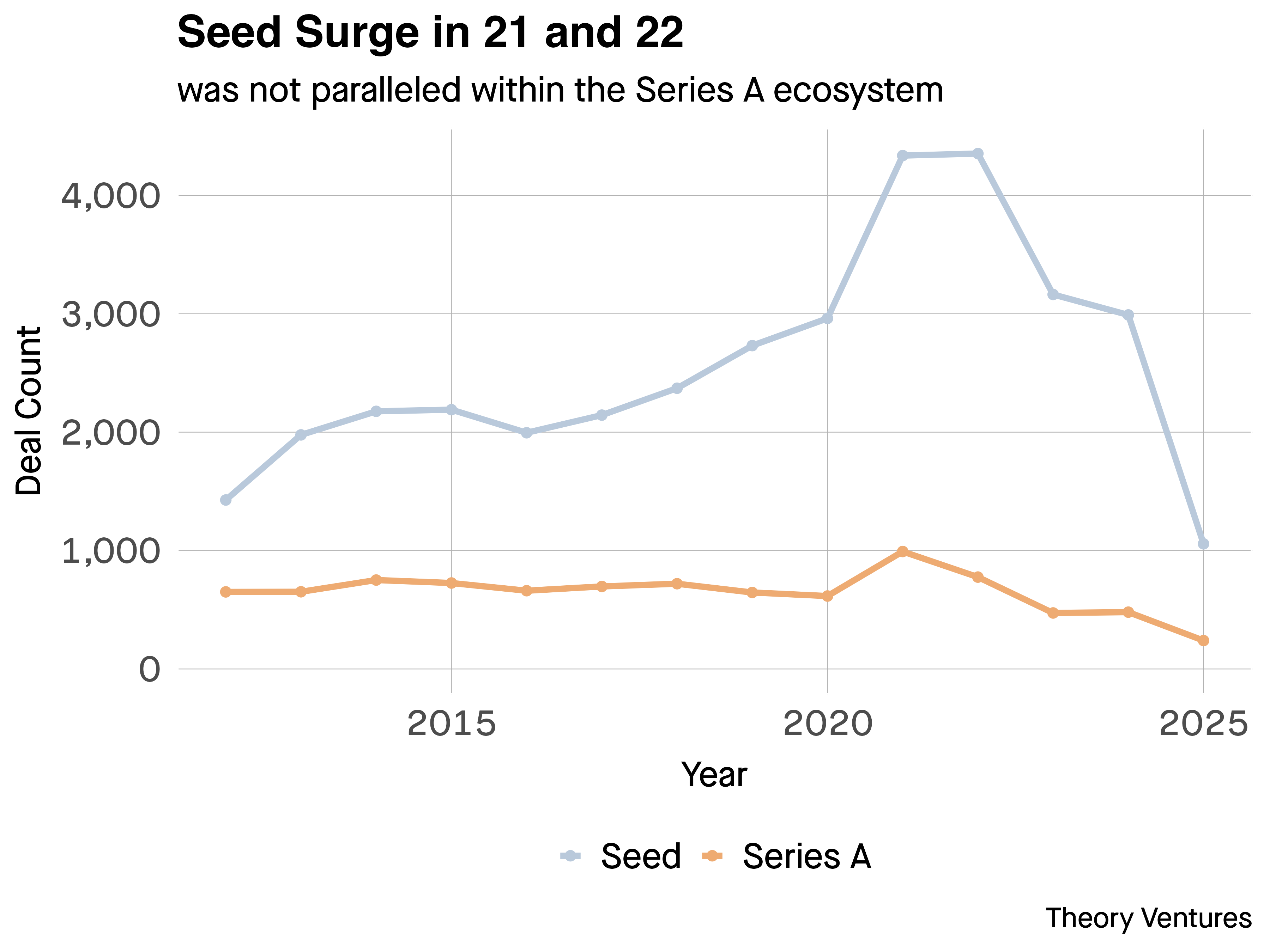
The Seed Surge of 2021 will lead to a raft of acquihires. image

In 2021 the total number of US software & AI seeds jumped from 2900 to 4300 - a 49% jump. Seeds fell to about 3000 creating a seed tabletop.

Series As moved in lockstep both on the way up and the way down - creating a squeeze.

Read more

Partnering with Maze Security

Doctors and security research have more in common than you might think.

Doctors defend human bodies against an ever-shifting landscape of viruses & infections. Security researchers do the same thing, but at massive scale—protecting thousands of servers instead of a single patient.

The doctors’ responsibility are to defend a human body from an ever-shifting landscape of potential viruses and infections. Each human body is slightly different. The research around human health evolves all of the time as well as the research around potential infections.

Read more

Patterns Across 5 Years of YC Investing

Where venture capital flows, innovation follows. And for more than a decade, few faucets have been watched more closely than Y Combinator. An analysis of their investment patterns since 2020 doesn’t just reveal the accelerator’s strategy—it provides a map to the entire startup ecosystem’s next chapter.

With Demo Day approaching this week & inspired by Jamesin Seidel’s YC Series A analysis, I wondered how YC investment patterns have changed since 2020.

Read more

The IPO Door is Swinging Open

Who could have predicted that crypto and data center real estate would be the categories swinging the IPO market doors open?

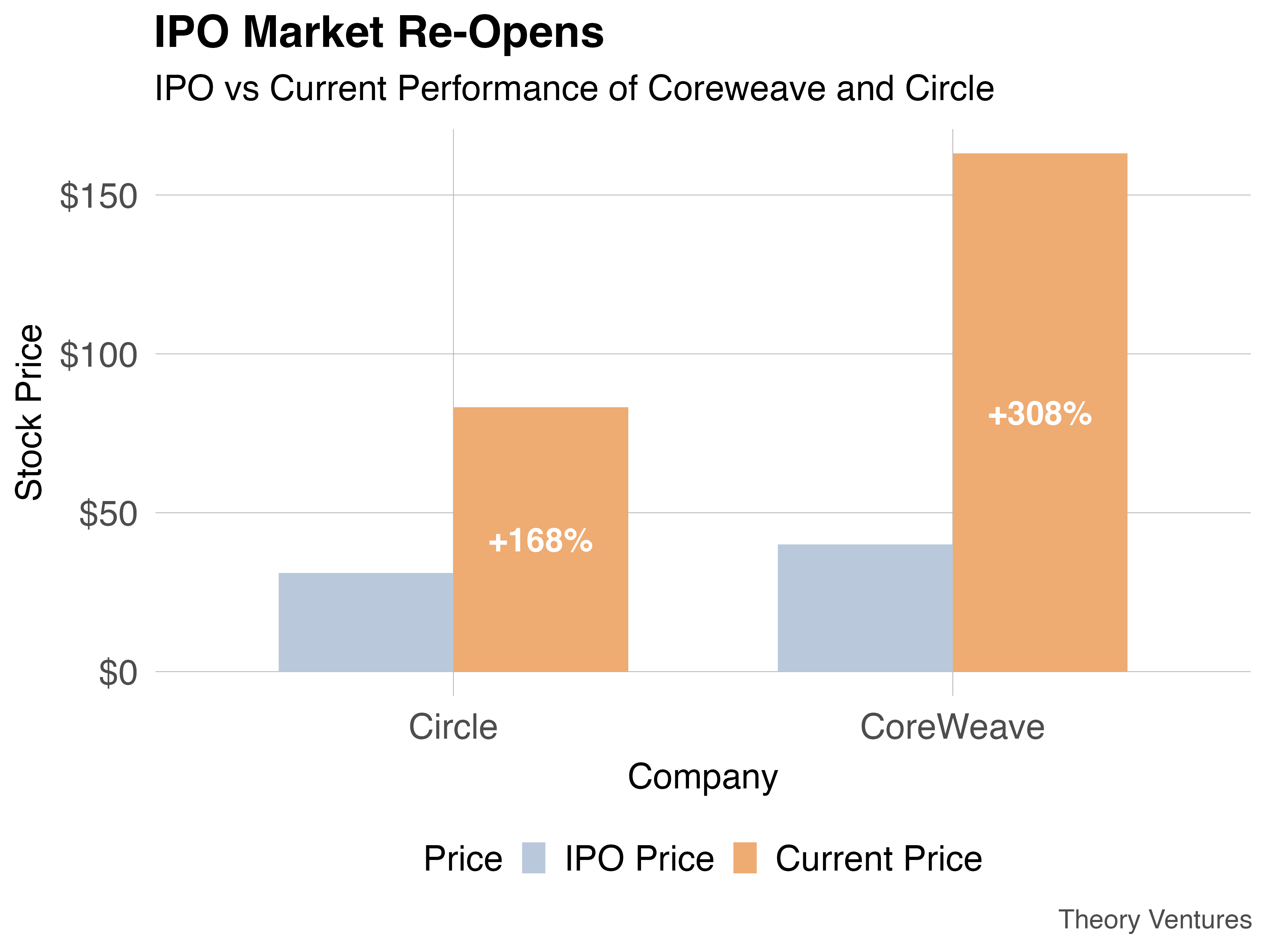
In late 2024, I predicted a thaw in the IPO market. We’re now seeing that forecast come to life with CoreWeave and Circle’s IPOs. Neither company is pure-play software, but their strong performances signal renewed investor appetite for the ragged edge of technology.

image

Read more

Stuck in the Middle of AI Workflows

Whenever I hear about a new startup, I pull out my research playbook. First, I understand the pitch, then find backgrounds of the team, & tally the total raised.1

Over the weekend, I decided to migrate this workflow to use AI tools, & the process taught me something important about how we’re actually integrating AI into our work.

Tools are small programs that expand AI capabilities. ChatGPT might call a web search tool to read a blog post I’d like to summarized. Claude might call the terminal tool to change file permissions in my current directory. Gemini might call a tool to find the latest stock price of the most recent IPO I’ve been following.

Read more

What Level of AI?

Which level do I want to use AI?

I find myself asking this question more & more frequently & I think the answer means at work I’ll be using many AIs - not just one or two.

AI Level Use Case Description
Chat-Based AI Find the best Italian restaurant in the North Beach neighborhood of San Francisco.
In-App AI Find a document or generate an overview paragraph within Notion.
Browser-Based AI Deep research queries, such as estimating the market size of data center construction.
Computer-Based AI Transcribe a video call and upload the notes to an investment memo.
Multiple AI Agents Newer coding agents (e.g., Codex & Jules) work in parallel on the same codebase.

Why are there so many levels? It depends on the context I want the AI to have.

Read more

How Monte Carlo's Daily Revenue Model Rewrote Their Strategy

Pricing changes are hard.

Fundamental shifts in go-to-market strategy tied to pricing? Monumentally difficult.

We recently dove deep into one such transformation with Barr Moses, CEO of Monte Carlo, during a Theory Ventures Office Hours. Monte Carlo, a data & AI observability pioneer, moved from traditional annual contracts to a daily revenue model.

These were the three most important takeaways for me from the conversation:

  1. Monte Carlo customers were used to buying usage-based rather than contract-based & the alignment was an important & critical evolution. Ali Ghodsi said the annual contract is “selling like Oracle in the 1980s.”

Read more