From A to B Without Inventing Letters

“The way to do a piece of writing is three or four times over, never once.”

Writing is hard. John McPhee, who invented literary nonfiction that reads like a novel, developed a four-draft writing method that transforms chaotic ideas into compelling narratives.

McPhee pioneered creative nonfiction at The New Yorker, writing books like Oranges & Coming into the Country that made complex subjects fascinating through storytelling. His approach differs from traditional journalism by incorporating fiction techniques while maintaining factual accuracy. His prose combines vivid imagery with economy :

Read more

The Efficient Frontier of AI

Every portfolio manager knows the efficient frontier - the set of optimal portfolios offering maximum returns for given risk levels. What if AI prompts had their own efficient frontier?

As we all start to use AI, prompt optimization will be a consistent challenge. GEPA, GEnerative PAreto, is a technique to discover the equivalent efficient frontier for AI.

Reading the paper, I noticed the initial results were promising, with a 10-point improvement on certain benchmarks & a 9.2 times shorter prompt length. Shorter prompt length, & we all know that input prompts are the biggest driver of cost (see The Hungry, Hungry AI Model). So, I implemented GEPA in EvoBlog.

Read more

The Math of Hypergrowth: Two Paths to the Same Goal

How long & how quickly can a business compound ?

This is a question every investor asks of every business, public or private.

In the 2010s, Slack & Atlassian became titans. On the day Salesforce announced its intent to acquire Slack, it was equally valuable to Atlassian at ~$27b.

slack_vs_atlassian_market_cap

The revenue curves look similar in the out years, similar growth rates. Atlassian continues to compound at massive scale.

Read more

Is T3D2 Dead? Has AI Killed It?

OpenAI hit $12 billion ARR within five years of ChatGPT’s launch [1] . Anthropic reached $200 million in revenue in January 2024 [2] . Meanwhile, Salesforce took ten years to reach $1 billion ARR [3] .

Read more

The Post-AI Org Chart

We build teams in pyramids today. One leader, several managers, many individual contributors.

In the AI world, what team configuration makes the most sense? Here are some alternatives :

Screenshot 2025-09-19 at 12.13.10 PM

First, the short pyramid. Managers become agent managers. The work performed by individual contributors of yore becomes the workloads of agents. Everyone moves up a level of abstraction in work.

Read more

Beyond a Trillion : The Token Race

One trillion tokens per day. Is that a lot?

“And when we look narrowly at just the number of tokens served by Foundry APIs, we processed over 100t tokens this quarter, up 5x year over year, including a record 50t tokens last month alone.”

In April, Microsoft shared a statistic, revealing their Foundry product is processing about 1.7t tokens per month.

Screenshot 2025-09-18 at 12.57.26 PM

Yesterday, Vipul shared Together.ai is processing 2t of open-source inference daily.

Read more

How AI Tools Differ from Human Tools

tools_evolution_hero_960

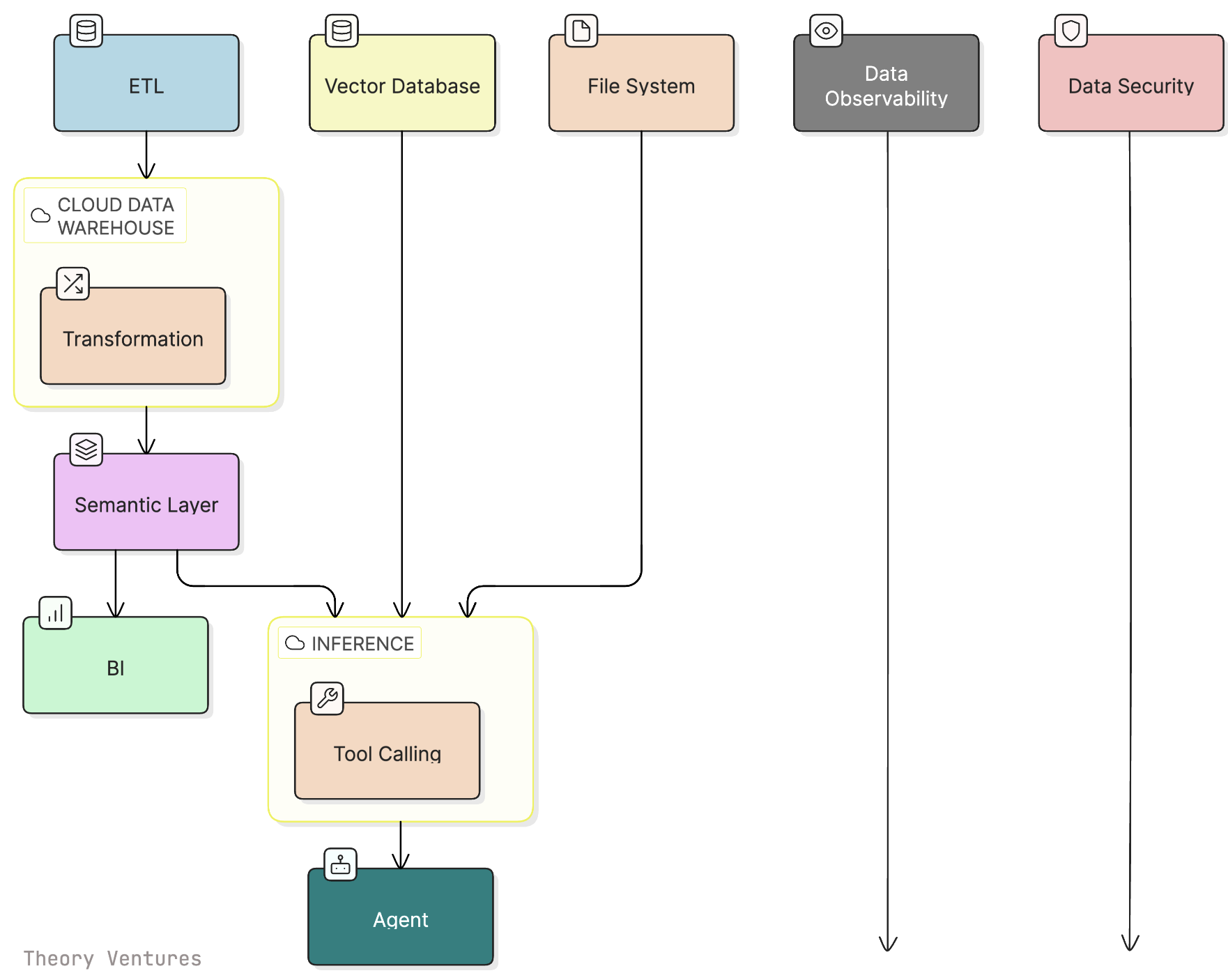
Now that we’ve compressed nearly all human knowledge into large language models, the next frontier is tool calling. Chaining together different AI tools enables automation. The shift from thinking to doing represents the real breakthrough in AI utility.

I’ve built more than 100 tools for myself, & they work most of the time, but not all the time. I’m not alone. Anthropic’s Economic Index report reveals that 77% of business use of Claude centers on full-task automation, not co-piloting.

Read more

Coffee, Omelettes, and Five-Course Meals: A New Software Menu

Screenshot 2025-09-12 at 12.00.48 AM

Like breakfast at a diner, software is cheap & fast to make. Ask for a new task management tool & you’ll have the first version in less time & for less money than an omelette.

AI-built tools may not last long. Some survive only a few minutes, long enough to answer “What’s our turnaround time this week?”

Read more