Posts
Marketing’s Technical Liberation
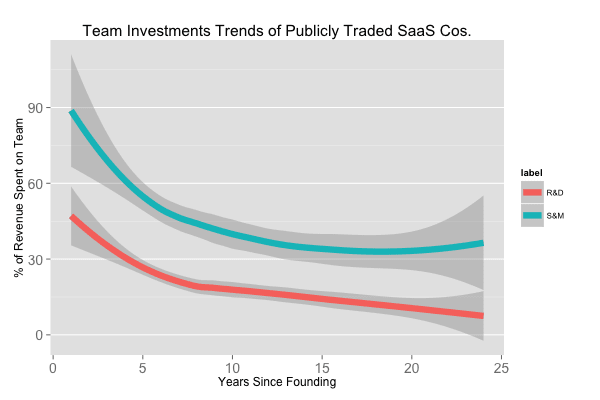
Product and engineering teams are inseparable and at the core of most startups. One degree removed, sales and customer support teams ply the voice of the customer to influence product and eng. Of the five teams in a startup, marketing teams tend to have the least influence because traditional product marketers must influence others to enact change.
Marketing works with product and engineering to update branding and communication within the product. Marketing collaborates with sales to refine the product positioning. Marketing relies on engineering to provide analysis for marketing spend efficiency, customer segmentation and user engagement. Marketing teams with customer support to ensure service reinforces the company’s brand. In each case, marketing is working through others.
A team of founders who had just made their first their first hire asked me about culture and on boarding. How do they go about managing people? How do they maintain the values of the business?
The underlying question of successful management is: How can founders lead and learn at the same time?
I think a bastardized version Dostoevsky’s well-worn refrain is apt:
Happy teams are all alike; every unhappy team is unhappy in its own way.
The Fundamental Challenge of Your Startup’s First Hire: Leading and Learning at the Same Time
A team of founders who had just made their first their first hire asked me about culture and on boarding. How do they go about managing people? How do they maintain the values of the business?
The underlying question of successful management is: How can founders lead and learn at the same time?
I think a bastardized version Tolstoy’s well-worn refrain is apt:
Happy teams are all alike; every unhappy team is unhappy in its own way.
Choosing a Content Marketing Strategy for Your Startup
For bloggers and content marketers, choosing the right content syndication tools to distribute posts is critical to developing an audience. The author/marketer must balance four attributes: distribution, measurement, retention and brand.
Table 1: Balancing Syndication Tools Attributes
| Channel | Distribution | Measurement | Retention | Brand |
| RSS | Poor: only one subscriber | Poor: volatile metrics | Good but declining | So so: controlled by RSS reader |
| Poor: only one subscriber, double-opt in | Poor: limited engagement stats | Poor: Low unsubscribe rates; GMail filtering decreases visibliity | Good: total control over UI | |
| Content Hubs | Great: siphon site traffic, new readers | Good: proprietary tools or GA | Poor: often lacking follow or subscribe mechanisms | Poor: limited control over UI |
| Social Media | Volatile: dependent on the audience but huge upside potential | Great: use traditional web analytics plus follower data plus retweet | So so: follower model creates 2 way relationship; no way to assure delivery | Good: customize profile + traffic goes to website |
RSS’s end is nigh. Google shuttered Reader. Feedburner’s subscriber metrics of this blog swing by 50% or more. Plus the relationship between author and reader is one way (push).
Your Startup’s Three Horizons
Credit: Karl Scotland
When I started at Redpoint in 2008, I wanted to find every way of analyzing companies I could. Consultants scrutinize the inner-workings of companies daily and create simple frameworks for explaining their operations. So I bugged a handful of friends with experience at the Big 3 consulting firms for their most used frameworks.
Recently I came across an old friend, a framework I studied then called McKinsey’s Three Horizons in The Lean Entrepreneur, an anthology of lean startup techniques and case studies.
The Seed Investment Patterns of Billion Dollar Startups
Over the past few years, there has been a pronounced shift in the seed market. VCs now participate quite actively in the market. As a result, seed investment volumes have roughly doubled in the past year.
But is the seed strategy working for startups and VCs? Do hugely successful businesses raise seed capital? Do those businesses include VCs in their seed rounds? And most importantly, do the VCs follow on in the Series A?
The Seed Investment Patterns of Billion Dollar Startups,w
Over the past few years, there has been a pronounced shift in the seed market. VCs now participate quite actively in the market. As a result, seed investment volumes have roughly doubled in the past year.
But is the seed strategy working for startups and VCs? Do hugely successful businesses raise seed capital? Do those businesses include VCs in their seed rounds? And most importantly, do the VCs follow on in the Series A?
The Founder’s Null Hypothesis
Over breakfast, I caught up with a close friend, an entrepreneur who is exploring a number of ideas for his next venture. He and his co-founder want to test their way to success with the Lean Startup Model. But they have added a twist to the Lean Startup process I call the Founder’s Null Hypothesis. Here’s how it works:
First, this entrepreneur assumes each of his ideas will fail - the null hypothesis. Then, he and his co-founder write down a set of milestones or metrics that if achieved or proven would imply the idea is a good one. These tend to be quantitative customer feedback metrics.
Announcing Redpoint’s $16M Series A Investment in Looker
Big data technologies like Hadoop, HBase, Redshift, Vertica and others store ever greater quantities of data. As the capacity to store this data increases, so does the importance of extracting value and insight from it.
Big data adoption is a four step process: generate data, store data, hire specialists to analyze the data, and finally democratize data exploration. Today, businesses lack great data exploration tools. Looker has built those tools.
Two hours before a meeting with the Looker team, I sent them a sizable data set. During the pitch, Lloyd Tab, Looker’s founder, grouped, pivoted and drilled into the data. He said to me, “I’ve bet you’ve never really understood your data before I showed it to you on Looker.” And I agreed with him.