Data on the “seedpocalypse”

Call it what you like. The Series A Crunch or Silicon Valley’s Financial Cliff, there’s a lot of talk about the challenge seed stage companies facing insurmountable odds raising Series A investment - PandoDaily’s analysis pegs the odds at 20% based on anecdotal data.

The three horsemen of the seedpocalypse

In the past 3 years, the three major trends influencing the seed market are:

  1. The decreasing cost of starting a company is balanced by growing labor costs. Seed companies must still raise Series As to scale.
  2. Macroeconomic factors, namely the challenging job market for young professionals, are pushing people towards entrepreneurship. Incubators have arisen to provide education and a fundraising launching pad for these young founders. Politicians and the media have stoked this trend.
  3. Rising valuations at every stage and the fear of missing out led VCs to invest in the seed market - and more precisely, index the seed market by investing in 50 to 60 companies per year. VCs' relative price insensitivity (relative to angels) has skewed the pricing in the angel market. As a result, some angels have moved to other markets or moved up-market, raising larger funds to compete.

These three forces have created the impression, right or wrong, that there is a huge wave of seed companies in the market who all need to raise Series As.

Read more

VC consumer investment trends by sector and stage

Yesterday, I showed the increasing share of venture capital investments consumer companies represent. But examining the trends at a category level may mask patterns by consumer category and also by stage.

So, I’ve created two charts: the first is a bar chart of consumer investment by segment and the second is a heatmap of of sector and stage. I categorized the consumer investments by 10 leading firms over the past 18 months into six buckets of my choosing.

Read more

The cognitive burden of unbundling

Department stores. Computer software. And even education. Products and services are being broken into their atomic units and optimized for price, selection, features and, most importantly, customer satisfaction. This is an inexorable trend that cannot and should not be stopped.

Roger Ehrenberg in a post called “The Great Unbundling”

This unbundling is happening. But I’m not convinced it’s every consumer’s desire to consume media or purchase clothing a la carte. Or that this is the end state of commerce. Instead, the future is a hybrid model. And it’s already in market.

Read more

VC investment trends in the consumer web

Fred Wilson’s perspectives on trends in consumer web investment created a big brouhaha over the weekend. Commenting on a WSJ article, Wilson offered his confirmatory observations that follow-on investments in the consumer web have become more challenging as momentum investors have shifted toward enterprise.

Over the past 18 months, valuations of later stage consumer internet companies have ballooned into the hundreds of millions propelled by enormous user growth. For many of these startups, revenue hasn’t been able to keep pace with rising serving costs. It’s not surprising that some members of the eight figure valuation club can’t raise follow-on rounds at even greater premiums - the economics can be challenging. It took YouTube something like seven years to break-even.

Read more

A Startup’s Two Financial Plans - the Board Plan and the Stretch Plan

Last week I wrote about the importance of a financial plan for startups at every stage. It’s a challenge to balance the predictability the board requests and the ambition the company wants.

Often, as startups grow, they adopt two plans: a board plan and a company plan. By creating two plans and presenting each to the right audience, founders can communicate and motivate their teams effectively.

The board plan is the more conservative of the two. Typically, the founding/management team has a high degree of confidence in the board plan, something like 90% confidence. The board plan’s audience is the board. It’s often viewed as the commitment the management team makes to the board, so it can be used as a framework for evaluating the team’s performance at quarter or year end.

Read more

Financial planning for startups

Over lunch last week, I asked a Redpoint entrepreneur, who had recently sold his company, how his board could have been more helpful to him. His answer surprised me.

He wished the company had built a financial/operational plan sooner.

Building an financial plan is challenging and it is often perceived as a waste of time because the plan can be so inaccurate. Lots of entrepreneurs tell me their plans are just WAGs - wild assed guesses. And to some degree they are.

Read more

Segmenting customer pipelines

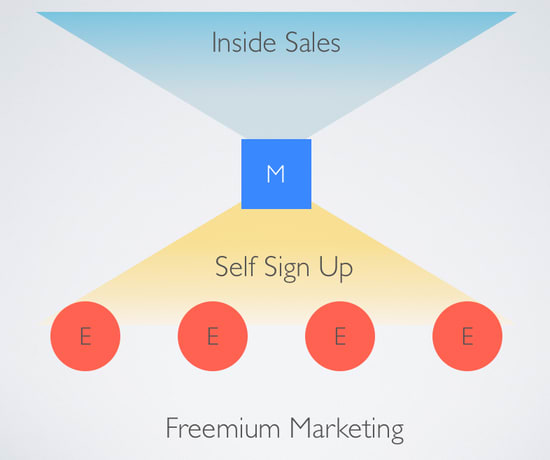
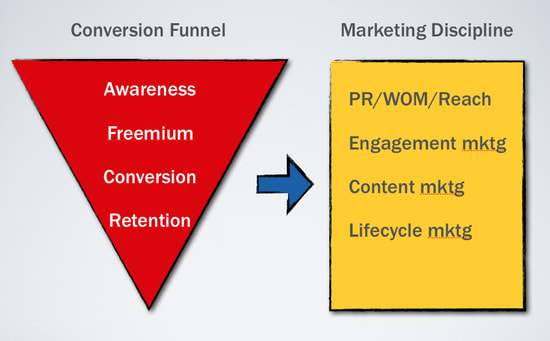
When building a freemium SaaS company or an ecommerce company or any product that requires users to move through a funnel towards an objective, it’s important to track this funnel to understand where the funnel can be improved.

But tracking one funnel may not be enough. The aggregated funnel may be masking conversion differences across customers segments. For example, at Expensify conversion rates to paid vary quite a bit across customer size. But the total conversion-to-paid rate hides these nuances.

Read more

Great products are like ducks

Great products are like ducks. They are calm above the water but paddling furiously below the water. An entrepreneur told me this quip last week and I think it had great wisdom in it.

In other words great products are graceful. They make something complex look effortless.

Great athletes are the same. So are great dancers. And even great entrepreneurs.

The secret within this aphorism is that success is a grind. It is hard work. It’s easier to let it all hang out for others to see how hard work can be. Often we want others to understand how challenging a problem was to solve or how stressful a deal was to close or how complex a product is.

Read more

The stewards of vision and culture

Vinod Khosla penned a great overview of the three phases of a company this weekend. He identifies the hub and spoke phase, the organized chaos phase, the functional management phase.

Once a founder has experienced each of these phases, it’s easy to identify the them in retrospect. But companies don’t transition from one phase to another in discrete steps. Instead, they morph and evolve fluidly into these phases.

Throughout this metamorphosis, two things must remain constant to keep the startup functional: the vision/mission of the company and the culture of the company. Lacking a consistent vision, the startup can enter a tailspin - with a team unclear on the path to pursue. Without the right culture, teams fall apart.

Read more

Incremental Innovation is Just As Powerful as Disruption

Peter Thiel and Gary Kasparov wrote in the Financial Times about “Our dangerous illusion of tech progress”. The main point of the article is quoted below:

[We are living in an era of] cautiousness far too satisfied with incremental improvements. Our ability to do basic things such as protect ourselves from earthquakes and hurricanes, to travel and to extend our lifespans is barely increasing [since the 1960s]. The genuine progress in IT from the 1970s up to the 2000s masked the relative stagnation of energy, transportation, space, materials, agriculture and medicine.

Read more