What Loom & Klaviyo Indicate about Exit Valuations

Within the last few weeks, we’ve seen two significant exits in Startupland, the first new pricing information we received in many quarters.

Klaviyo was the first half for IPO in at least a year. Atlassian’s acquisition of Loom is also the first unicorn sale in about the same time frame.

Company Last Round Post, $b Current Value, $b Change
Loom 1.53 0.975 -36%
Klaviyo      9.5 7.6 -20%

Naturally, many of the first analyses compared the last round valuation in the private markets to the exit value. In both cases, the exit values amounted to less than the last private round - discounts of 36% & 20%.

Read more

The PLG Trap : Lessons Learned from Oliver Jay, former CRO at Asana

Last week, Office Hours hosted Oliver Jay, former CRO at Asana to talk about Avoiding the PLG Trap. More than 900 people registered for the event.

The full recording is here or embedded below on the web.

Oliver shared some trenchant insights about his experience leading the GTM teams to success. These are three of the lessons that stood out to me espcially managing the transition from product to sales-led growth (PLG -> SLG).

Read more

The Promise and Pitfalls of Chaining Large Language Models for Email

Over the last few weeks I’ve been experimenting with chaining together large language models.

I dictate emails & blog posts often. Recently, I started using Whisper for drafting emails and documents. (Initially there were some issues with memory management, but I’ve since found a compiled version that works well on my Mac called whisper.cpp)

After tying Google’s Duet I wondered if I could replicate something similar. I’ve been chaining the Whisper dictation model together with LLaMA 2 model from Facebook. When drafting an email, I can dictate a response to LLaMA 2, which will then generate a reply using the context from my original email.

Read more

SaaS Competitive Advantage Through Elegant LLM Feedback Mechanisms

Eliciting product feedback elegantly is a competitive advantage for LLM-software.

image

Over the weekend, I queried Google’s Bard, & noticed the elegant feedback loop the product team has incorporated into their product.

I asked Bard to compare the 3rd-row leg room of the leading 7-passenger SUVs.

image

At the bottom of the post is a little G button, which double-checks the response using Google searches.

image I decided to click it. This is what I would be doing in any case ; spot-checking some of the results.

Read more

Centaurs & Cyborgs : The Jagged Frontier of AI

Last week, Harvard Business School released its analysis of LLMs on 758 consultants’ performance when using AI. Three key insights emerged.

In the first experiment (inside AI’s capability frontier), consultants randomly assigned access to GPT-4 AI completed 12.2% more tasks on average & 25.1% faster. Quality improved by 40%.

Lower performing consultants benefit the most from AI augmentation, increasing performance by 43% compared to 17% for higher performers.

This rising-tide effect seems common across AI applications. The benefit to the lower quartiles is dramatic across sales, customer support, & consulting. This has broader implications, something I aim to write about later this week.

Read more

Artisanal Emails

Artisanal chocolate, artisanal candles, artisanal silk scarves. What about an artisanal email?

LLM’s powerful content generation abilities will soon automate many emails we send. Sales teams have started using software that identifies leads, researches them, identifies commonalities (a shared university affiliation or a passion for a sports team), drafts the email, & sends it. Then it tracks the email for follow up.

New product launches will bring similar tools to everyone.

Read more

Avoiding the PLG Trap : Office Hours with Oliver Jay

image On October 5th at 9:30am Pacific time, Office Hours will host Oliver Jay, former CRO at Asana & executive at Dropbox. Having worked at two of the most successful bottoms-up SaaS companies, Oliver understands the product-led growth motion better than most.

Recently, he’s written about the PLG trap. “Although the PLG approach yields rapid initial adoption and growth, scaling a PLG company is a different story.”

The main reason is the tension PLG creates for SaaS companies between the early adopters who have fueled the company’s rapid & efficient growth & the demands of the larger customers. Having seen this twice, Oliver has a clear point of view on how to successfully build a company with multiple sales motions.

Read more

Building Applications with AI - Lessons from LangChain, Hearth, & Context.ai

image

Yesterday at TechCrunch Disrupt, Harrison Chase, founder of LangChain, Ashe Magalhaes founder of Hearth, & Henry Scott-Green, founder of Context.ai, & I discussed the future of building LLM-enabled applications.

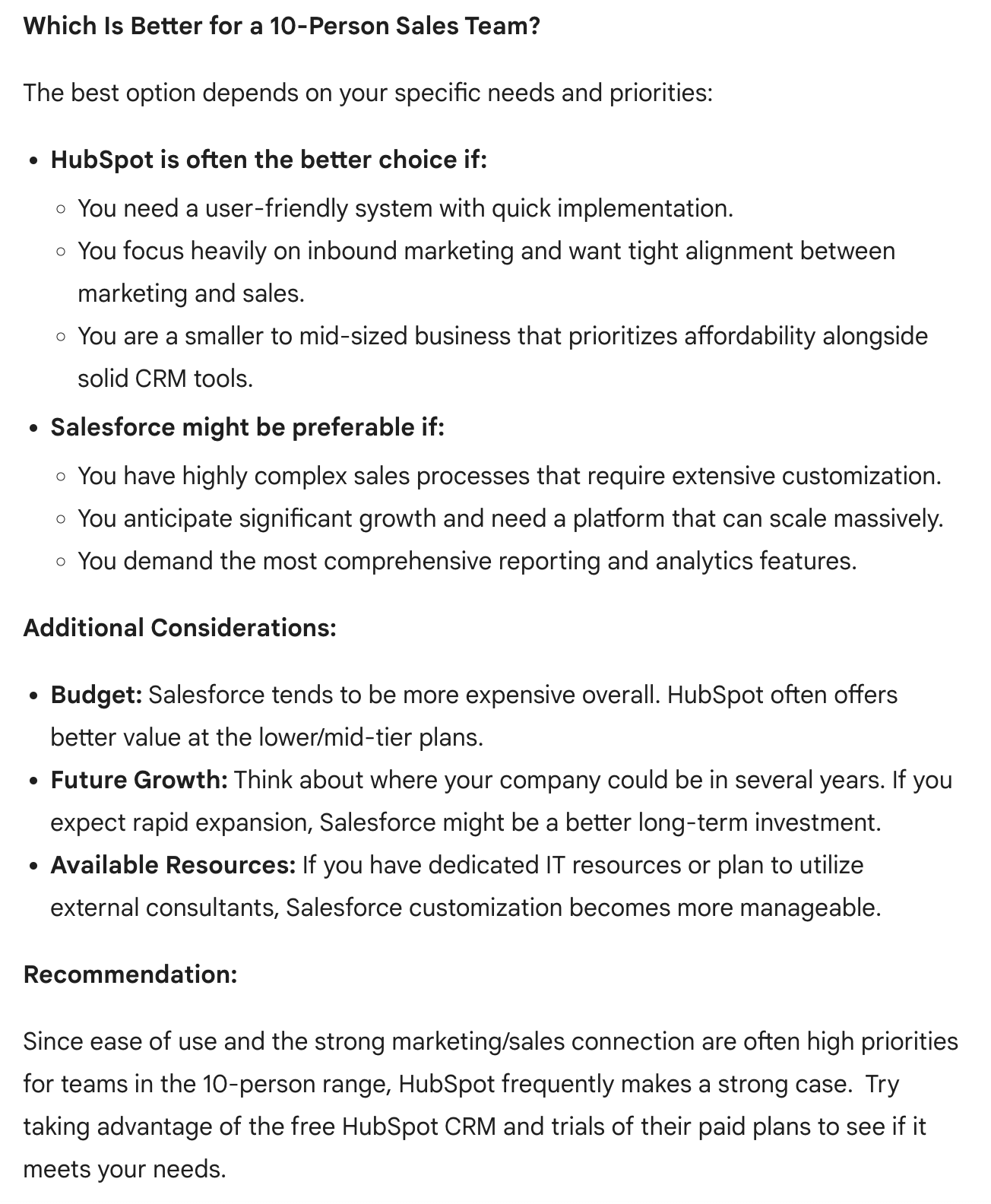
We assembled the panel as a three layer cake : Hearth, the application ; Langchain, the infrastructure ; Context.ai, the product analytics. Here are my takeaways from the conversation.

First, it’s very early in LLM application development in every sense of the word. Few applications are managing significant user volumes. Many remain in testing & are working to develop quality scores for LLM performance before launch. The state of the art is using “vibes” ; how much better did the model feel?

Read more

Cisco & Splunk Continue the Trend of SaaS Take Privates

Earlier today, Cisco announced its intention to acquire Splunk for $28b, a 30% premium to the closing price.

Reviewing the financials, we see Splunk is a very healthy business.

Metric Value
Revenue, $b 3.64
Revenue Growth 37%
Gross Margin 77.7%
Net Income Margin -7.6%
Cash Flow from Ops Margin 12.2%
Estimated Sales Efficiency 0.60
Forward Multiple pre-M&A 4.2
Implied Forward Multiple post-M&A 5.7
Predicted Forward Multiple based on Market Comps 7.5

$3.6b in revenues growing at 37% places the business in the top quartile of public software companies. The 78% gross margin is 6 percentage points greater than the public median.

Read more

Building a Generational Business Databrick by Databrick

Last week, Databricks announced their Series I financing at $43b. At the same time, they released quarterly figures similar to a public company’s reporting.

image

Those numbers provide the first public view into one of the most valuable private companies in the world. It’s also an opportunity to compare Databricks to Snowflake.

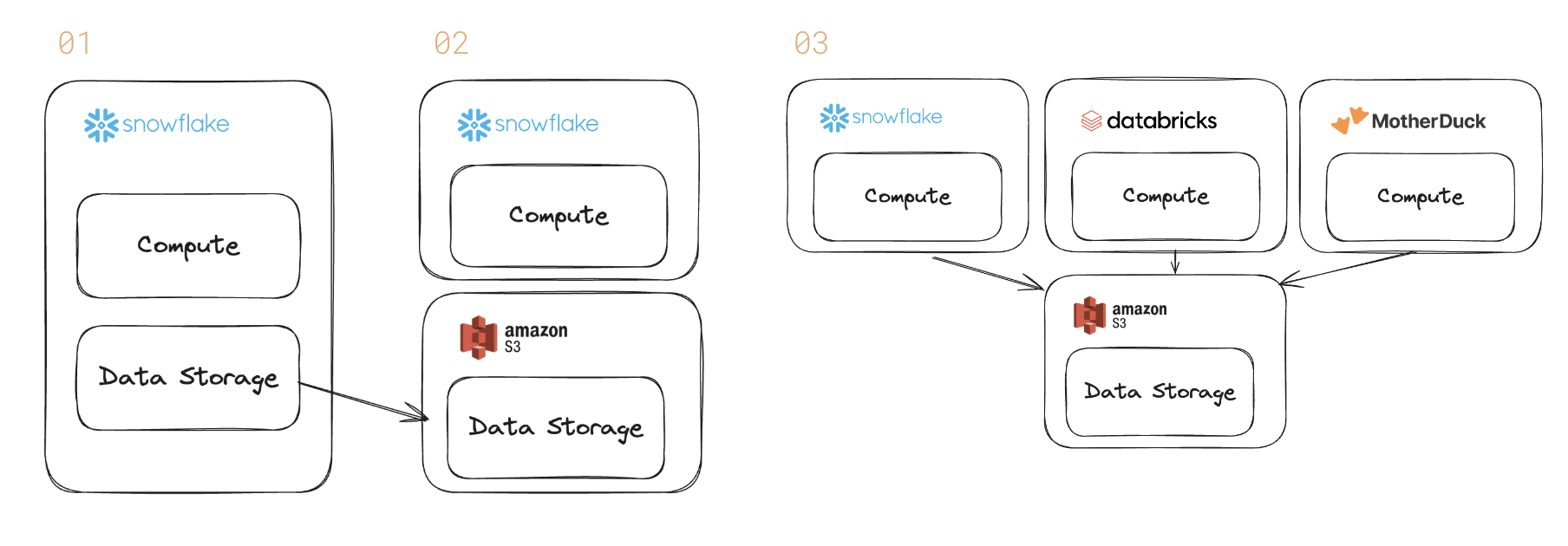
Two mammoths competing for customers’ workloads offer different architectures. Snowflake’s cloud analytics database thrives on structured data. Databricks’ technology rips through unstructured data in a cloud data lake house.

Read more