The Spicy Future for Data

What’s the price of spice? If you’ve never seen a data app, that’s the question you should be asking yourself. Data apps are living documents that weave narratives around data and charts to explain, persuade, or empower.

Imagine your future self. You work for a large company selling spices and you’re tasked with exploring the impact of pricing changes. Most importantly, you’ll present the results to executives who will no doubt pepper you with questions about what-ifs.
Read more

The App Store Model Comes to Web3

Six months ago, I wrote about how the cap tables of crypto companies have approached the structure of web2 startups. Recently, EVMOS, a web3 project, pushed forward an important innovation for the web3 ecosystem. EVMOS enables Ethereum’s virtual machine on the Cosmos chain.

The EVMOS token model innovates on its predecessors by introducing the App Store dynamics to web3. In Apple’s app store, users pay Apple to access apps and developers receive a revenue share. This doesn’t happen today in web3. Except on EVMOS.

Read more

Usage Based Pricing: 3 Questions to Ask Before Leaping

Is charging by consumption (usage-based pricing) a superior model for a business? When we say UBP, we mean charging customers by how much they use, rather than a constant amount of seats per month or API calls per month.

On on hand, UBP lubricates the customer conversion funnel. Prospects sign up and grow their accounts seamlessly. Usage data feeds the PLG lead score, and AEs outbound to the most promising users. Customers expand as their needs dictate and customer segments fall out from usage data

Read more

Guess the Startup Answers

Thanks to the many readers who wrote in to Guess the Startup on Friday. There were a torrent of ideas: Mongo, Twilio, Snowflake, Databricks, Niantic, Klayvio, Microsoft, DataStax, Zoom, and Peloton.

image

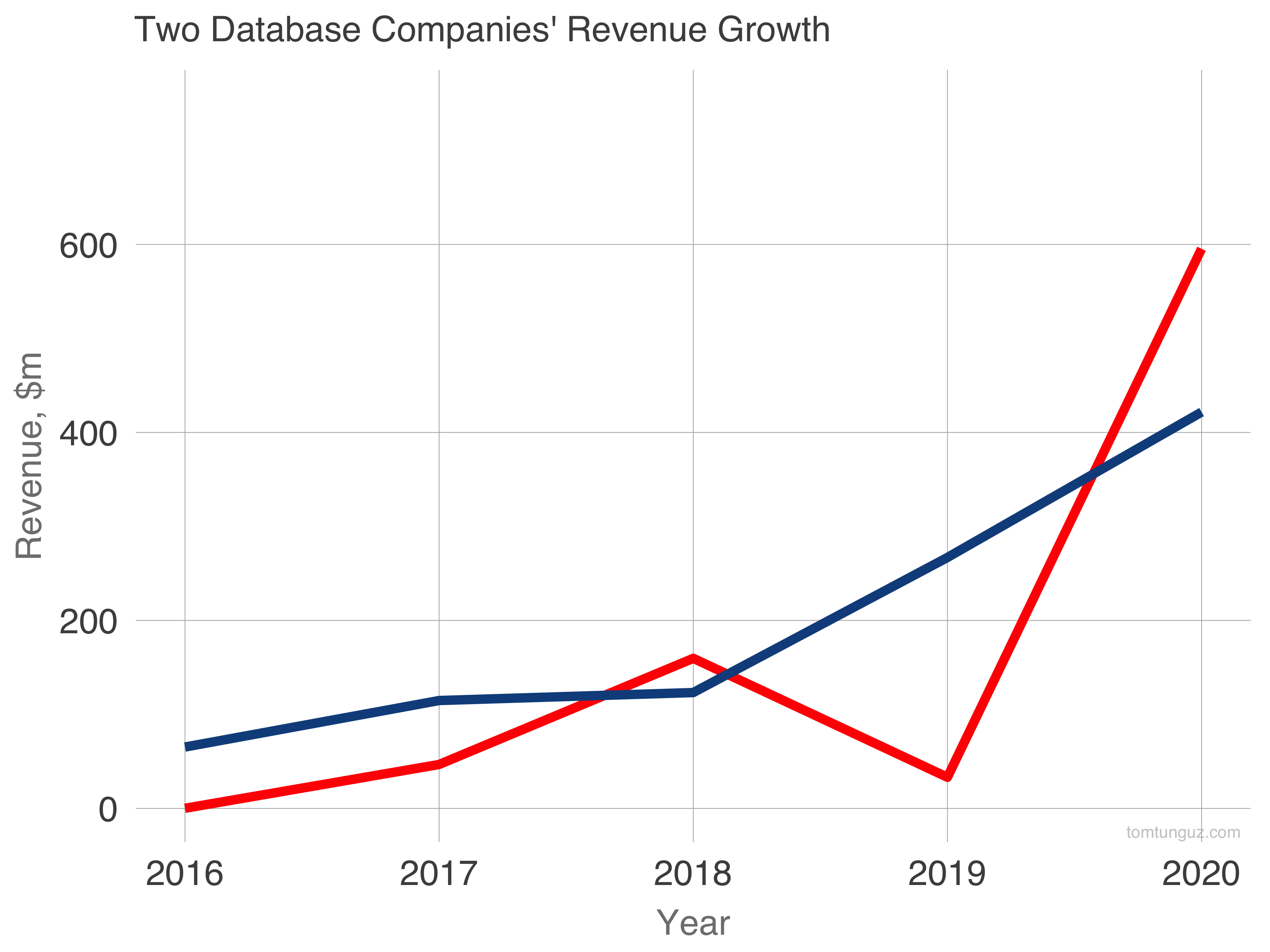
Here’s the early revenue chart again. Blue Company is none other than MongoDB, one of the most successful standalone database companies. Red Company is Ethereum.

To the many people who guessed correctly, congratulations! I’m impressed by your knowledge of the tech landscape.

Read more

Guess the Startup

I’m going to tell you a bit about two startups and I’d like you to guess the name of each company.

Both of these businesses are publicly traded. Both startups provide database software to developers to build applications. Both have grown very fast. In fact, their revenue trajectories through 2020 are nearly identical. Both companies employ a usage-based pricing model: pay for what you use.

image

Read more

The Three Types of Customer Success Teams

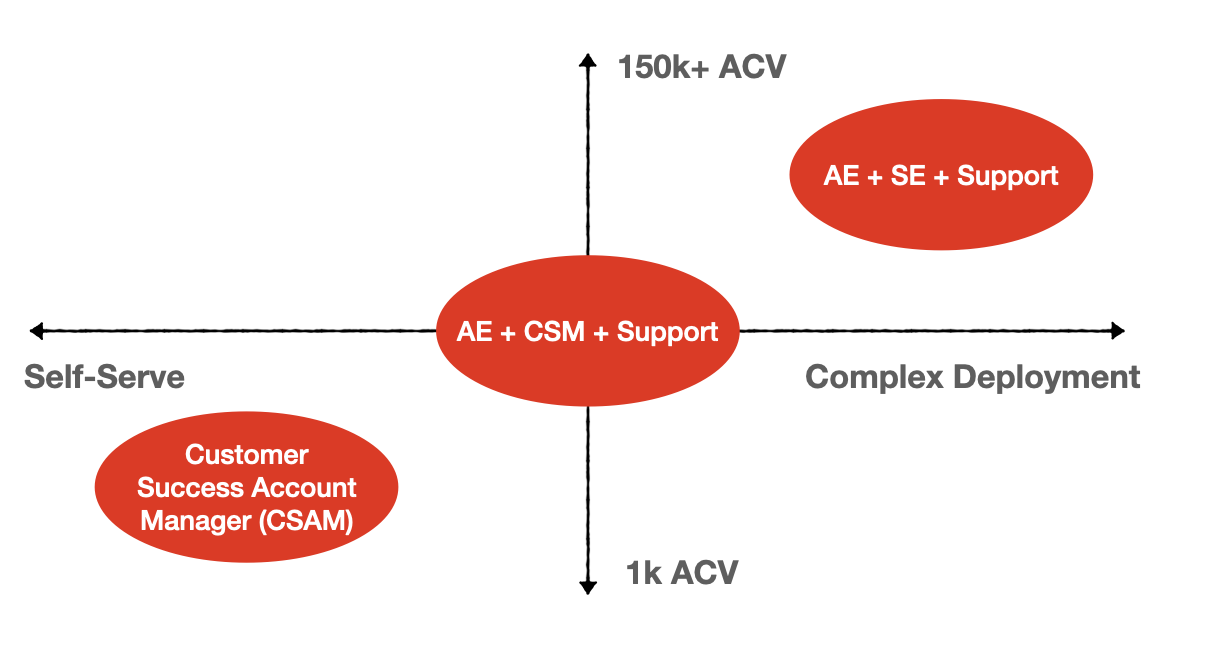
A decade ago, Gainsight championed the creation of the customer success category. People curious and passionate about customer success convened at the Pulse conference to debate customer success. In 2013 and 2015, the discipline’s merits dominated the conversation. Soon thereafter, the most common question became how to build and run a CS team, replacing why start a CS team. image

Read more

The People Roadmap for Startups

Startups create products. After product-market fit, product teams hew the product roadmap from a panoply of options to the features best aligned with the company’s plans.

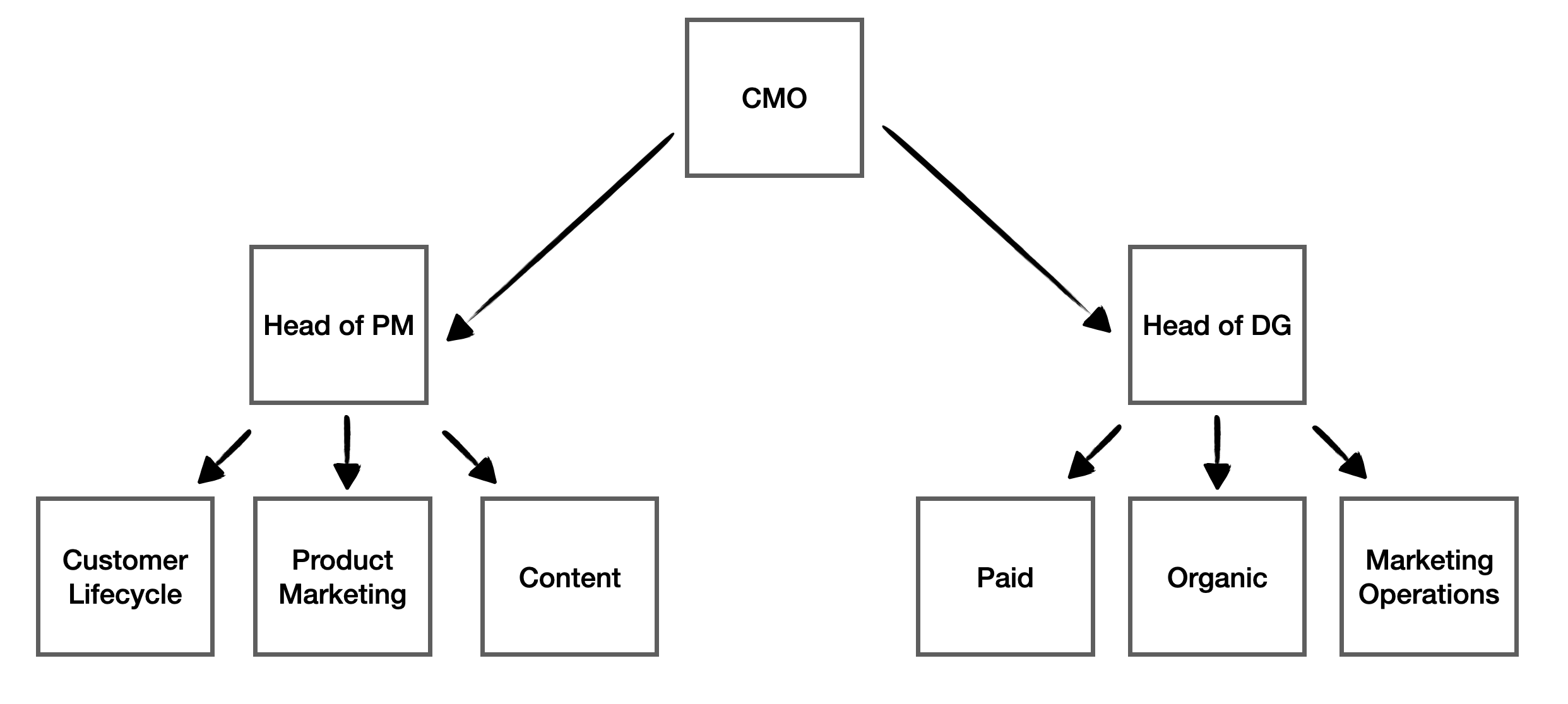
In much the same way, CEOs architect the organization that builds, markets, sells, and supports the product. When a business is ready to scale, a startup ought to develop an organizational roadmap. These roadmaps chart the growth of each organization within the business.

image

Read more

The Future of Money

The Future of Money provides a sweeping landscape of how money is changing.

Paper money is an 800 year-old institution implemented by Kublai Khan grandson of Ghengis Khan, and founder of the Yuan Dynasty. After nearly a millennium, bills and coins’ time may be ebbing. Sweden projects the end of paper money, amongst its citizens by 2030. Today, 87% of Swedes never use cash for transactions.

What will replace paper money? In the future, central banks may mint Central Bank Digital Coins (CBDCs). Sweden has experimented with the eKronor, the Swedish CBDC, since 2020. The Swedes aren’t the only ones to pursue CBDCs. The Bahamas mints the Sand Dollar. China is developing the e-yuan. Ecuador, Uruguay, Tunisia, the US and others are experimenting or exploring CBDCs.

Read more

Rediscovering the Power of the Command Line

I remember sitting in the second floor of the engineering building late into the night in front of an SGI Indigo workstation during grad school. The machine was a deep purple, and the keyboard was gray, and the screen showed a terminal with a little blinking green box. I spent many nights trying to figure out how to complete work with that little prompt. And now I find myself going back there.

Read more

1/9/90 in Crypto

Distributed autonomous organizations (DAOs) are one of the most vibrant areas of crypto. DAOs are groups of people with the right to vote to change how a crypto company operates.

DAOs pop up for many different reasons: to form a social club that requires a token to join, to buy a copy of the Constitution, to manage open source software. Almost any group of people can organize a DAO to pursue a shared purpose.

Read more