Will Your Startup Borrow More in 2022?

In 1968, Milton Friedman argued “In the Price of Money,” that higher interest rates don’t mean less borrowing. He would echo this sentiment in an article Reviving Japan.

“After the U.S. experience during the Great Depression, and after inflation and rising interest rates in the 1970s and disinflation and falling interest rates in the 1980s, I thought the fallacy of identifying tight money with high-interest rates and easy money with low-interest rates was dead. Apparently, old fallacies never die.”

Read more

The New Discipline Web3 Software Companies Must Develop

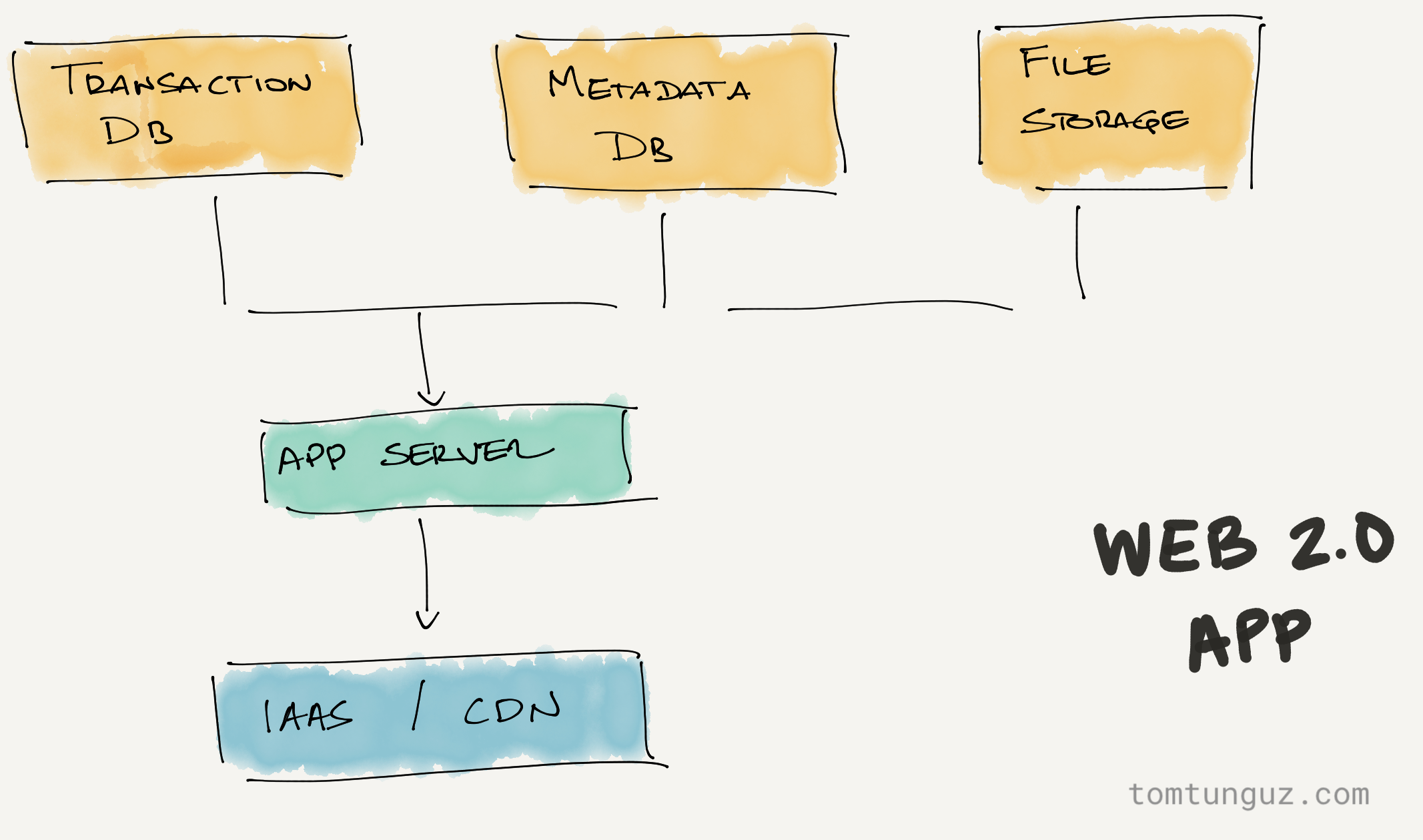
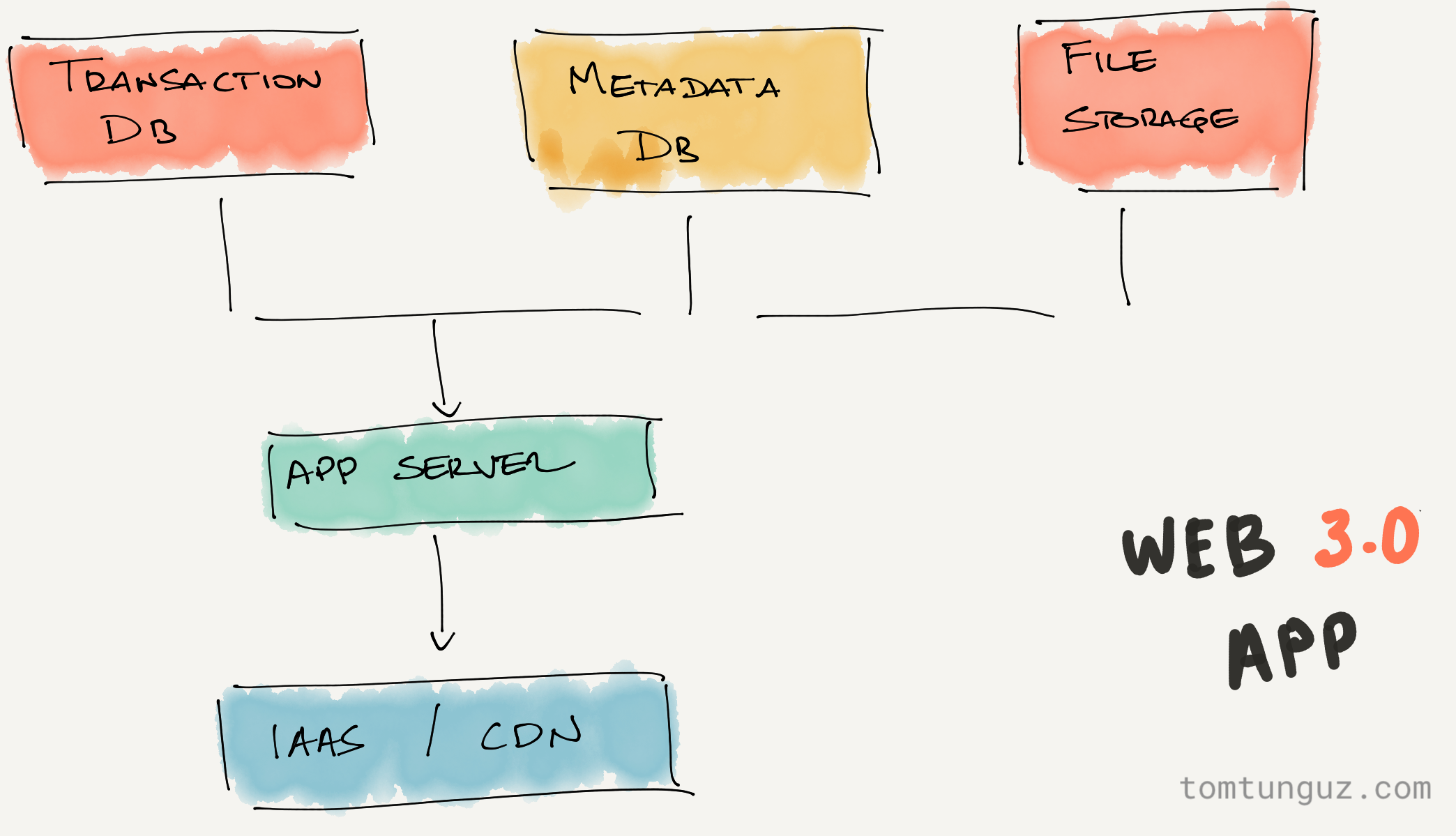
Suppose you launch a web3 company tomorrow. The business builds software to help other crypto companies grow. Perhaps you’ll sell infrastructure to help other startups scale or software to manage internal operations. After you’ve launched the product, you’ll encounter a new phenomenon. Your customers prefer to pay you in crypto.

Fast forward three years, your business thrives. The customer roster brims with the best names, each client increases their spend every year, and the sales team outpaces its quota handsomely.

Read more

If You Had $10k to Invest, Which Stock Would You Buy?

If I gave you $10,000 to invest in one company today among the following four software businesses, which would you pick?

Company Growth Rate ARR Multiple (ARR/EV)
1 100% 100 50x
2 125% 950 25x
3 71% 2800 20x
4 65% 2960 10.5x

The first company is a $100m ARR business growing at 100%, trading at 50x ARR, a $5b enterprise value. The fourth company grows 65% on $7b in ARR, implying a $29b EV.

Read more

Intensity Oozes from these Pages

I remember the first time I spoke with Frank Slootman. Beforehand, I read his book Tape Sucks, watched some of his videos on YouTube, and read his blog posts. After few minutes, I couldn’t deny his unique passion for growth and scale.

I called him on a Sunday in the summer. Frank told me most companies don’t focus enough; that there’s only one priority for him: growth. He said if he were to join a startup’s board he would push the business very hard - very, very hard. The company and the board needed to sign up for exactly that.

Read more

How Much Money is Flowing into Crypto?

How much money flows into crypto each month?

There’s the headline figure $1.7T which is the aggregate market cap of crypto. But how about the volumes of US dollars being exchanged into crypto each month? Sometimes this is called fund flows.

I’ve learned calculating this figure is tricky because there’s no centralized reporting for it. But we can get a sense of it via stablecoin minting patterns.

Stablecoins are tokens that are backed by a fiat currency. Each time a marginal dollar buys a stablecoin, a new stablecoin must be minted. Sometimes these stablecoins are burned (destroyed). The net amount of stablecoin creation over time should provide us a directional sense of dollar flow.

Read more

Why You Should Expect Your VP Product to Sign Up for a Lead Quota

image

Pocus and First Round Capital published the 2021 Product-Led Sales (PLS) report earlier this week. Product-Led Growth (PLG) and PLS are important advances in SaaS growth that have existed for a while, but are coming to the fore more recently because startups who master PLG/PLS enjoy terrifically capital efficient growth because technology supplies leads rather than human effort.

PLG/PLS motions typically couple three things:

Read more

Dremio - A Foundational Component of the Modern Data Stack

In 2015, Dremio started in our offices. Today, the company announced its Series E at $2 billion valuation. The business has cemented itself as a foundational component of the Modern Data Stack.

About seven years ago, Dremio’s founder Tomer envisioned a product that would enable customers to manage data and compute separately. Today, we call this idea the data lakehouse and a query engine. Dremio enables Amazon, FactSet, Goldman Sachs, Microsoft, NCR, and Nutanix, amongst others to query oceanic volumes of data at comparable speed to data warehouses.

Read more

How Will the 52% Correction in the Stock Market Impact the Startup Fundraising Market?

The public software sector is weathering the second deepest multiple contraction in the last decade. Only the 2016 reduction of 57% surpasses it. Public market investors are rotating out of high growth technology companies as the Fed’s policies of quantitative easing, asset purchases, and low rates abate.

image

The question on every software founder’s mind today must be, how will this affect the private financing markets? As a company’s scale approaches that of a public company, the greater the impact on their fundraising.

Read more

Is Compensation Stagnation to Blame for the Great Resignation?

The Great Resignation has rippled across headlines and boardrooms as employees’ values and priorities evolve. Has the Great Resignation been caused by a silent stagnation in compensation?

Let’s compare data from 2010 and 2021 to understand the longitudinal trends in cash and equity compensation. The cash compensation of three executive roles at early-stage companies has increased faster than inflation.

Role 2010 Cash 2021 Cash Cash Change
VPE 219 256 17%
VPM 220 250 14%
VPS 320 404 26%
CPI 217 262 21%

A VP of Engineering in a Bay Area startup that has raised less than twenty-five million dollars earned 17% more in 2021 than 2010. In constant dollars (correcting for inflation, which is listed here as CPI), a 2021 VPE took home 4% less. VPs of Marketing saw similar raises across their salary and bonus, and small loss to inflation. On the other hand, heads of sales’ pay appreciated 5 percentage points more than inflation.

Read more

How Correlated are the Web 2 and Web 3 Software Markets?

In the last few weeks, public software company multiples have halved. As have cryptocoins. Solana and Etherum followed Snowflake and Elastic downwards. So much for the Santa Claus rally. Both declines seem to have been catalyzed by the Fed’s intention to hike the Fed Funds rate three to four times in 2022.

Beyond the most recent cycle, how often do the web2 and web3 software markets move in synchrony? After all, Web3 is a future incarnation of software and infrastructure. Like high growth startups, cryptocoins are considered risk assets by the market. Is historical data compelling enough to hypothesize that investors’ rotation out of high-growth software should be mirrored in crypto?

Read more