The Challenge Facing Deep-Learning Powered Startups

Why is this ad appearing on this site? This was a frequent questions both advertisers and publishers asked of Google. Behind the scenes, machine learning models match the best ad to the best website, given a set of constraints including budget and the dynamics of the ad auction. To untangle the decision chain across the many different targeting systems to answer the question is a knotty task indeed.

In March, the head of Google research Peter Norvig spoke at MIT. One of the challenges facing computer scientists over the next decade, he said, is debugging the complex machine learning systems that power revolutionary products from photo recognition to speech recognition to machine translation.

Read more

How Big is a Typical Software Company Acquisition?

image

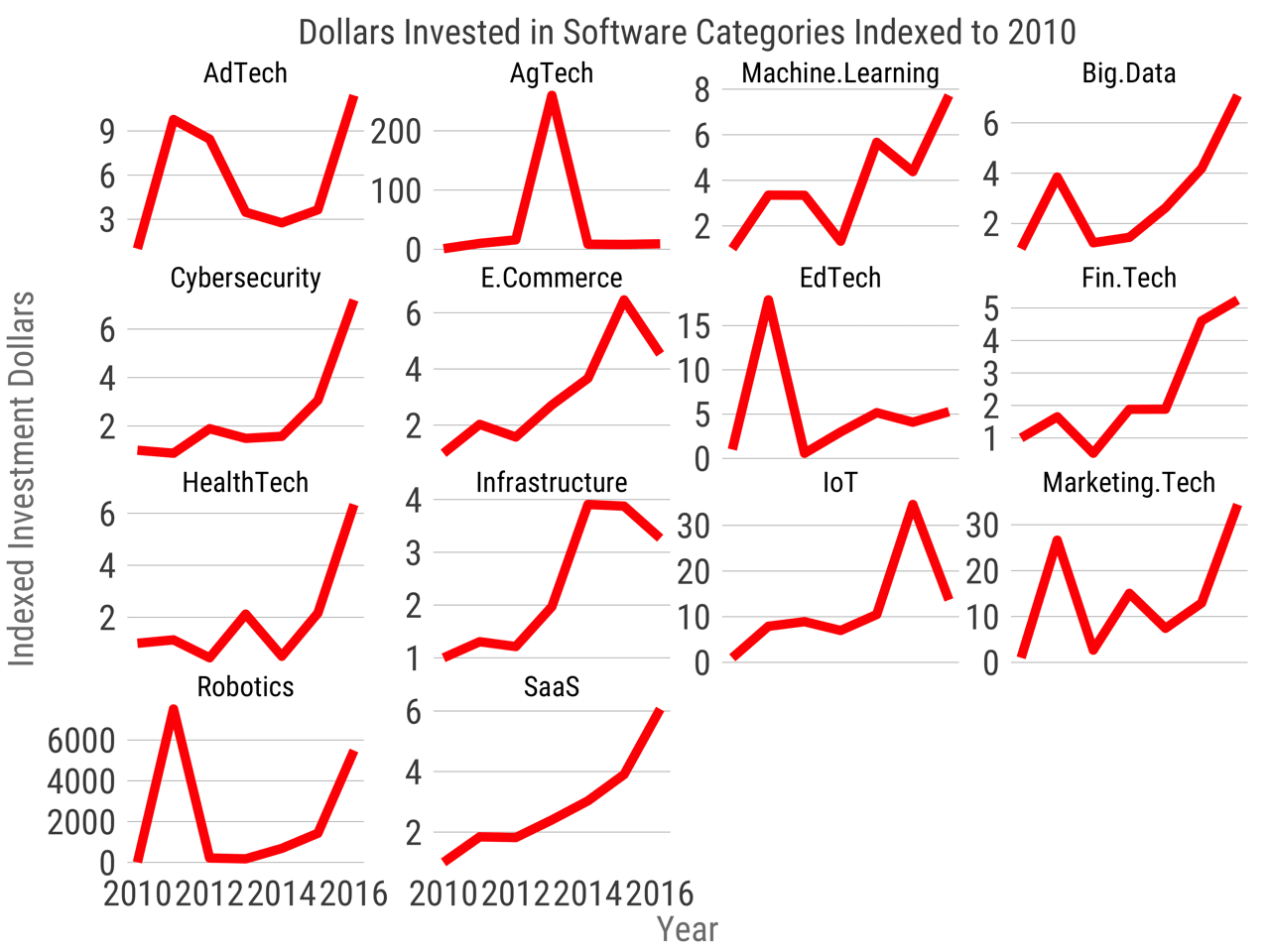
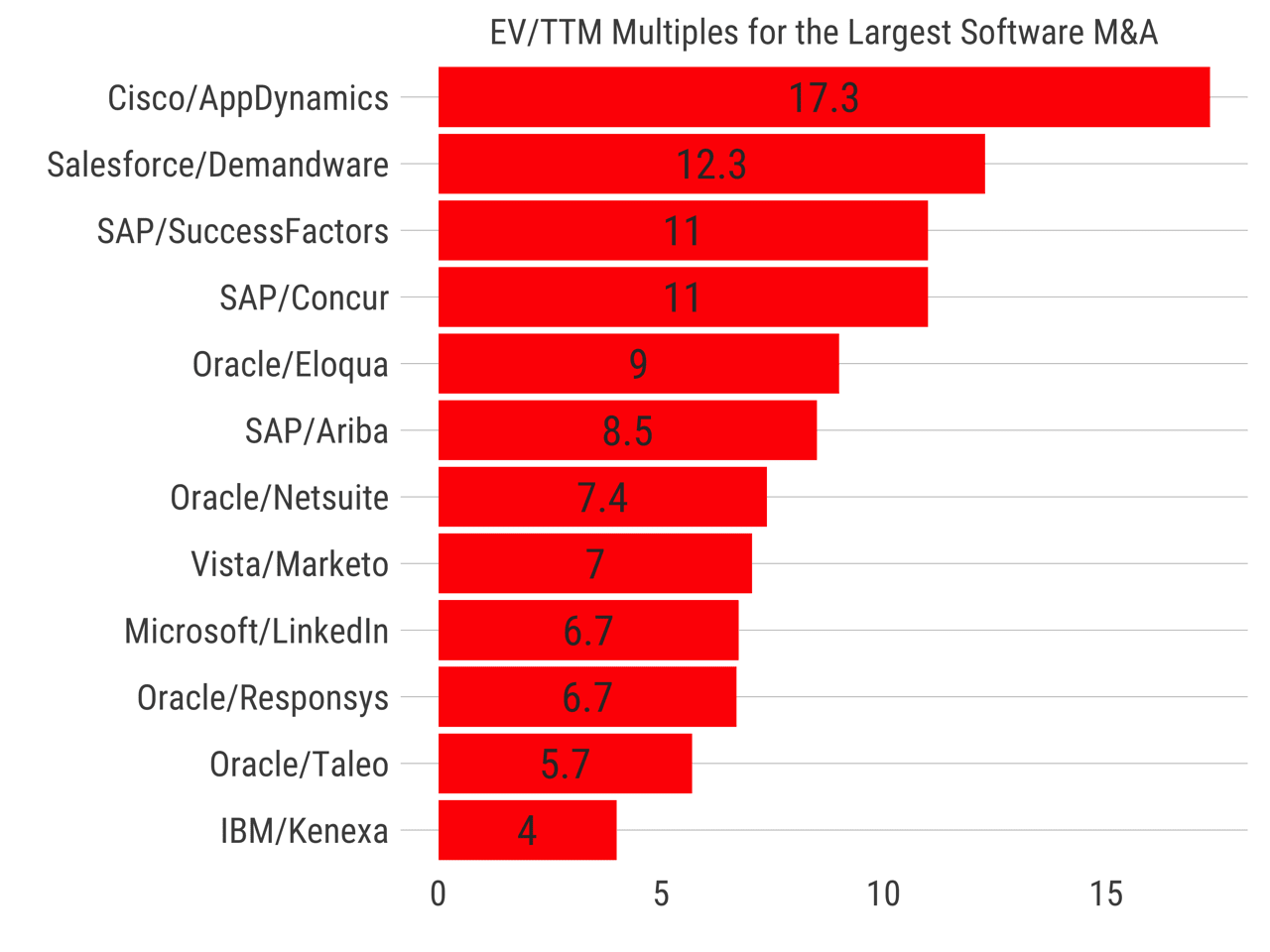
2016 has been a volatile year. Major capital investments fell 55% in Q3. The IPO market is a tale of two cities with some companies able to go public and catapult their valuations, but the overall number remains in the single digits. Last, M&A activity seems quite brisk with more than 30 $1B+ billion acquisitions in the last nine months alone. How do all these factors commingle to influence today’s acquisition environment? And how does it compare historically?

Read more

What Can You Remove from Your Product?

image

Perfection is finally attained not when there is no longer anything to add, but when there is no longer anything to take away.

Antoine de St. Exupery

I remember launching a new filtering feature a Google within the AdSense product. At the time, we had hundreds of thousands of website publishers using our user-interface to accomplish many tasks. They might download reports of their revenue from running AdSense ads, configure ads to match their website’s style, and indicate their preferences for the content of the ads to be shown on their site.

Read more

The Characteristics of the Most Attractive SMB SaaS Companies

What are the attributes of the ideal SMB SaaS company, an entrepreneur asked me recently. It’s a good question. There are product, marketing, and sales attributes to that ideal company that successful SaaS business have exemplified in the past.

Product

A beautifully designed, simple and elegant product is the first and most important thing.

The product satisfies the top three priority for the software buyer and consequently the software buyer uses a software very frequently. I believe that the next wave of SaaS companies will be centered around workflows, Event Driven SaaS, and this extends to SMB SaaS.

Read more

Are SMB SaaS Companies Valued Differently than Mid-Market SaaS Businesses?

image

Recently, we examined the comparative efficiency of bottoms-up and top-down businesses. Today, we’ll dig into valuation metrics to see if there’s any systematic bias in the investor community for SMB, Mid-Market and Enterprise SaaS companies.

Using public data, I categorized the 50 or so public companies by ACV at IPO. SMB is less than $10k, Mid-Market is between $10k and $100k, and Enterprise is greater than $100k in average customer value.

Read more

What's the Maximum Rate of Growth for Your SaaS Startup with Paid Customer Acquisition?

How fast could a SaaS business grow on paid acquisition? If the business decided today to sprint and acquire as many customers as possible?

We can model it with some assumptions, some of which are quite aggressive. Let’s take a startup with $1.2M on the balance dedicated to customer acquisition. Assume a $10,000 CAC, an 80% gross margin and a payback period of 12 months. We’ll assume customers begin to pay the month after they sign up, and all this math implies customers pay a monthly fee of $1042 ($12,500 ACV over 12 months). Assume zero net churn and no impact of the crush of new customers on sales or support.

Read more

The Pressure to Move Up Market Facing SMB SaaS Startups

ARR15102550100
New Customers per Year1333666713,33333,33366,667133,333

When an SMB SaaS startup is young with quickly growing revenues, more of the same works. A $1M ARR SaaS startup with an average selling price of $750 per year needs to add 1,333 each year on average to double.

Fast-forward two years when the company is at $5M in ARR and the business needs to be adding 13,333 customers each year. At $25M in ARR, suddenly the 100% growth figure demands 33,333 customers.

Read more

Startups as a Second Language

image

Like many others, English is my second language. As I learned over time, there’s a particular way of ordering adjectives in English to make yourself understood. Opinion. Size. Shape. Condition. Age. Color. Pattern. Origin. Material. Purpose. Noun. That’s the order most of the time.

When I say a unique large curvaceous second-hand modern orange checked Italian carbon fiber racing car, it rolls right off the tongue and you imagine a sleek, if garish, Lamborghini. But if I alter the order just a bit to say carbon fiber checked Italian orange racing second-hand curvaceous unique modern car, I’ve lost you in adjectival gobbledygook.

Read more

How Should I Think About My SaaS Startup's Burn Rate

If I made a word cloud of the terms in 2016 that dominated Startupland, burn would be among them and perhaps the largest. On the contrary, burn would be absent from the 2015 list, replaced by unicorn. Starting in the end of 2015, Public companies have markedly shifted the way they manage their businesses pushing toward cash flow positive and net income positive. In parallel, startup founders and CEOs have markedly shifted the way they communicate and manage their businesses.

Read more

Startup Best Practices 22 - Explicit Risk Bundles and Mitigations

image

In Startups are Risk Bundles, Leo Polovets outlines the risks startups face as they grow. In particular, Leo identifies common mistakes when addressing that parcel of peril. Addressing minor risk by spending time and effort on low priority or low impact risk a common failure mode for companies. The business isn’t focused on the most critical issues.

One founder I met recently took this idea to heart. On the last slide of his presentation, he listed the four key existence risks facing the business today. In the adjacent column, he wrote the strategies he intends to employ to mitigate those risks.

Read more