Hiring for a Discipline You Know Little About

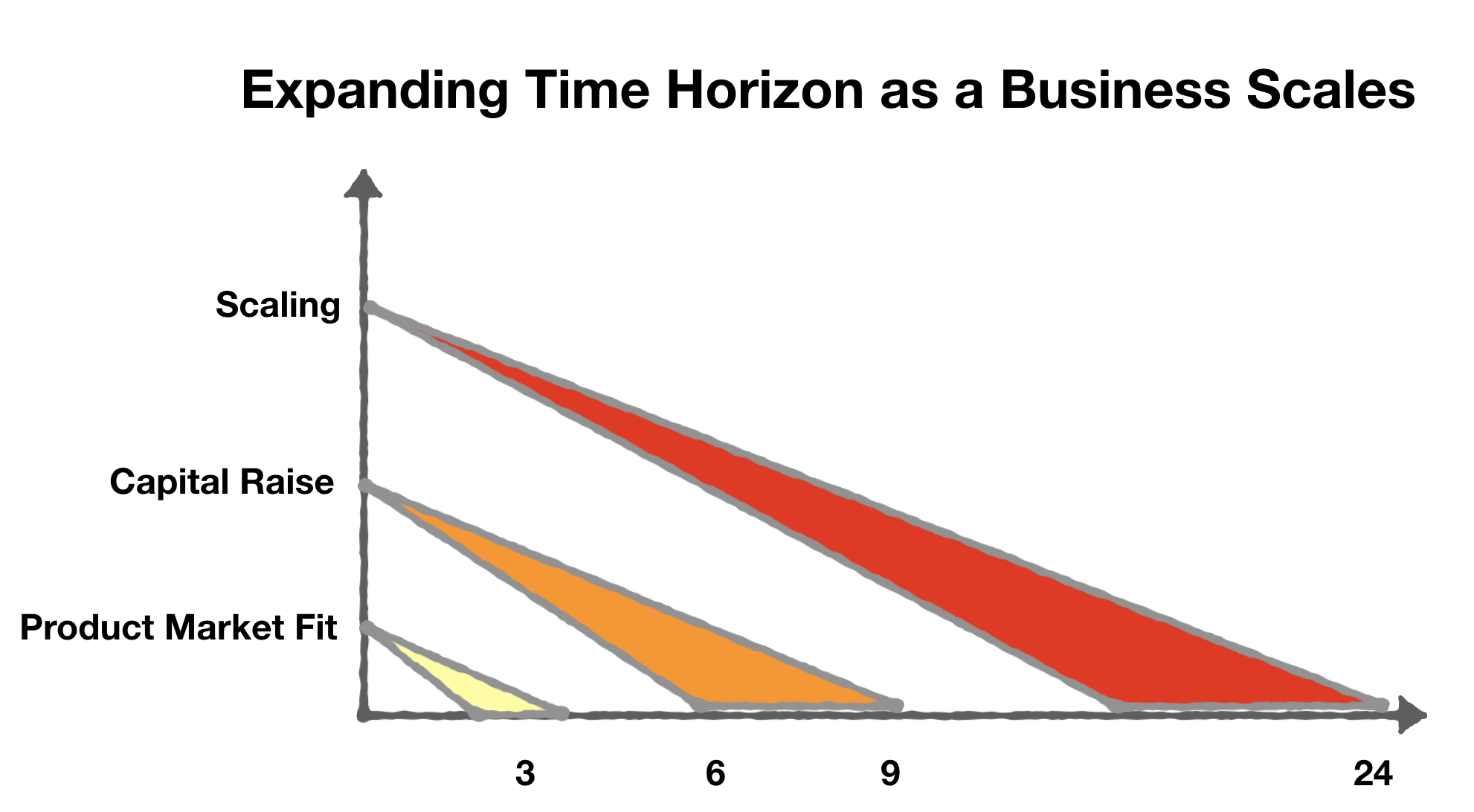
Your startup is growing. You suspect you have initial product market fit. Time to hire the first head of each department. Sales, marketing, customer success, engineering, product management. Some founders might have experience or exposure into one of these teams. But rarely do they understand every one well enough to hire the right department chief. How should you do it? I’ve observed three successful strategies.

First, do the job yourself. Great managers manage themselves out of a job. By doing the work yourself first, you’ll know exactly what the role entails and what questions to ask. You’ll have the experience to judge whether a candidate can outperform you in that role. This is a common strategy for sales. The founders confirm product market fit with the first 10-20 sales and then hire an expert to scale the team and polish the process.

Read more

Maximizing Productivity on My Commute

I commuted to my first job on a bicycle. With my parent’s help, I bought a lemon yellow second-hand road bike that I pedaled 20 miles each way from 30th and N streets in Georgetown, Washington DC, over bustling Chain Bridge and the languid Potomac to an office park buried in Tyson’s Corner in Virginia. That was my workout each week. Then I moved to California and retired the bike. When I started working at Google, I spent the hour on the Google shuttle from San Francisco to Mountain View emailing. Today, I drive most places.

Read more

Has SaaS Become Commodified?

A founder asked me if we had reached the point that SaaS is commodified. “Can you build a venture scale SaaS company anymore?” He made three key points to support the argument.

First, the technology barriers to starting a SaaS company continue to fall. Amazon, Google and Microsoft provide sophisticated, scalable, and easy to use infrastructure as a service. Next-generation machine learning tools are also available by API and improving all the time.

Read more

The Volatility of Multiples in the Public SaaS Market

image

We’ve seen quite a bit of volatility in the valuations of publicly traded software companies over the last 5 years. In 2014, the average software company traded at 7.7x forward revenues - the sum of projected revenues over the next 12 months. Two years later, that multiple dropped 57% to 3.3x. Today, we’re exactly where we were in 2013, at 5.4x, which is coincidentally, is the average over this time period.

Read more

The Limiting Factor of Voice and Dictation Adoption

Harry Stebbins published a podcast with David Beisel this week in which they discussed the importance of voice. David says, “Voice is the most natural user interface possible.” I think the biggest challenge for voice is the skepticism and cynicism engendered by a decade or two of poor experiences. It’s no longer the technology.

One of my partners recently switched from an iPhone to an Essential phone and was stunned by the accuracy of the voice interface Google offers. Voice has become far more sophisticated than just a few years ago, and we are quickly moving past the stage of toy applications.

Read more

Why Cash Conversion Cycle Matters for Your Startup

The cash conversion cycle is a key metric for startups, but one that often isn’t talked about until a business hires a CFO. Once a business established product market fit, the cash conversion cycle is a key metric of a company’s cash efficiency - how quickly a company can convert a dollar of investment into a dollar of cash flow.

To calculate the cash conversion cycle for a software company, the formula is

Read more

When, If Ever, Should Profitable Bootstrapped Startups Raise Capital?

“Would you compare a bootstrapped SaaS company to a seeded company? At what point does the bootstrapped company have to raise if it’s profitable, if ever?” One founder asked me this question recently.

I hesitate to compare and contrast bootstrapped and venture backed businesses, because I’m a venture capitalist and it’s very easy to dismiss any analysis as biased in favor of venture investment. As I’ve said countless times, there are many ways of building a very successful business.

Read more

Three Big Ideas on Technology Innovation Cycles

Invest Like the Best is one of my favorite podcasts. Hosted by Patrick O’Shaugnessy, Invest Like the Best profiles investors from many different disciplines. Recently, New York seed investor Jerry Neumann spoke on the show and talked about three key ideas on the technology innovation cycle.

First, he discussed reading Carlota Perez Technological Surge Cycle. I first read Perez’ book after Fred Wilson wrote about it. Jerry describes the theory very well in about 10 minutes. The key idea is each technology cycle lasts 70 years, and is broken into two phases installation and deployment.

Read more

How to Decide When To Move Upmarket

At some point in the life of most SaaS companies, the business will be faced with the question, when should we move up market? The strategic question might be catalyzed by increasing cost of customer acquisition in the core SMB segment. Alternatively, a surge of large customers paying for the product might trigger the question. Or account executives might raise it. Whatever the reason, this is a key strategic question.

Moving upmarket is an experiment. It’s a new sales motion. Very few businesses have clear demonstration of success in enterprise sales cycles without effort. The first step in deciding when to move up market is an asset allocation question.

Read more

Labor Arbitrage Comes to Silicon Valley

Last week, I wrote about the decline of investments in San Francisco startups. On Hacker News, this post engendered a lengthy conversation on the challenges facing founders and start-up employees in San Francisco. In short, the cost of living in San Francisco and the Bay Area has reached untenable and unacceptable heights for many.

The average one-bedroom apartment in San Francisco costs $3500 per month. That is simply astronomical. It’s 30% more expensive than Manhattan.

Read more