Thursday is Podcast Day

Thursday is the new Monday for podcast producers. Analyzing hundreds of tech & VC podcasts over six weeks this fall through MotherDuck’s MCP server, I found 42% of episodes drop mid-week, between Thursday & Friday. Sunday? A publishing desert at just 3%.

Here’s what else the data reveals.

When Episodes Drop

Prompt: Count the number of podcasts published on each day of the week with %

motherduck_podcast_dow_v2

The pattern makes sense : listeners consume podcasts during commutes & workouts early in the week, so publishing mid-week ensures fresh content when people are ready to listen.

Read more

A Flash of Deflation

Gemini 3 Flash represents a step function increase in model deflation : a gauntlet thrown.

Google’s latest model underprices the state of the art by 70% to 79%, with very similar levels of performance. At $0.50 per million input tokens & $3.00 per million output tokens, Gemini 3 Flash hovers within 9% of the best scores across 20 benchmarks.1

How much better is the price-performance? How much cheaper can teams run inference?

Read more

The Bifurcation in the AI Market

Despite open-source AI models being 10-100x cheaper, proprietary providers haven’t lost pricing power. OpenRouter’s data reveals a market splitting in two.

Over the last year, open-source models’ market share has remained stable around 22-25%, briefly spiking to 35% during the explosive growth of Chinese models in mid-2025 before settling back down.

Open Source Market Share Steady Despite Massive Growth

The weak price elasticity indicates that even drastic cost differences do not fully shift demand; proprietary providers retain pricing power for mission-critical applications, while open ecosystems absorb volume from cost-sensitive users.

Read more

Is Your AI Funded by Junk Bonds?

It’s not often that venture capital thinks about the credit markets. I remember becoming a venture capitalist three months before Lehman fell, when mortgage securities topped the news of the global financial crisis.

Recently Oracle’s bonds have been weighing on my mind.

AI’s capital expenditure in 2025 represents about 1.6% of US GDP. In 2026, that number should top 3% of US GDP according to Goldman Sachs estimates1.

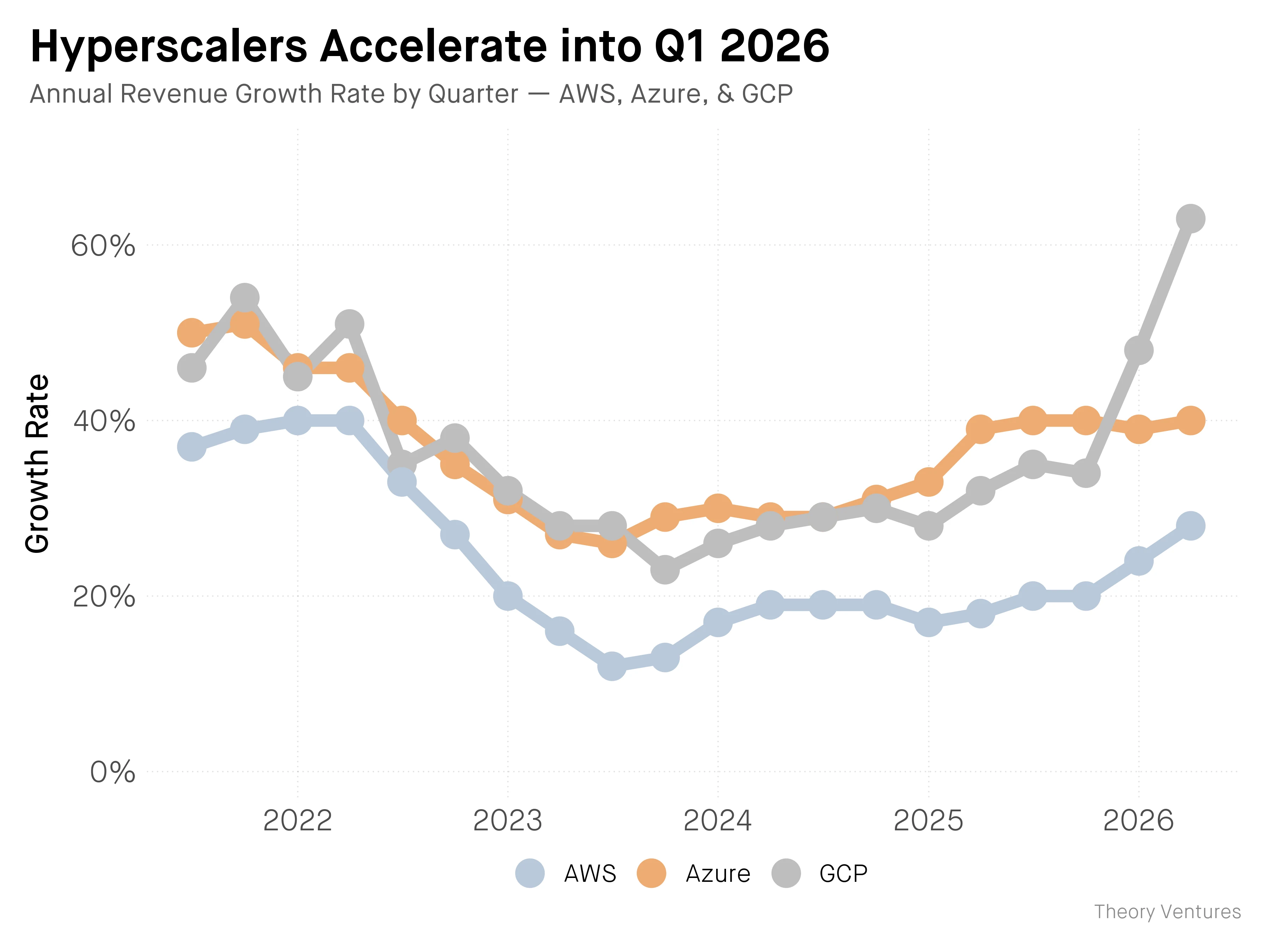
Hyperscaler Capital Expenditures for Data Centers

Google, Microsoft & Amazon do not have the capital necessary on their balance sheets to fund this buildout without debt.

Read more

The Average Founder Ages 6 Months Each Year

No, founders are not adopting Bryan Johnson’s regimen to reverse aging. Quite the opposite : the average founder raising capital ages six months every year.1

Median founder age trend over time

I suspect founder age has been increasing steadily for three reasons. First, venture capital has shifted toward AI, which grew from roughly 10% to 60% of investment in just three years.2 AI founders skew older. Many AI labs are started by PhDs who spent extended periods in school & often come from industry, commercializing initiatives from major labs or hyperscalers.

Read more

The Two Context Databases Powering Enterprise AI

Enterprises learned a lesson from cloud data warehouses. They handed over both data & compute, then watched as the most strategic asset in their business, how they operate, became someone else’s leverage, which created an opportunity for Iceberg.

Fool me once…

Leaders have recognized their companies need a new system of record for AI agents in the form of a context database. There are two different kinds of these context databases :

Read more

The AI Value Gap : Where Does the $7,000 Per Seat Go?

A new study from OpenAI shows AI saves the average white-collar worker 54 minutes per day. Where does all that value go?

BLS data shows median weekly earnings for full-time workers hit $1,165 in Q3 2024, or $60,580 annually. Across 2,080 working hours, hourly compensation equals $29.13. One hour saved per day equals 250 hours per year, or $7,282 in recovered productivity per seat.

Current AI pricing captures between 3% & 5% of this value :

Read more

Streaming Comes into the Fold

Streaming is the next category to consolidate within the modern data stack. IBM announced its intent to acquire Confluent.

The deal values Confluent at $11.1 billion, or 10.0x LTM revenue. Confluent commands more than 40% of the Fortune 500 as customers & has grown into a $1.1 billion revenue business.

The founders of Confluent, including CEO Jay Kreps, created Apache Kafka, a streaming technology built inside LinkedIn. Founded in 2014, Apache Kafka now runs at more than 80% of the Fortune 100. Kafka powers real-time data pipelines & stream processing, updating data systems whenever a new event happens. When a taxi ride is booked, a credit card is swiped, or a user likes a comment, Kafka handles the data flow.

Read more

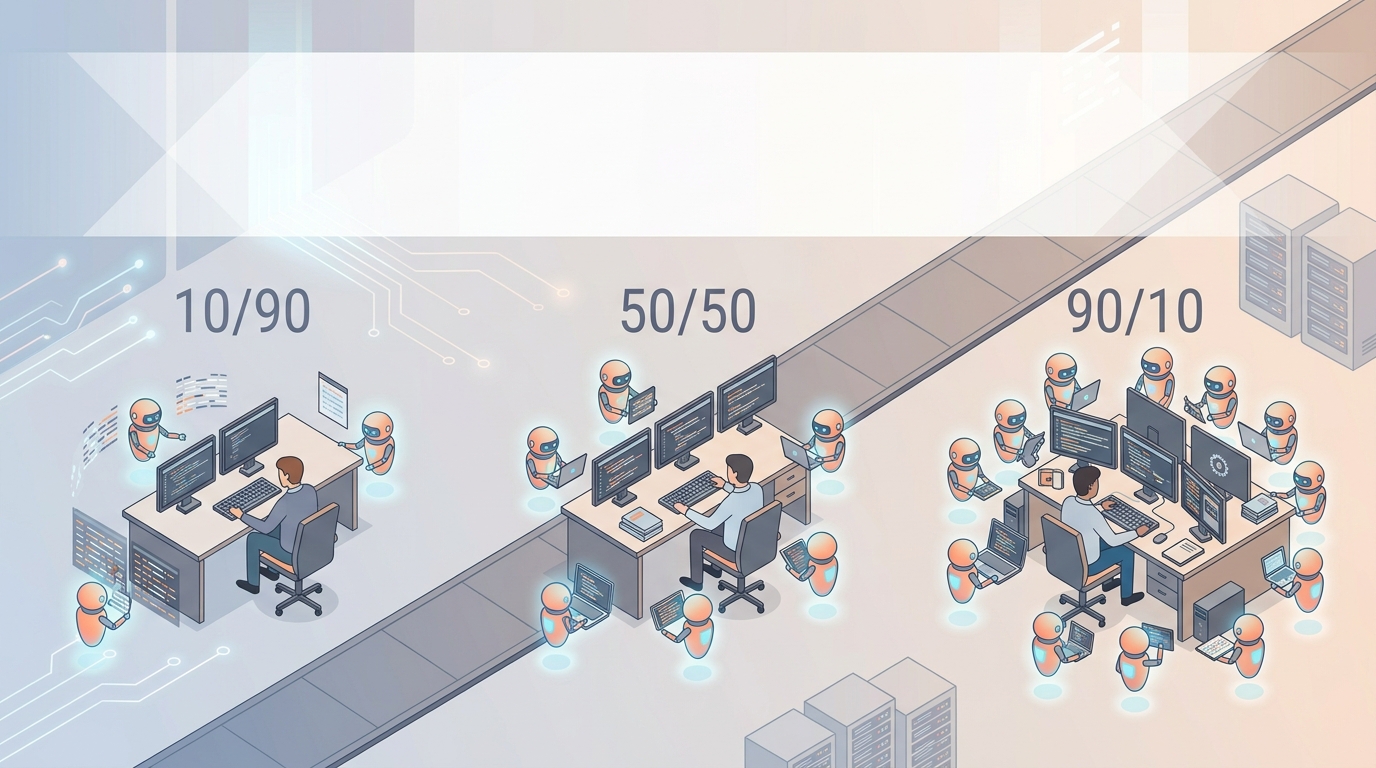
From 10 to 31 Tasks Daily : The Agent Inflection Point

Since I watched software engineers using AI, I’ve become jealous.

I’ve seen the most sophisticated software engineers assign 15 to 20 coding tasks in GitHub to an AI. They play foosball. They grab coffee. They return to evaluate the agent’s work.

The agent tackles the same task three different ways. Sometimes it nails the solution on the first try. Other times it needs more input. That engineer has paralleled her time by 10x to 15x.

Read more

Top 10 Posts of 2025

Abstract visualization showing the 2025 paradox: massive AI infrastructure investment vs dramatic cost reduction

While OpenAI signed $1.15 trillion in compute contracts through 2035, DeepSeek trained a frontier model for $6 million. This was 2025’s central question : are we building on bedrock or quicksand?

The top 10 posts of 2025 examined some of these topics :

Read more