Flux in the Fundraising Market
image

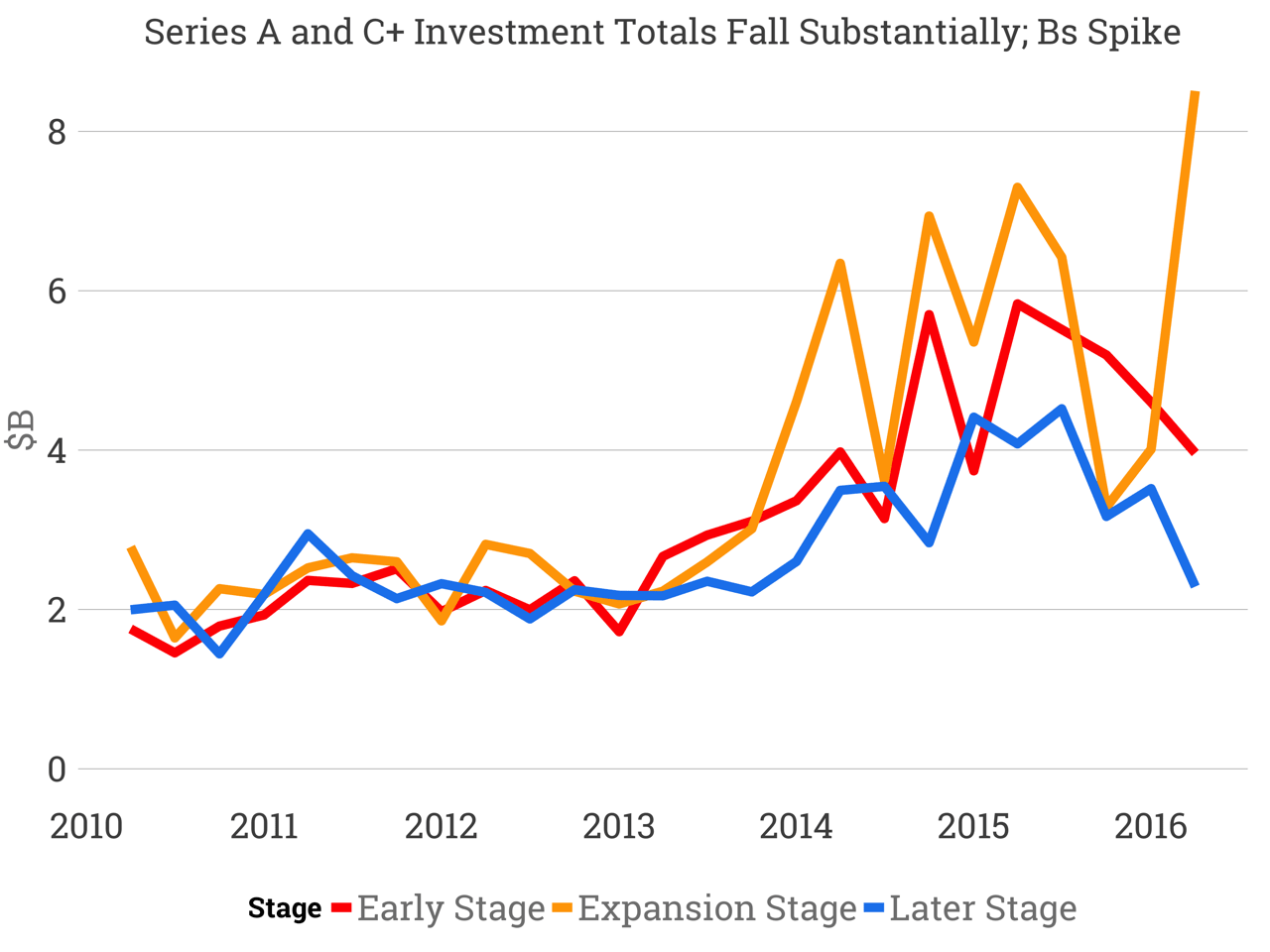
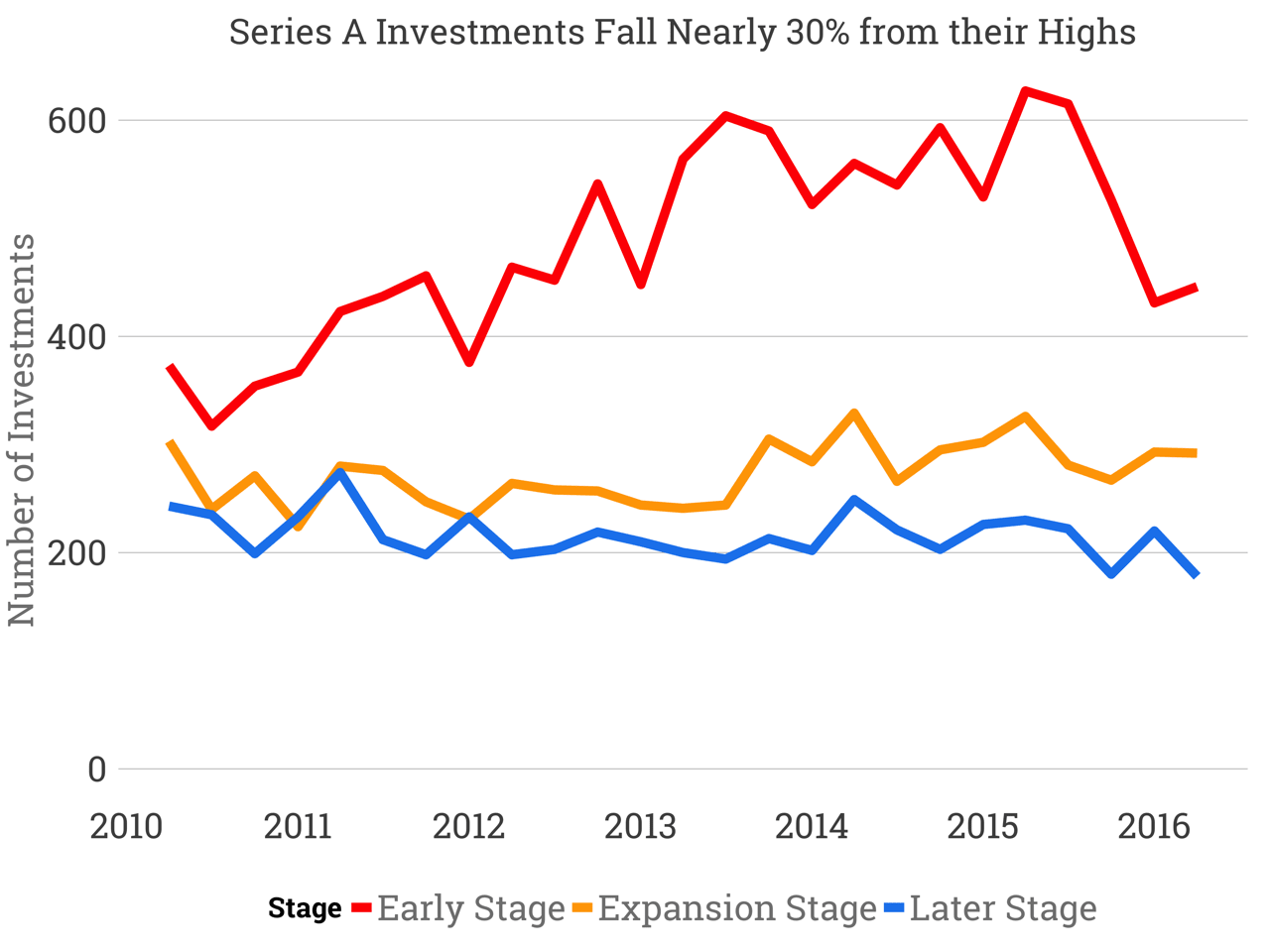
Over the last year, the amount of series A investment in US startups has fallen by nearly 33% from a high of $6 billion to about $4 billion in Q2 2016. Later stage investments have followed a similar path. Curiously, the series B/Expansion stage market has witnessed remarkable resilience, continuing to increase despite volatility.
image

Read more

Learning to Code in a Whole New Way

image

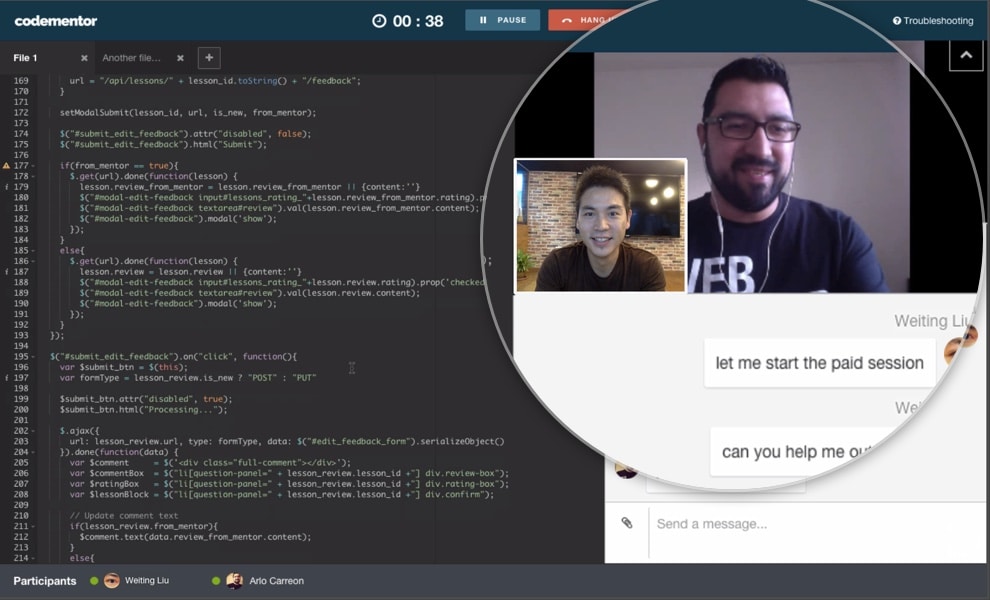
The last time I learned a new programming language was 2004. I had been writing in Java for about four years, and then I heard whispers of a new framework called Rails that allowed engineers to write web applications in one-tenth the time of a Java web application. Over the course of a few weeks, I bought an armful of paper books, read them, and worked through the examples. A few weeks later, I built my first Rails application and brought it to work at Google.

Read more

Dream Teams: The Characteristics of Billion-Dollar Startup Founders

There’s a perpetual and roaring debate in Startupland about the ideal founding team. Should the ideal team be entirely computer scientists? How important to success is having an MBA/business person? What about the stories of billionaire dropouts?

To answer that question, I’ve aggregated the academic backgrounds of 30 of the top startups of the past few years and analyzed the make up of each of those founding teams.

Above is a chart comparing the number of “billion” dollar startups by the total number of founders and the share of technical founders. The full dataset is here.

Read more

The Increasing Costs of Real Estate for Startups in San Francisco

image

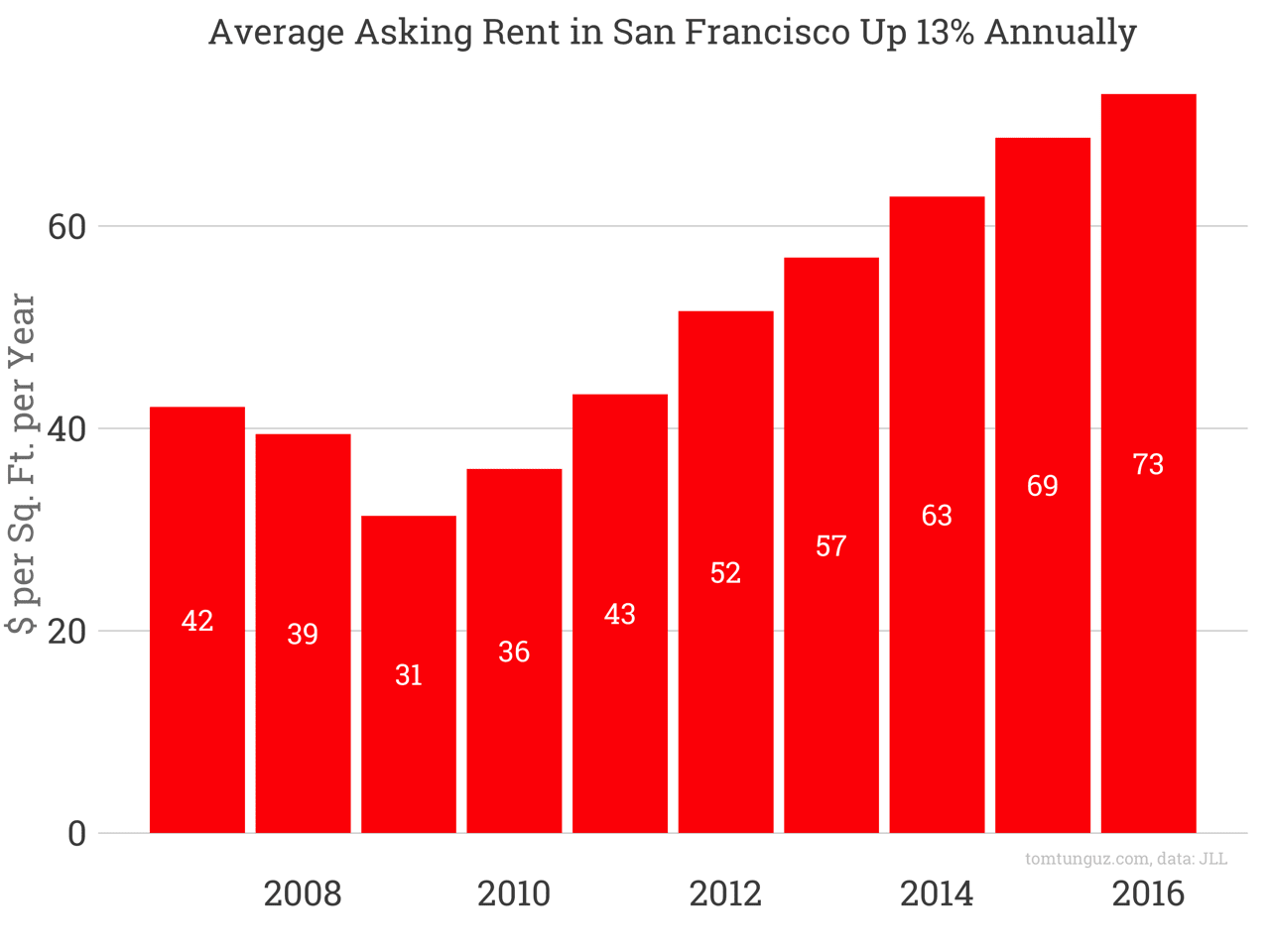
In addition to increasing labor costs, startups in San Francisco are facing monotonically increasing real estate prices. JLL the real estate broker shared their data on the average asking rent in San Francisco from 2007 two 2016, year to date. In 2009, the average asking rent was $31.37. In 2016 that number has more than doubled to $73.05, for an average annual increase of just about 13%.

Read more

The Next Big Shift in SaaS

The next big shift in SaaS is an evolution from software as a service as a displacer to a disruptor. Displacement technologies compete with incumbents on the same buying parameters. Disruptive companies change the way a buyer thinks about solving their need. Most SaaS products today are displacers.

SaaS products initially were viewed as a cheaper, often inferior product to their client/server peers. Five or ten years ago, that may have been true. But today, SaaS companies generate upwards of 15% of all the software revenue and are consistently ousting their older competitors.

Read more

How Healthy is the SaaS IPO Market?

image

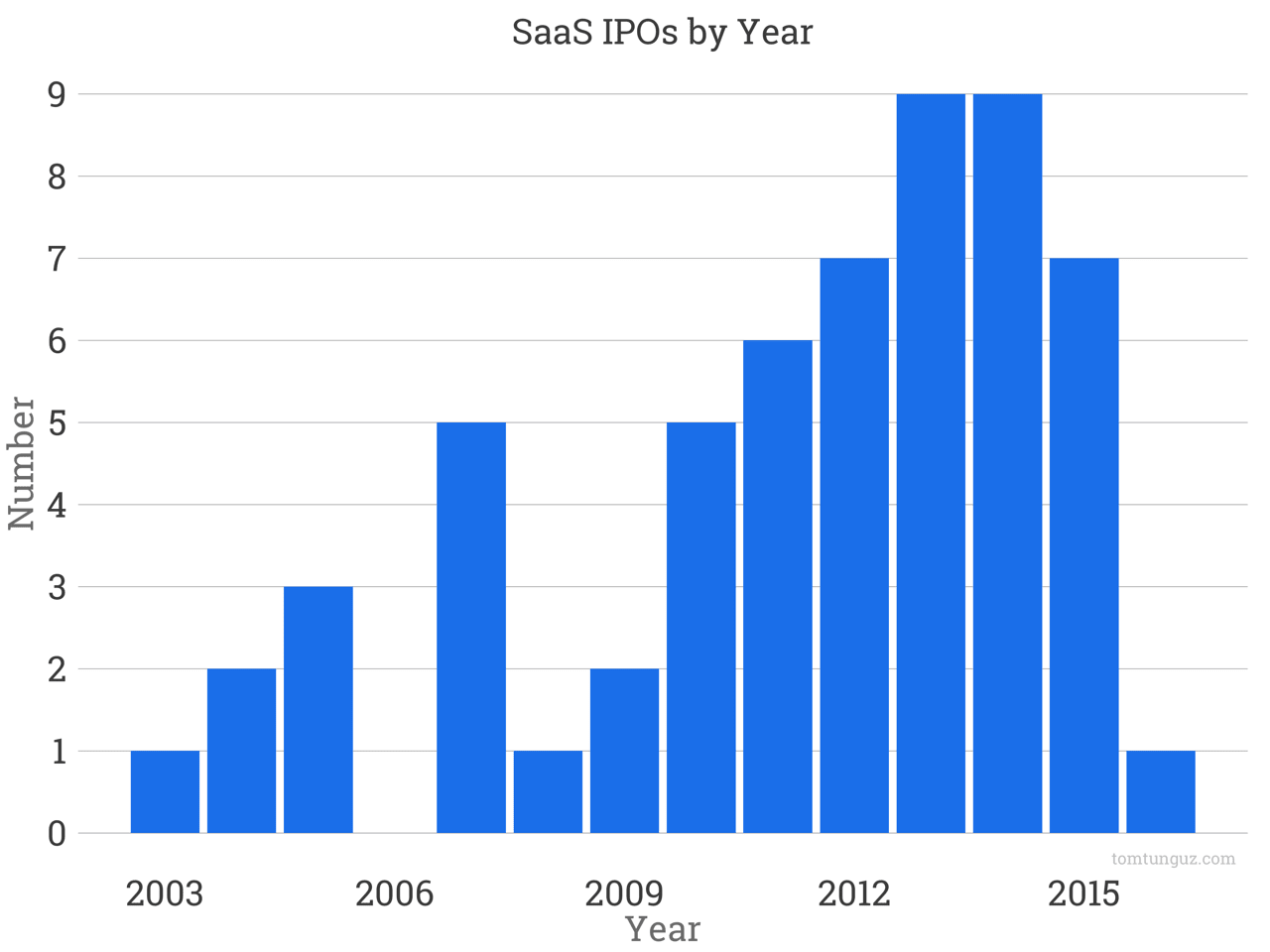
Salesforce’s initial public offering in 2003 demarcated the beginning of a new era, the era of Software as a Service. In the 13 years that followed, many startups have followed their path to build innovative software that has transformed their respective industries and sectors. The shift has been revolutionary both in software delivery as well as sales. It’s not an understatement to say everything has changed.

Read more

You're in the Business of Selling Promotions

image

On the prospects list of every SaaS startup, you will find a list of company names and next to them a projected dollar amount projecting the potential revenue from closing the deal. Each line item might represent a sale to team, department or the entire company. Regardless, there is a single champion advocating internally for the company to invest in this software product. If the project succeeds, that person will be promoted.

Read more

The Two Ingredients of Mastery

image

I’ve been reading Robert Greene’s book Mastery. Greene has amassed biographies of tens of great people from Henry Ford to Paul Graham, from Alexander the Great to Larry Page. Across many of them, he identifies two common paths to mastery: mentorship and grit.

The story of Leonardo da Vinci captures both ideas. Da Vinci was born out of wedlock and was prohibited from attending school. His father, a notary, had access to a large supply of paper which was a rare commodity at the time. With all of his free time, Leonardo would walk through the forests of Vinci and draw.

Read more

How Many Inboxes Do You Have?

image

LinkedIn. Twitter. Facebook. Asana. RelateIQ. Slack. 3 Email Accounts. Each of those is an inbox, an implicit or explicit to do list. If I count the feed and the messaging products as separate inboxes, I have a grand total of 12 inboxes for work. 12 things to check first thing and last thing. How many do you have?

Read more

The Decline of New SaaS Company Formation

image

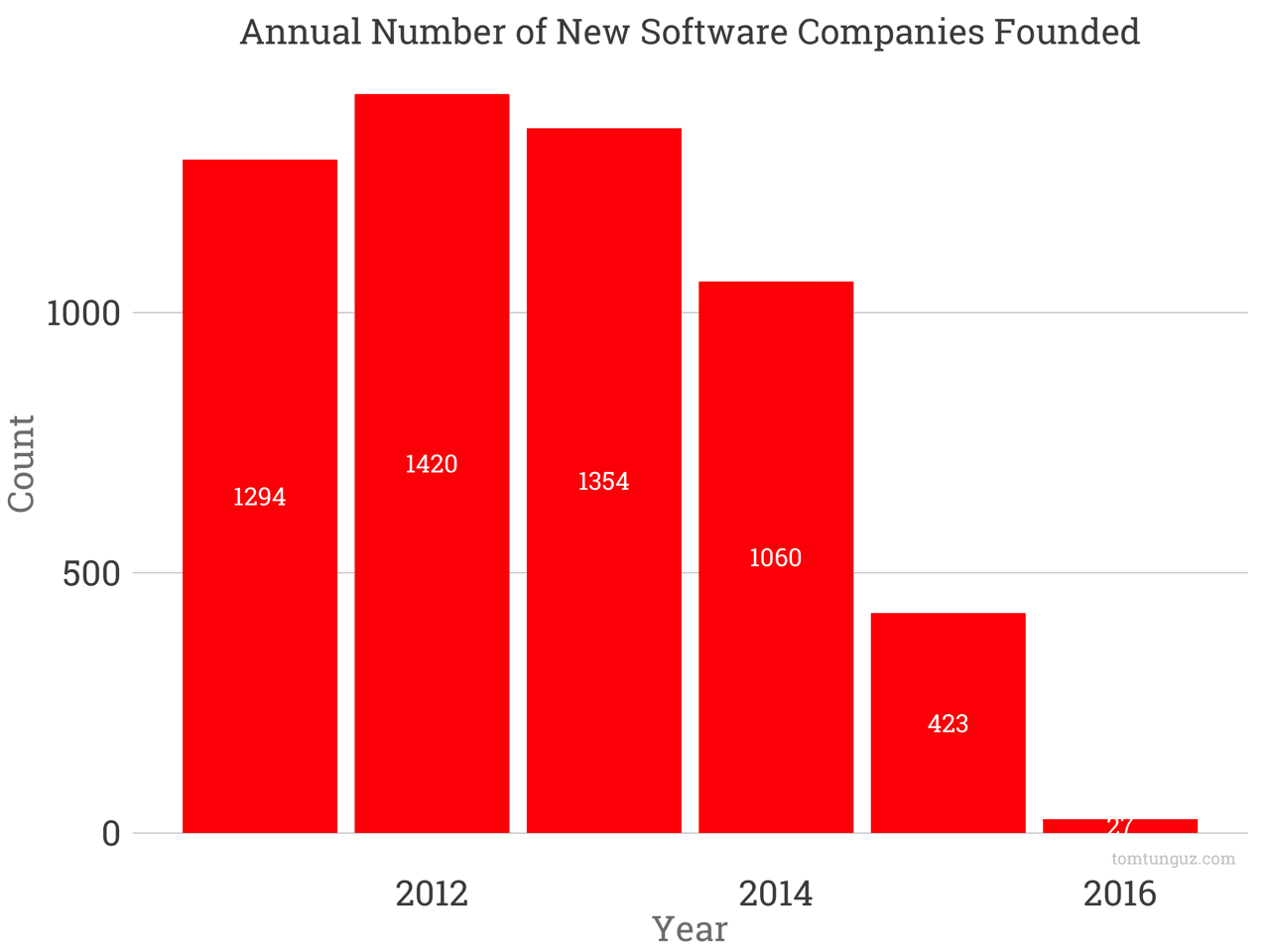
The rate of new software company formation seems to have declined materially in the past few years. In 2011-2013, about 1450 software companies were founded each year on average. In 2014, that figure fell to 1186 and in 2015, we count 481.

Why does Crunchbase data indicate this decline? First, there might be a few data issues in the most recent years. Perhaps software companies remain in stealth longer. Perhaps there a substantial delay between when the business is founded and when it appears in Crunchbase. However, Pitchbook analysis corroborates this trend.

Read more