Five Charts on the State of the Early Stage SaaS Market in 2016
image

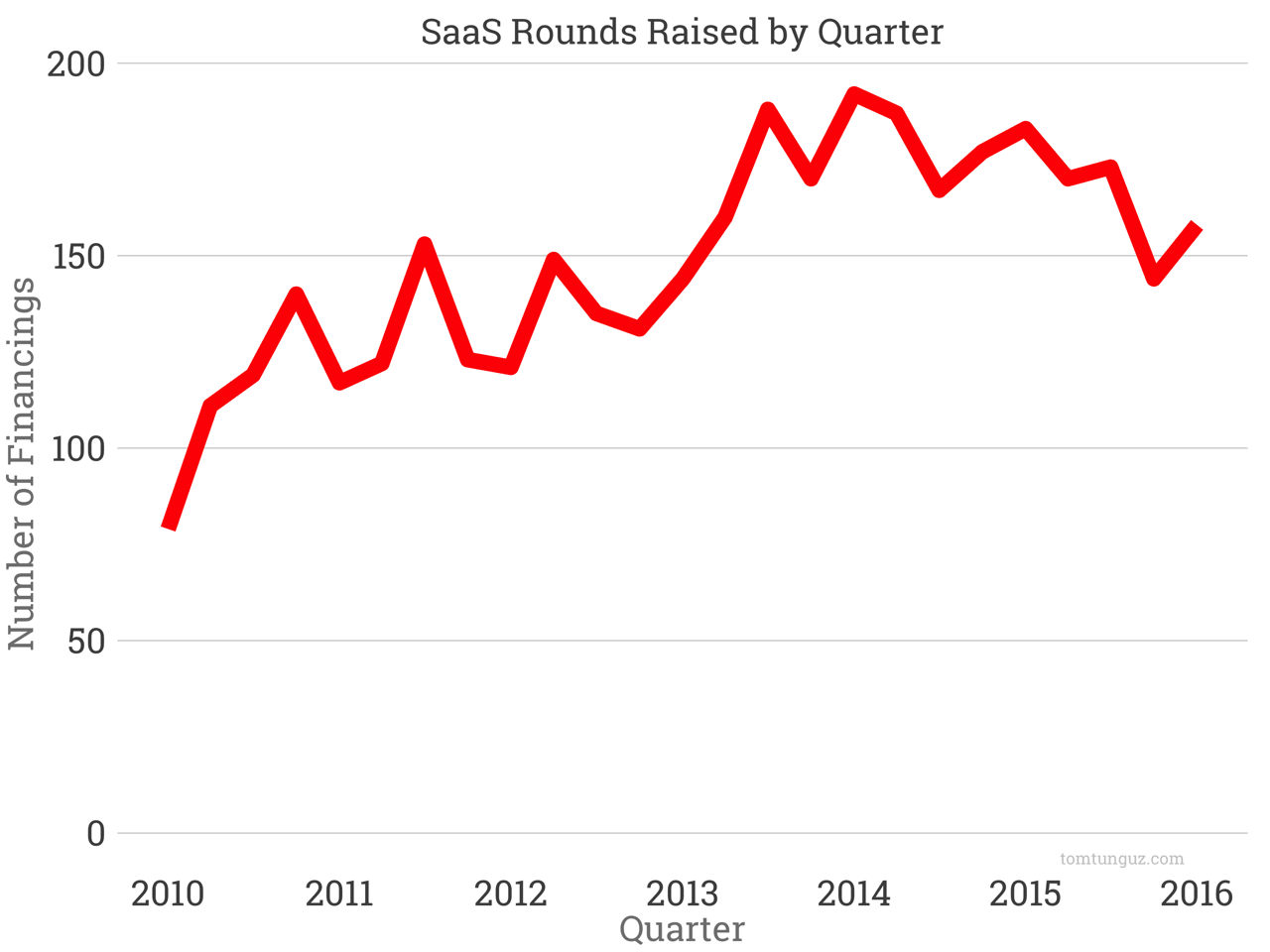
As the overall venture market environment evolves in 2016, so too does the SaaS and Software segment. The number of Series A, B, C, and D investments in software companies stabilized at roughly 170 per quarter from mid-2013 through mid-2015, before falling 17% in Q4 2015 to a two year low. In Q1 2016, SaaS rounds increased a modest 10%. The SaaS fundraising has slowed in parallel to the rest of the market. But early 2016 pace still exceeds the best quarters of 2010-2012.

Read more

The Secret of Exceptional Teams

image

It’s hard to read Boys in the Boat before I sleep. The stories of the 8 rowers awaiting the coxswain’s call at the starting line of a boat race remind me of the races I competed in with so many wonderful friends and oarsmen. Imagining those races - and in particular, placing second at nationals, the adrenaline surges and my heartbeat accelerates, resurfacing all those memories and moments.

Read more

There are Only 3 Pricing Strategies for Your Startup

Pricing. Is there any word that confers some whisper of dark arts than pricing? Or any question that instills less confidence than, “How did you derive your pricing strategy?” Many times, startups replicate and tune competitors’ pricing strategies. If everyone else prices per seat, then so should we…

Is this the right thought process?

Madhavan Ramanujam is a pricing expert. A partner at Simon-Kucher partners, the pre-eminent pricing consultancy, he argues in Monetizing Innovation that there are only three pricing strategies startups should pursue: Maximization, Penetration and Skimming. They prioritize revenue growth, market share and profit maximization differently.

Read more

Just How Far Along Are We In SaaS?

image

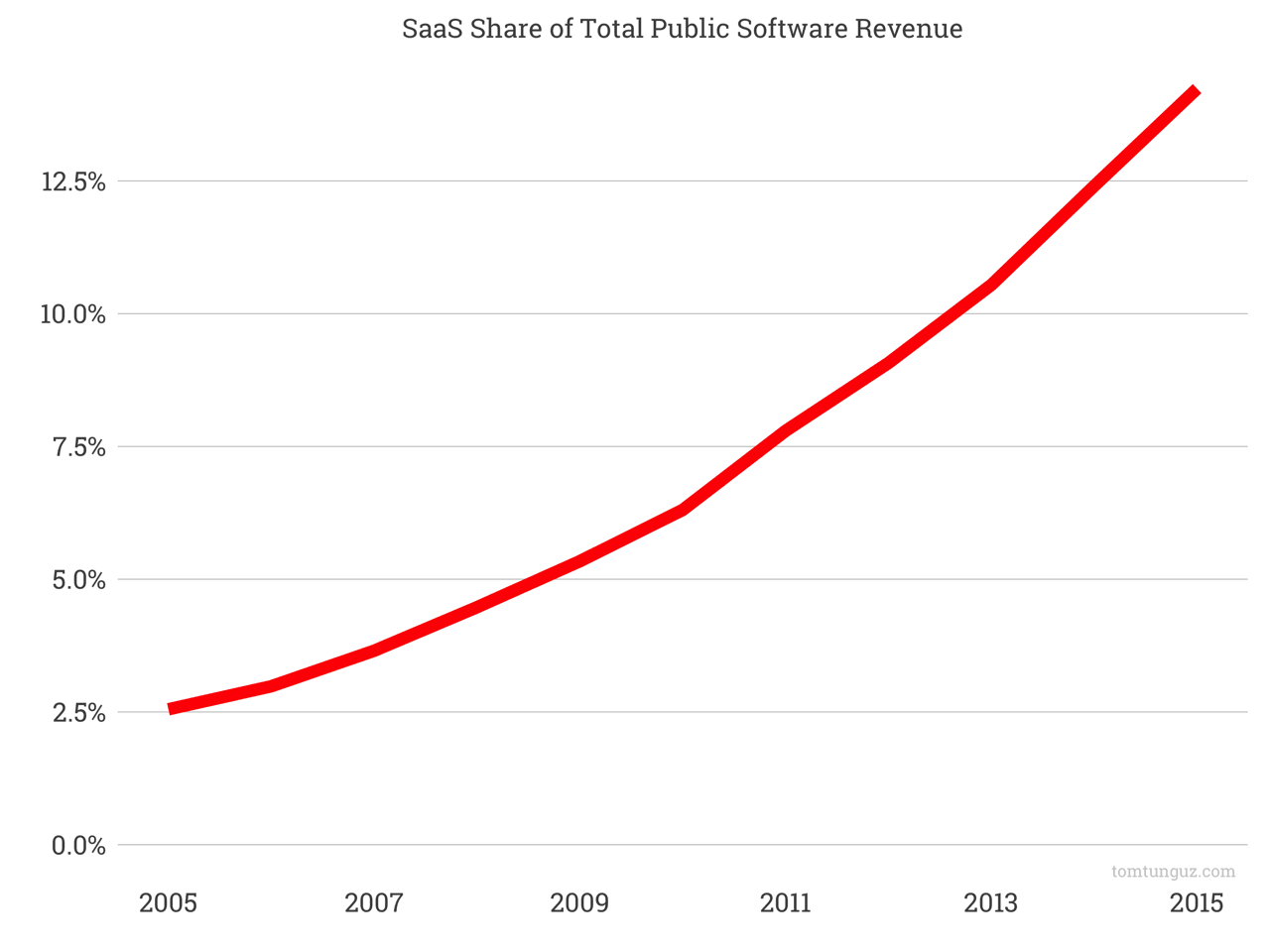
About 15 years since the creation of the first SaaS companies, public SaaS companies account for 14% of total software revenues generated by public companies, a figure growing at about 17% per year. Over the last ten years, the total amount of revenue generated by software companies has tripled from $53B to $169B, meaning SaaS companies are both taking share and growing the market.

Read more

Have VCs Changed Their Seed Investment Strategies?

image

Starting in late 2015 through the first quarter of 2016, founders have shifted their seed fundraising strategies toward a single investor. Seeds led by a single investor have increased by 50% in these trailing six months. How much of this trend is due to greater participation of venture capitalists investing in the seed market?

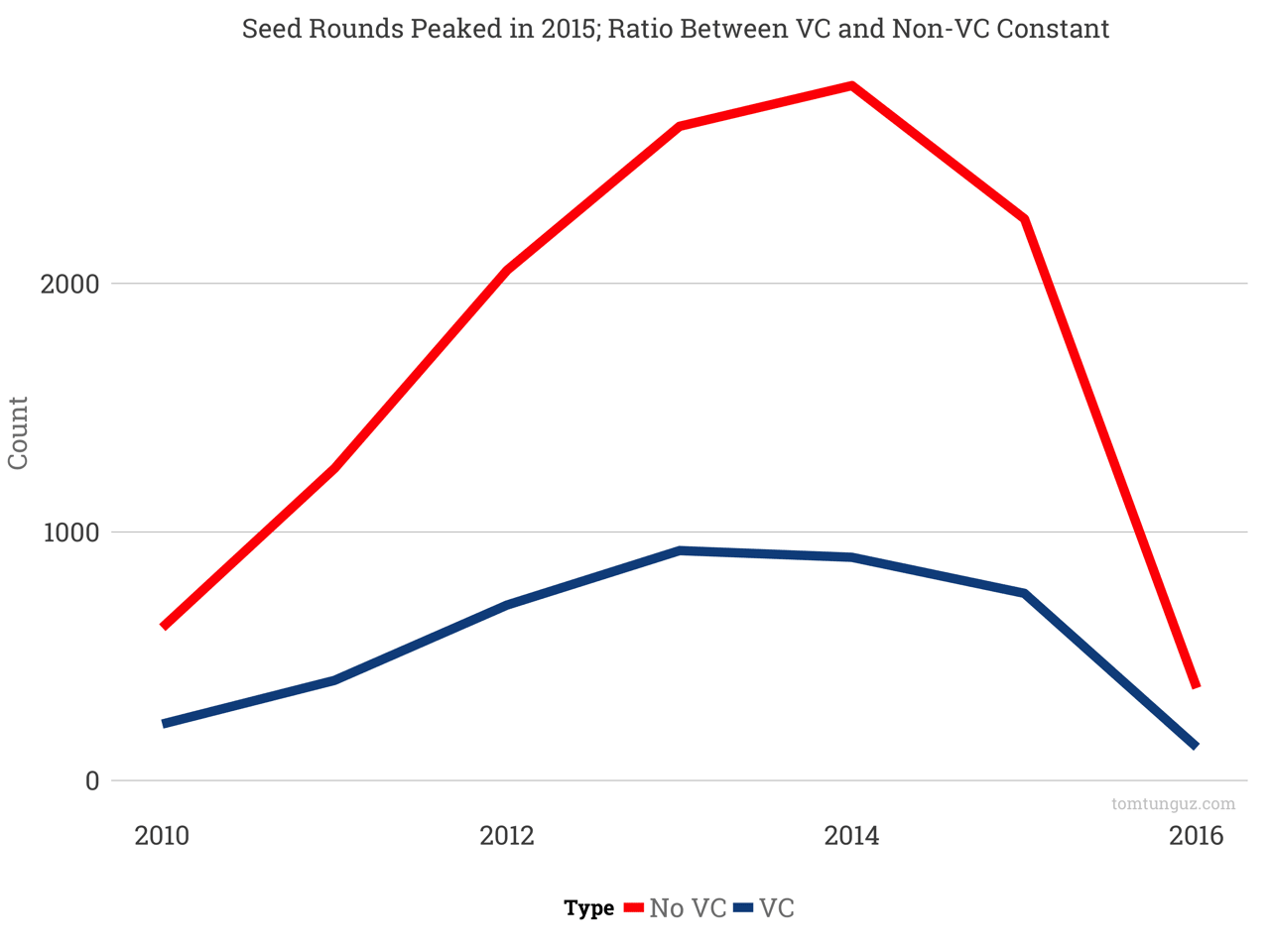
The chart above plots the number of seeds rounds by year. Rounds with VC participation are marked in blue, and those without VCs in red. Both types of rounds have increased by about 5x since 2010. Rounds without VC participation seem to be roughly twice as frequent as those with venture funds. This pattern hasn’t changed in the last five years.

Read more

Party Rounds in Seeds - Just Getting Started or Has the Clock Struck Midnight?

image

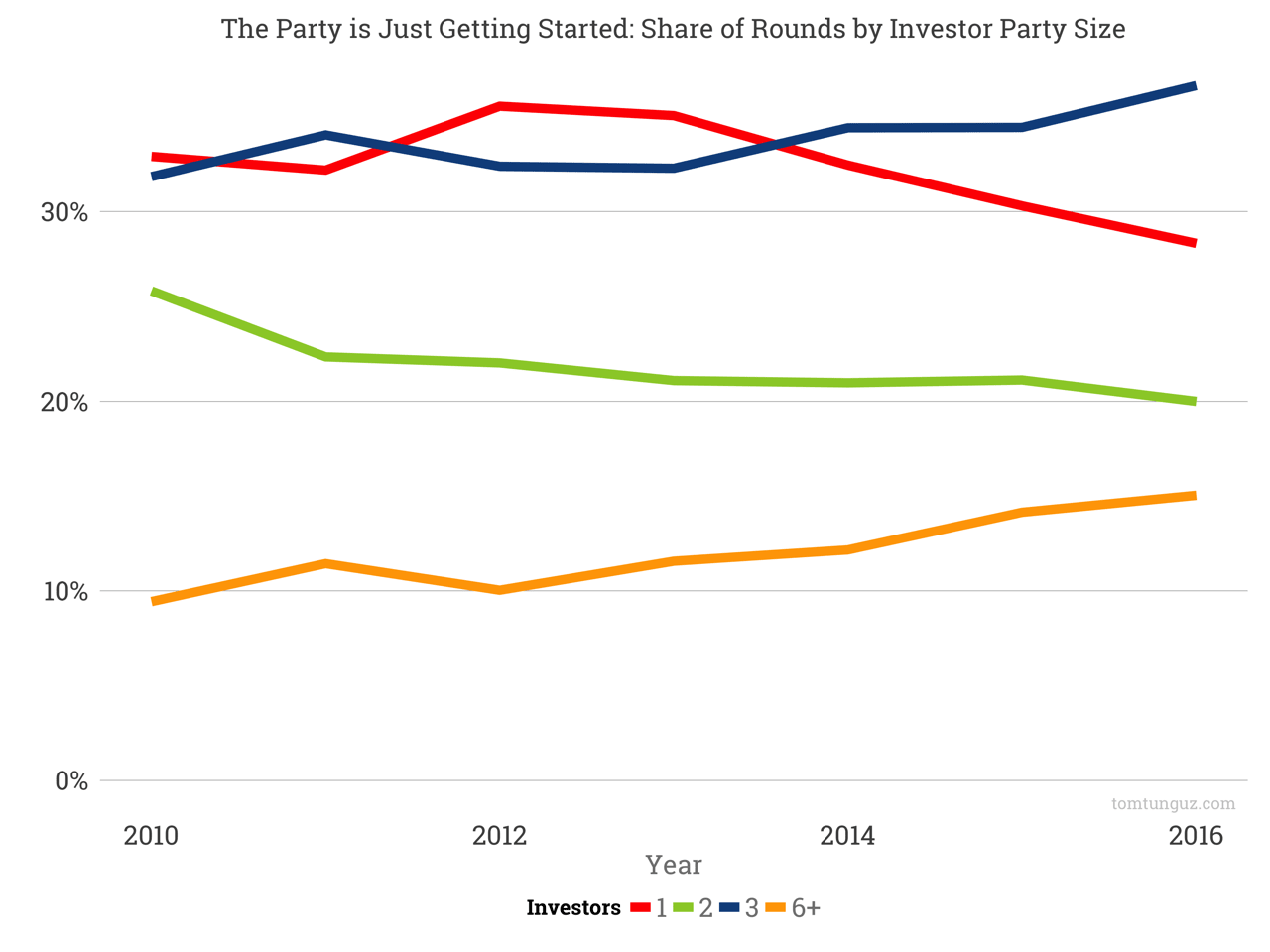
Party rounds symbolized the heyday of the startup seed market just a last year. Called parties because of the number of investors who collaboratively financed seed rounds of startups, the lists became almost comically long as seed sizes ballooned and investor syndicates swelled with them. Recently, I have heard from founders that they are less interested in party rounds, but does the data support the case?

Read more

Five Questions About The Future of Chatbots

image

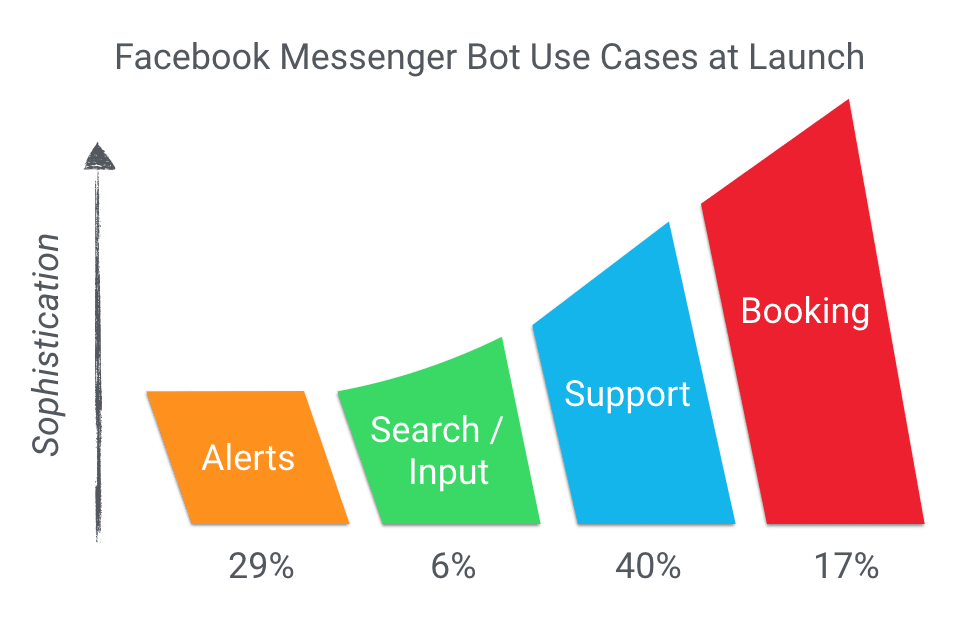
Last week, Facebook launched the messenger chatbot platform, which like Slack, Telegram and others, presents a big market opportunity for startups to innovate. In addition, the companies and products that determine how to most efficiently distribute their product on these new platforms will benefit from user curiosity and less competition, both of which result in lower cost-of-customer acquisition.

Read more

All New Ideas are Combinations of Old Ideas

image

“All new ideas are combinations of old ideas, but not all idea combinations are created equal,” wrote Frans Johannsen. Mick Pearson designed the Eastgate office building in Harare, Zimbabwe based on techniques he observed termites employ to stabilize the internal temperature of their nests. Remarkably, the Eastgate maintains an ambient temperature between 73-78°F despite variances in external temperatures from 58° to 88°. Johannsen argues in his book that most innovation comes at the intersection of fields, and Pearson is just one example.

Read more

Inside-Outside-Bias in Startups

image

Daniel Kahneman wrote about his experiences with the inside/outside bias. Kahneman, a team of graduate students, and the Dean of the Hebrew University School of Education collaborated on curriculum for judgment and decision-making for high schools. At one point, Kahneman surveyed his team to estimate the amount of time remaining to complete project.

The group’s opinion ranged from 18 to 30 months. The Dean, who had developed several textbooks in the past, initially concurred with the group. But Kahneman prodded him on the timelines for his other projects, at which point the Dean reflected and responded previous teams completed these projects in 7 to 10 years’ time. Thinking as an insider, a member of the team, the Dean dramatically underestimated the scope of the project remaining, despite his expertise. Ultimately, the book was completed eight years later. Inside/outside bias.

Read more

The Optimal Seed Round Strategy - Timing and Size

image

About one third of US startups that raise a seed round raise a Series A. The larger the seed investment, the greater the odds the company successfully raises the next round. A $500,000 seed round results in a series A 20% of the time, while $1.5M seed increases the chances to 30%, an increase of half. larger seed rounds enable early-stage companies to experiment more, hire more aggressively, recover from mistakes better and attain more of the milestones necessary to raise a series A.

Read more