What Average Contract Value is Best for a SaaS Company
image

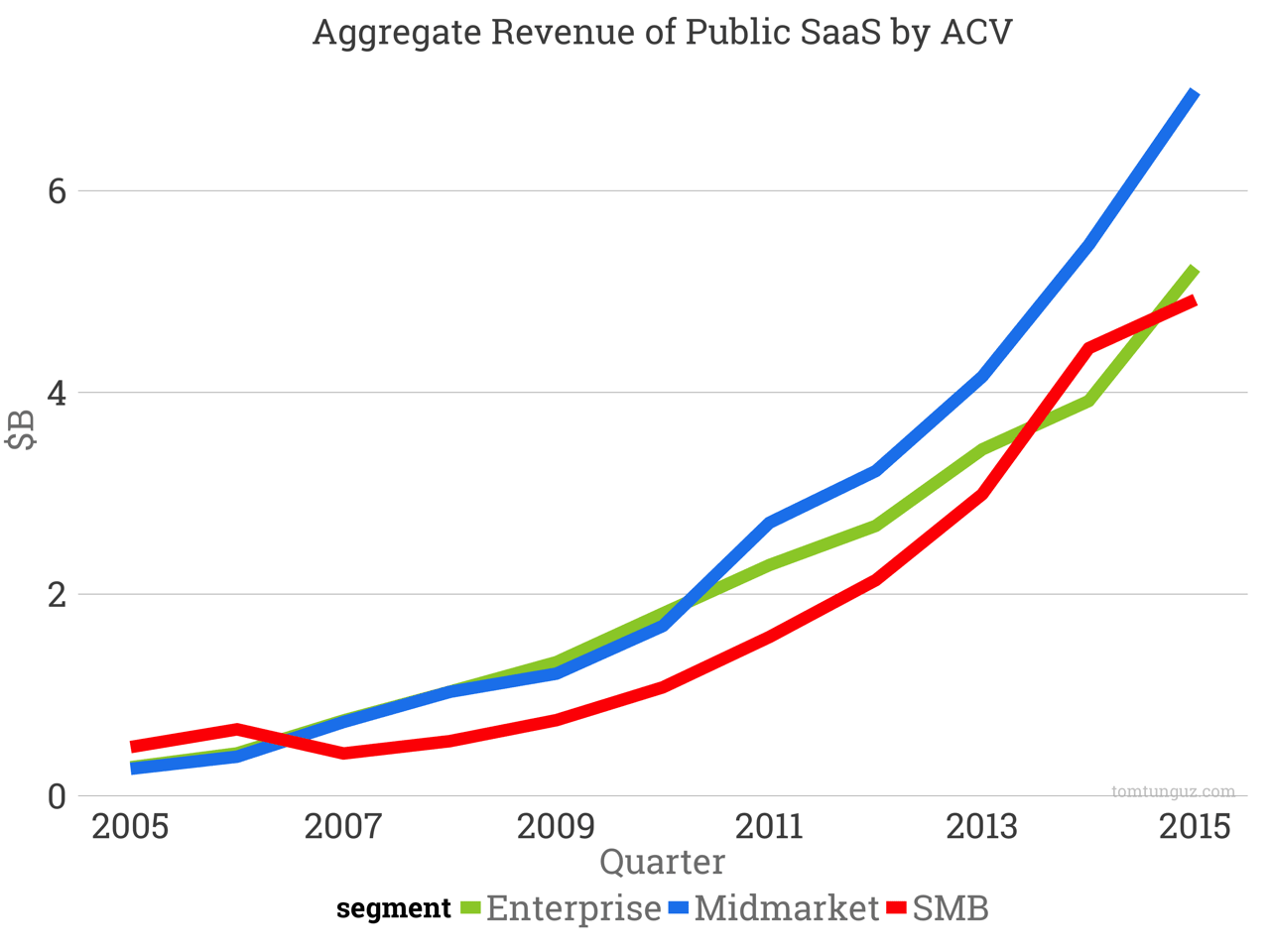
One question founders often ask is which is the right customer size to target? What is the optimal ACV for a SaaS startup? One way of answering this question is to reflect upon the success of previous SaaS companies and analyze how they did it.

The chart above plots the total revenue of publicly traded SaaS companies by ACV bucket. Enterprise companies average contract value is greater than $100,000. Mid-market companies span $10,000-$100,000, and SMB companies generate less than $10,000 per year per customer. These demarcations are not industry-standard, but my own.

Read more

The Decentralization of Venture Capital

image

To thrive, venture capital firms must perform three things well: raise capital from limited partners, source companies to invest in, and pick the best opportunities. Historically, each of these three activities has been highly centralized in a small partnership often perched on Sand Hill Road. But new networks are changing this. The latest called DAO attempts to decentralize all three at once.

Read more

Is A/B Testing A Good Idea for SaaS Startups?

image

At Google, we tested everything. User interfaces, advertising targeting models, even hiring practices. One product team tested 41 different shades of blue to ensure maximum click through rate; but the company is now testing black links. That’s one enormous advantage of A/B testing - all the sacred cows must prove their beatitude to maintain their divinity.

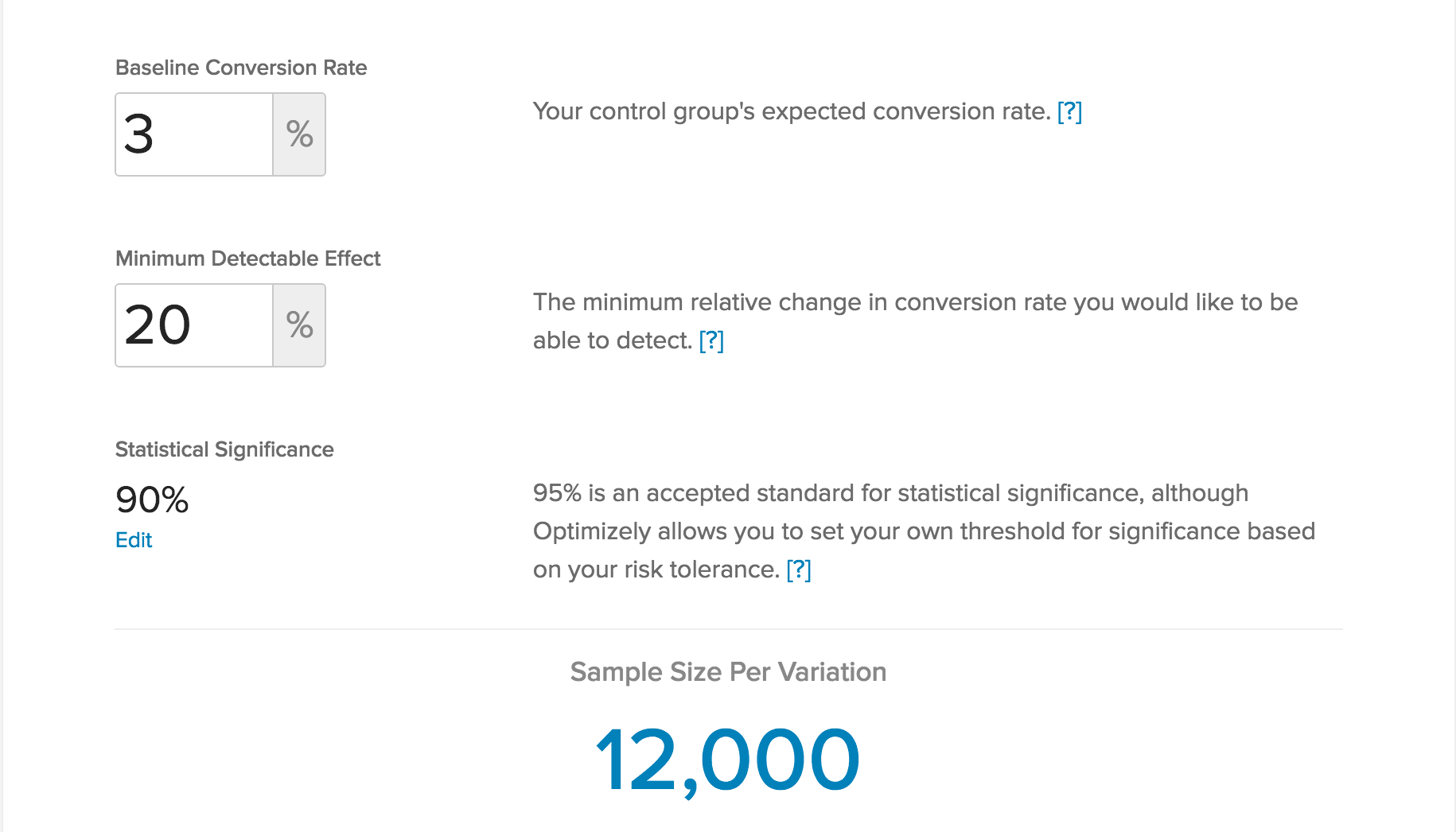
As Looker founder Lloyd Tabb explained to me, it doesn’t work for early stage SaaS companies. There’s a key ingredient to AB testing that most SaaS companies don’t have, something that Google profited tremendously from. Huge amounts of user traffic. The image above is a screenshot from A/B Testing marketshare leader Optimizely.

Read more

The Leading Predictor of Series A Valuation for SaaS Companies

image

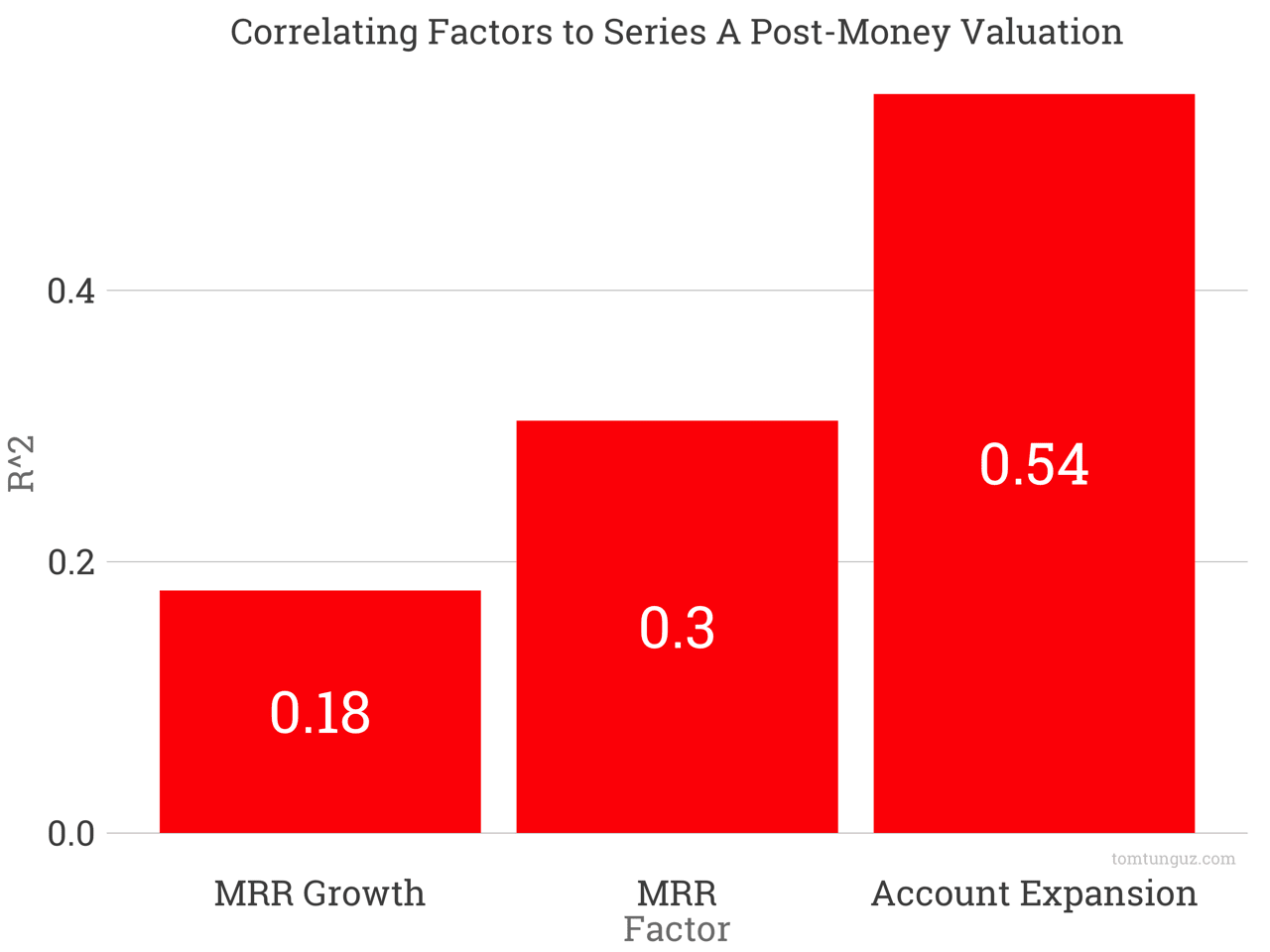
The highest correlated factor to post-money valuations for Series A SaaS companies isn’t revenue or revenue growth, but negative churn. Revenue growth correlates to post-money with a 0.18 R^2. Revenue correlates at 0.3 R^2. Negative churn, or account expansion, correlates at 0.54 R^2.

Initially, I found that result astounding, because all of the public market research and valuation work focuses instead of multiples of revenue. But the more I reflected on it, the more logical it is, especially for an early stage company. Here’s why:

Read more

Are You Spending Enough Time on Your Startup's Go To Market?

image

Half of innovation is invention. Creating an elegant, disruptive, and new experience is one of the greatest attractions of founding a company. A product that can change the way people view the world and interact with it – who doesn’t want to build that? Most start ups have no problem focusing time and attention on iterating, improving and perfecting product.

Read more

SaaS Companies Are Changing their Growth Strategies

image

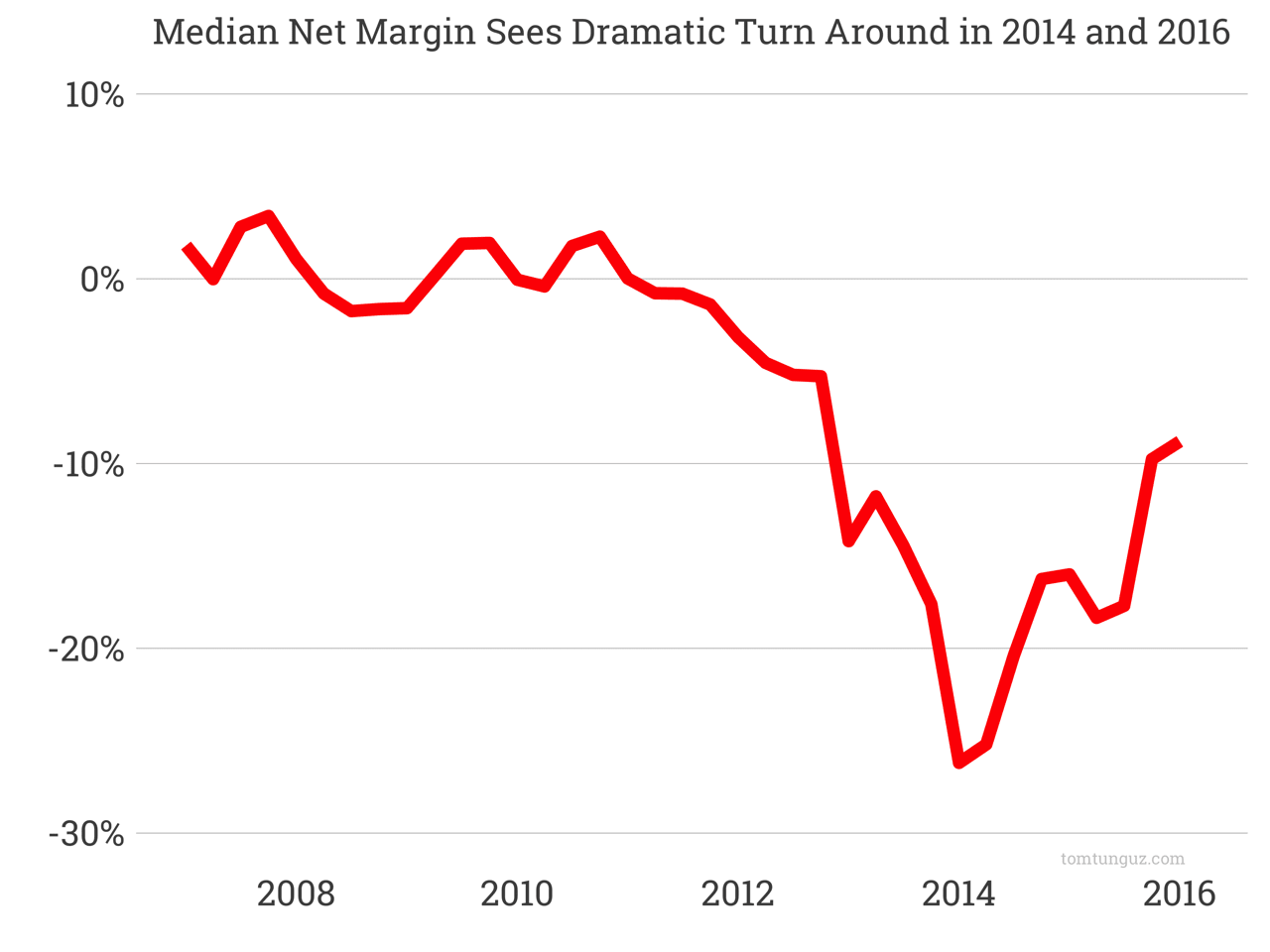
Just how real is the sudden importance and profitability for SaaS companies? The median publicly traded SaaS company has improved net margin from -25% to -8.8% in less than two years, after a nearly four-year trend of negative growth in net margin. The initial spike in 2014 occurs two quarters after the first SaaS correction and the second occurs in late 2015.

Read more

The Rising Importance of Reseller Channels in SaaS

The notion of channel sales in SaaS companies is becoming more common than in has been in the last few years, and for some businesses like Intacct, channel partnerships drive more than 50% of sales.

Channels used to be about software customization, delivery and support. Most SaaS has little customization, manages all the delivery and are better suited to handling the support. Plus, value-added resellers charged buyers on a per-project basis which doesn’t align neatly with the recurring subscription intrinsic to SaaS. So there hasn’t been a great fit.

Read more

A Key Moment in Time for Vertical SaaS Startups

image

In the past week, Oracle acquired two vertical SaaS companies. OPower is an Arlington Virginia based company that employs approximately 600 people. The company analyzes utility consumption patterns and helps homeowners reduce their energy consumption. Textura provides collaboration tools for the construction industry and is based in Illinois. Oracle paid $663 million, net of cash for Textura and $532 million for OPower.

Read more

Is the 2016 Economy a Risk to SaaS Companies?

image

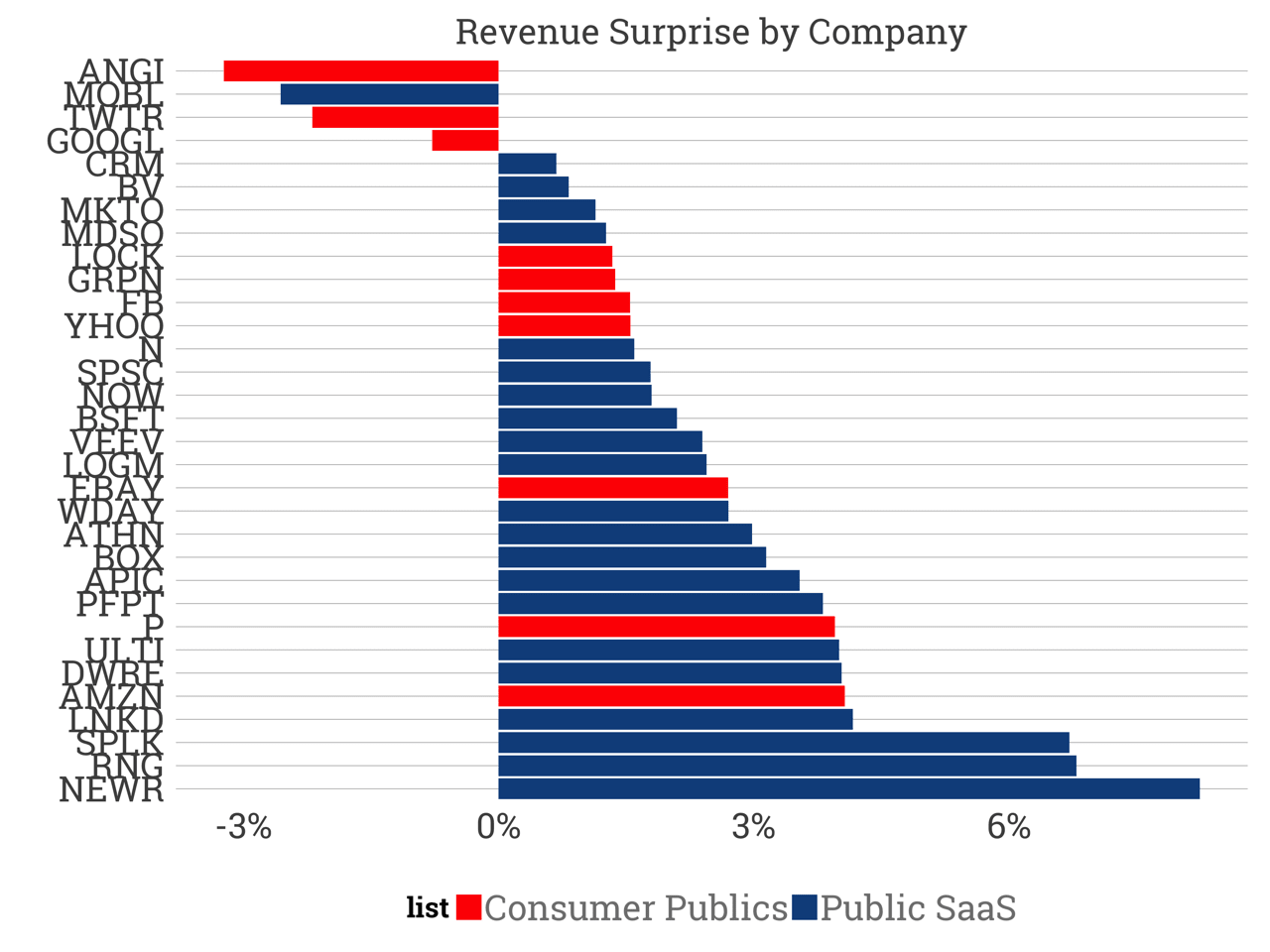
It is an election year. The Federal Reserve has changed its interest rate hike plan. Venture financing has slowed by upwards of 15% in the first quarter. Q1 GDP growth fell to 0.5% from 1.4% in Q4. How much have all these factors impacted SaaS companies? Are buyers purchasing less software?

Each quarter, publicly traded companies release two key figures: revenue per share and earnings-per-share. Wall Street analysts forecast these figures based upon company plans and their own research. The difference between the median Wall Street estimate and the actual figure provided by the company is called revenue/earnings surprise.

Read more

Land, Expand, Retain

image

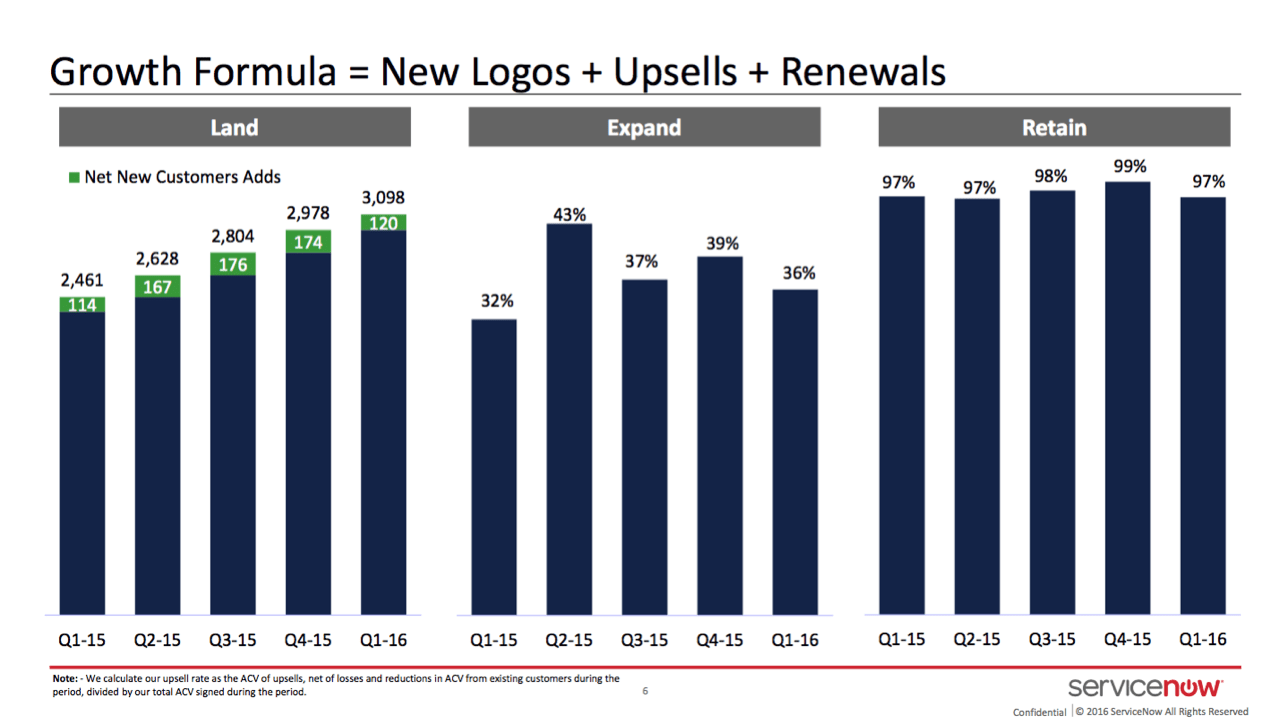
In ServiceNow’s Q1 Investor presentation are the first semblances of SaaS metrics in public company reporting. If you sift through the 40+ public SaaS businesses, you won’t find mention of annual recurring revenue, churn, account expansion, or cash collection cycles in most of them - even though these are the the metrics the management teams employ to evaluate and steer their businesses.

Read more