From Books to Prompts: The Instant Future of Productivity

From Books to Prompts: The Instant Future of Productivity

Last Saturday I spent three hours implementing a coding workflow I’d read about that morning. By Sunday afternoon I’d tested it on two projects , measured the results , & decided to keep it.

Ten years ago , the same journey would have taken weeks. Buy a Getting Things Done book , set up a Bullet Journal , or learn Zettelkasten. Read it. Understand the methodology. Build the habits. Iterate through mistakes. Maybe after a month you’d know if it worked.

Read more
Circular Financing: Does Nvidia's $110B Bet Echo the Telecom Bubble?

Circular Financing: Does Nvidia's $110B Bet Echo the Telecom Bubble?

When Nvidia announced a $100 billion investment commitment to OpenAI1 in September 2025 , analysts immediately drew comparisons to the telecom bubble. The concern : is this vendor financing , where a supplier lends money to customers so they can buy the supplier’s products , a harbinger of another spectacular collapse?

American tech companies will spend $300-400 billion on AI infrastructure in 20252,3 , exceeding any prior single-year corporate infrastructure investment in nominal dollars.3 David Cahn estimates the revenue gap has grown to $600 billion4.

Read more
Data & AI Infrastructure Are Fusing

Data & AI Infrastructure Are Fusing

Screenshot 2025-10-02 at 11.11.44 AM

AI breaks the data stack.

Most enterprises spent the past decade building sophisticated data stacks. ETL pipelines move data into warehouses. Transformation layers clean data for analytics. BI tools surface insights to users.

This architecture worked for traditional analytics.

But AI demands something different. It needs continuous feedback loops. It requires real-time embeddings & context retrieval.

Consider a customer at an ATM withdrawing pocket money. The AI agent on their mobile app needs to know about that $40 transaction within seconds. Data accuracy & speed aren’t optional.

Read more
Adding Complexity Reduced My AI Cost by 41%

Adding Complexity Reduced My AI Cost by 41%

I discovered I was designing my AI tools backwards.

Here’s an example. This was my newsletter processing chain : reading emails, calling a newsletter processor, extracting companies, & then adding them to the CRM. This involved four different steps, costing $3.69 for every thousand newsletters processed.

Before: Newsletter Processing Chain

# Step 1: Find newsletters (separate tool)
ruby read_email.rb --from "newsletter@techcrunch.com" --limit 5
# Output: 340 tokens of detailed email data

# Step 2: Process each newsletter (separate tool)
ruby enhanced_newsletter_processor.rb
# Output: 420 tokens per newsletter summary

# Step 3: Extract companies (separate tool)
ruby enhanced_company_extractor.rb --input newsletter_summary.txt
# Output: 280 tokens of company data

# Step 4: Add to CRM (separate tool)
ruby validate_and_add_company.rb startup.com
# Output: 190 tokens of validation results

# Total: 1,230 tokens, 4 separate tool calls, no safety checks
# Cost: $3.69 per 1,000 newsletter processing workflows

Then I created a unified newsletter tool which combined everything using the Google Agent Development Kit, Google’s framework for building production grade AI agent tools :


Read more
From A to B Without Inventing Letters

From A to B Without Inventing Letters

“The way to do a piece of writing is three or four times over, never once.”

Writing is hard. John McPhee, who invented literary nonfiction that reads like a novel, developed a four-draft writing method that transforms chaotic ideas into compelling narratives.

McPhee pioneered creative nonfiction at The New Yorker, writing books like Oranges & Coming into the Country that made complex subjects fascinating through storytelling. His approach differs from traditional journalism by incorporating fiction techniques while maintaining factual accuracy. His prose combines vivid imagery with economy :

Read more
The Efficient Frontier of AI

The Efficient Frontier of AI

Every portfolio manager knows the efficient frontier - the set of optimal portfolios offering maximum returns for given risk levels. What if AI prompts had their own efficient frontier?

As we all start to use AI, prompt optimization will be a consistent challenge. GEPA, GEnerative PAreto, is a technique to discover the equivalent efficient frontier for AI.

Reading the paper, I noticed the initial results were promising, with a 10-point improvement on certain benchmarks & a 9.2 times shorter prompt length. Shorter prompt length, & we all know that input prompts are the biggest driver of cost (see The Hungry, Hungry AI Model). So, I implemented GEPA in EvoBlog.

Read more
The Math of Hypergrowth: Two Paths to the Same Goal

The Math of Hypergrowth: Two Paths to the Same Goal

How long & how quickly can a business compound ?

This is a question every investor asks of every business, public or private.

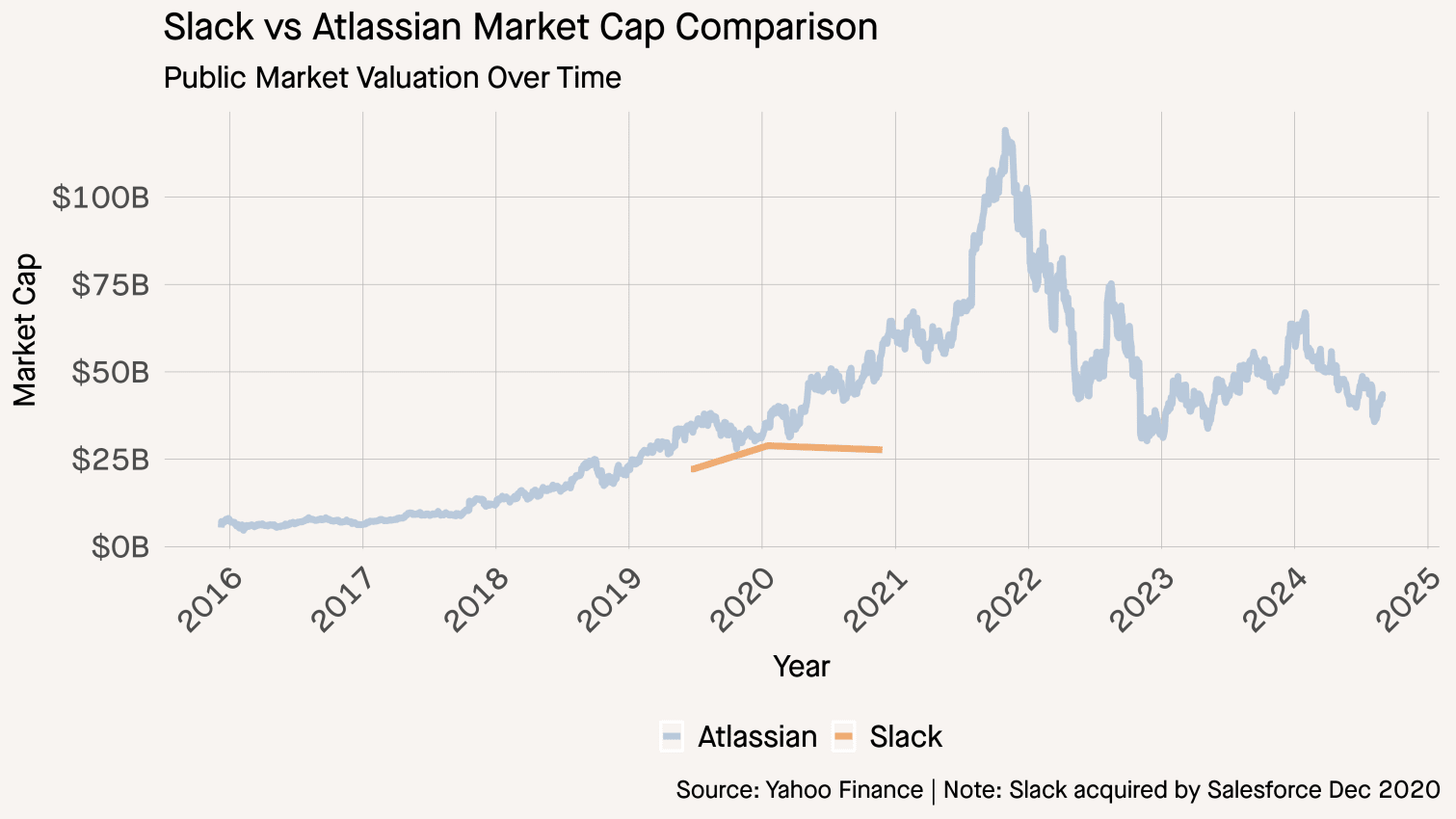
In the 2010s, Slack & Atlassian became titans. On the day Salesforce announced its intent to acquire Slack, it was equally valuable to Atlassian at ~$27b.

slack_vs_atlassian_market_cap

The revenue curves look similar in the out years, similar growth rates. Atlassian continues to compound at massive scale.

Read more
The Post-AI Org Chart

The Post-AI Org Chart

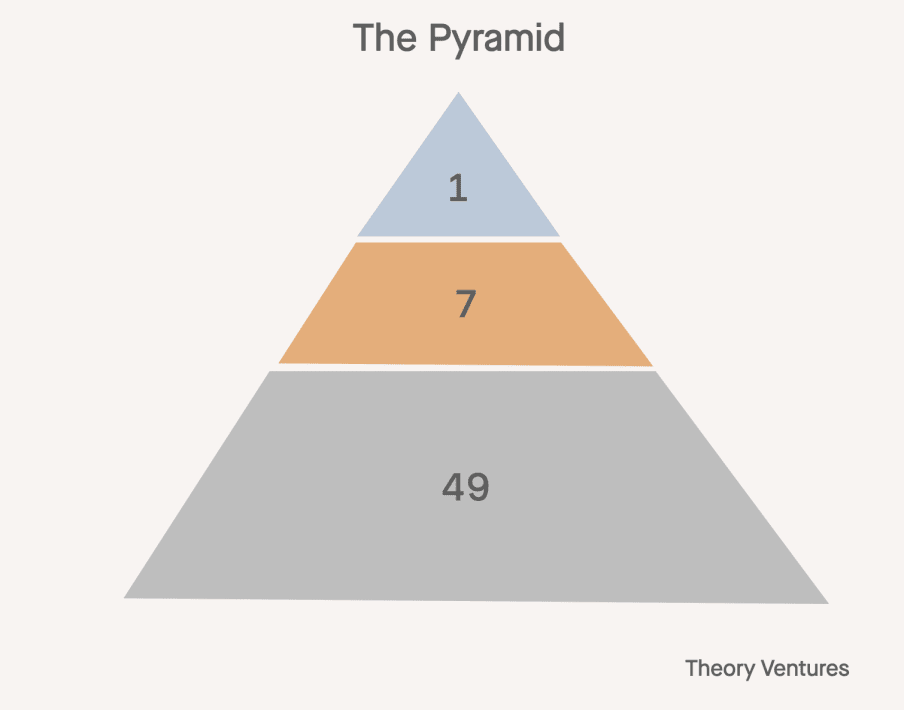
We build teams in pyramids today. One leader, several managers, many individual contributors.

In the AI world, what team configuration makes the most sense? Here are some alternatives :

Screenshot 2025-09-19 at 12.13.10 PM

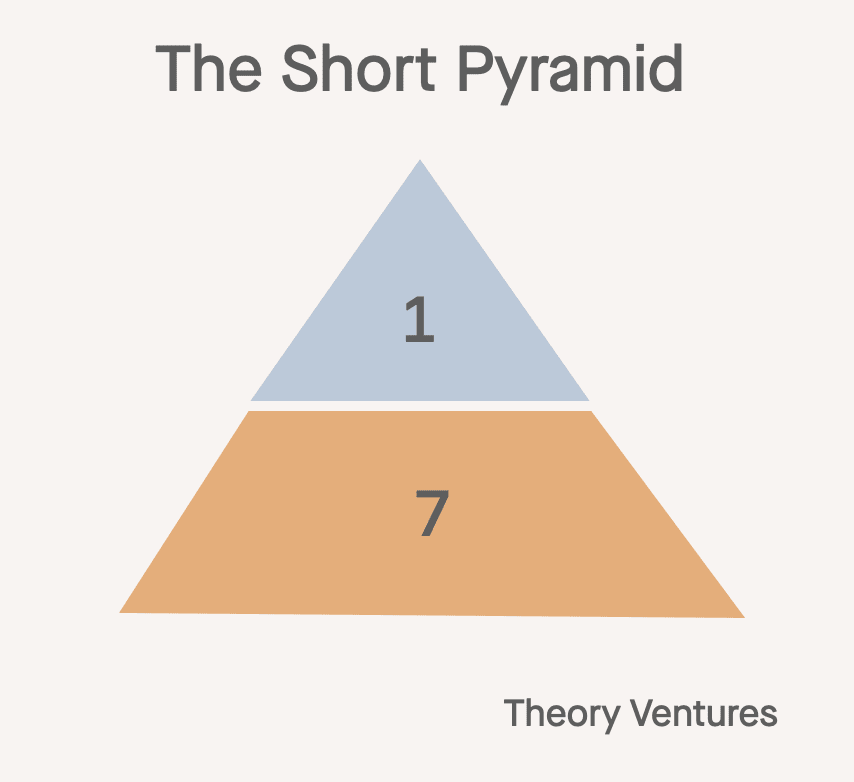
First, the short pyramid. Managers become agent managers. The work performed by individual contributors of yore becomes the workloads of agents. Everyone moves up a level of abstraction in work.

Screenshot 2025-09-19 at 12.13.04 PM

This configuration reduces headcount by 85% (1:7:49 -> 1:7). The manager to individual contributor ratio goes from 1:7 to 1:1. The manager to agent ratio remains 1:7.

Read more
Beyond a Trillion : The Token Race

Beyond a Trillion : The Token Race

One trillion tokens per day. Is that a lot?

“And when we look narrowly at just the number of tokens served by Foundry APIs, we processed over 100t tokens this quarter, up 5x year over year, including a record 50t tokens last month alone.”

In April, Microsoft shared a statistic, revealing their Foundry product is processing about 1.7t tokens per month.

Screenshot 2025-09-18 at 12.57.26 PM

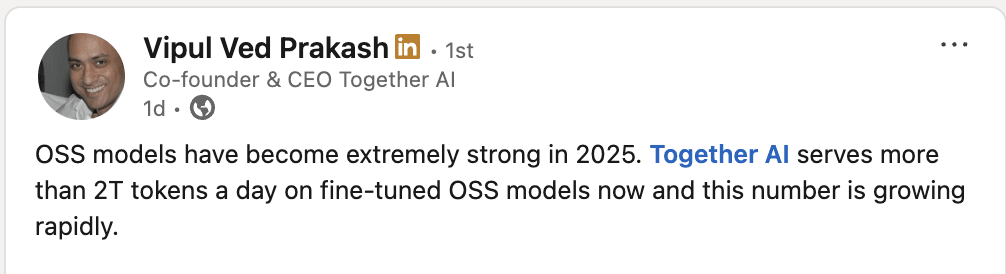
Yesterday, Vipul shared Together.ai is processing 2t of open-source inference daily.

Read more