At the inaugural DuneCon, Dune’s first conference, I shared a presentation on the state of crypto in 2022.
I aimed to characterize the health of the crypto ecosystem at the most basic level. For example, quantifying the number of active wallets, the population of active developers, & other dynamics within the ecosystem.
The slides are embedded here with summary commentary below and linked here.
My Top 15 Observations from the Data:
- 2.5m wallets are active daily across web3. Flat wallet count likely means relatively constant GDP in the ecosystem. We need more products to attract new users to bring in more GDP.
- Binance, Solana, Polygon, & Ethereum wallets represent more than 80% of those daily active users.
- Centralized exchanges manage roughly 100m total active wallets.
- Trading volumes are down 60% which is mostly driven by asset price reductions. DEX average transaction size declined from $8k to $1.4k.
- Centralized & decentralized exchanges trade at the same multiple & move in lock step.
- NFT buyers outnumber DEX traders about 35:1 over the last 6 months but the traded volume is roughly equal between the two groups.
- NFT trading volumes have fallen 97% from the top.
- 40% of NFT buyers use Solana. Because the average Solana NFT is worth 10% of the average Ethereum NFT, Ethereum retains 90% of NFT traded value.
- L2s (Arbitrum & Optimism) account for 30-40% of all transactions on Ethereum, but consume only 2% of the total gas, cementing their value.
- About $250m flows into L2s each month.
- MEV (maximum or miner extracted value) has tapered off due to FlashBots’ searchers. Lower MEV means users pay lower fees when they trade because the market is more efficient.
- Developers push about 300,000 smart contracts to Ethereum every month, a figure that has been flat for the last five months.
- Roughly 5,000 developers push code to web3 every week, down 20% from the beginning of the year. This number needs to increase significantly for the ecosystem to thrive.
- Web3 companies (aside from L1s) have begun to trade at similar multiples to their web2 counterparts.
- Web3 multiples are increasingly correlated to revenue. The investor community has matured its understanding of how to value a web3 company. This milestone will begin to shift the early & late stage private markets’ valuations. This is why marketing will become so critical in the next 12 months.
Overall, the crypto ecosystem finds itself in a winter. I see it as the coiling of a spring. So much innovation has been unleashed in the last few years, most of us are still absorbing the implications & working to identify the best applications of the 4 fundamental innovations of web3.
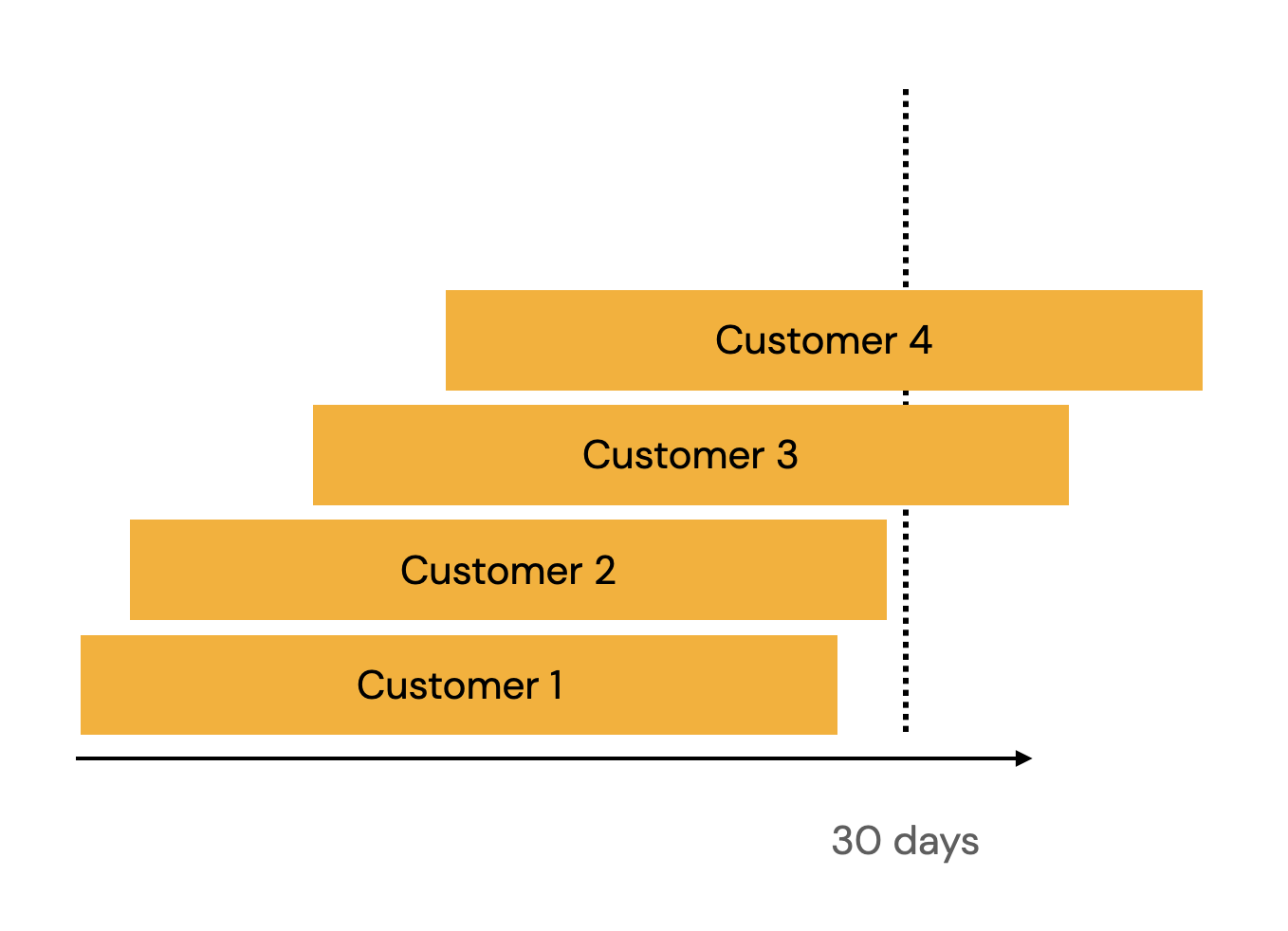 Imagine a startup with 4 customers in the pipeline. The average sales cycle is 28 days. Two of those customers should close this quarter. Two of them, who entered the funnel later in the month, will take longer than 30 days to close.

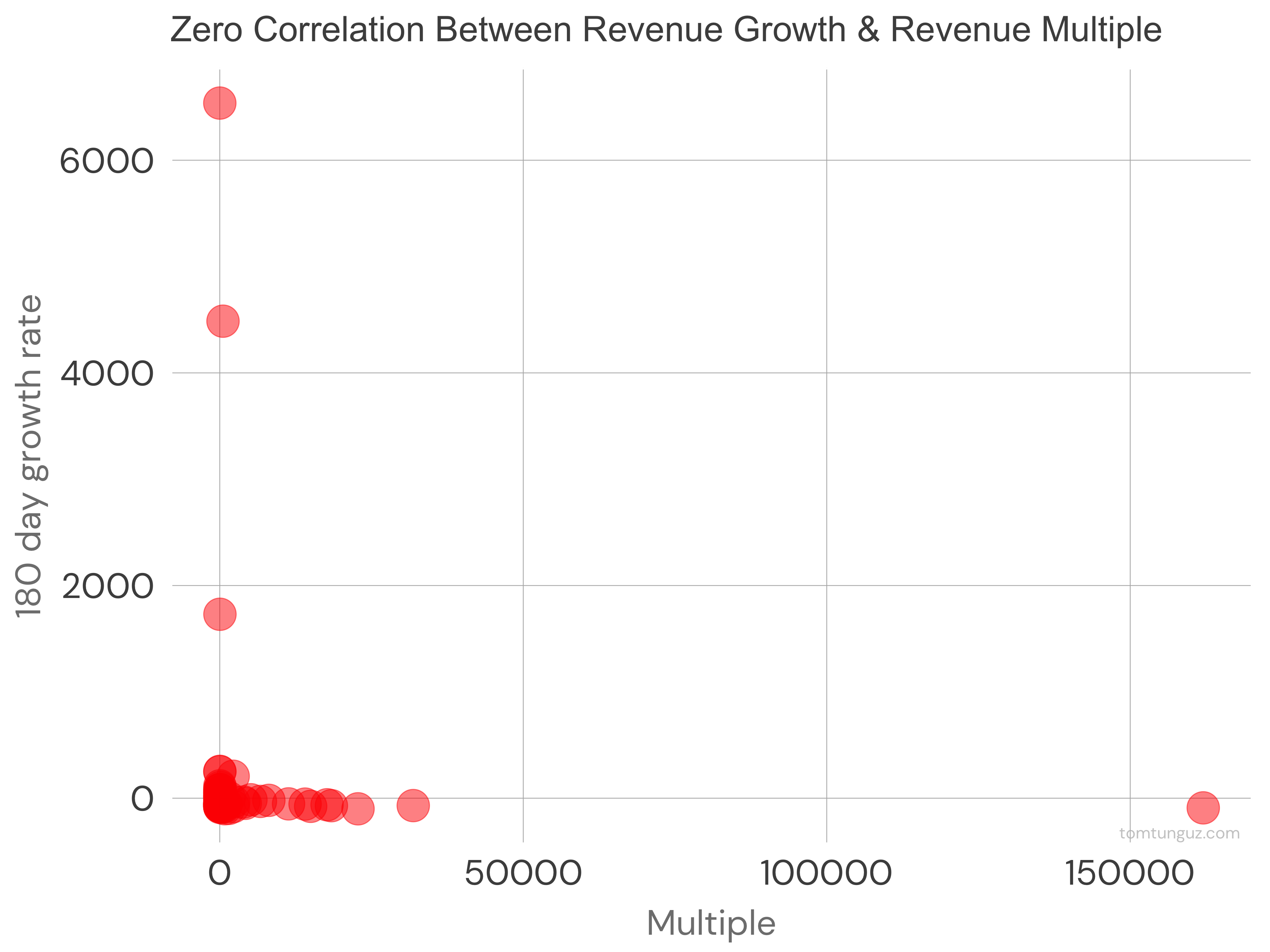 This chart shows the relationship between the top 100 public projects’ revenue and their trailing revenue multiple. There’s none. The correlation asymptotes to zero. At least when looking at the ecosystem as a whole.