Observations about Silicon Valley Two Weeks into Quarantine

What’s going on in Startupland?

Venture rounds are closing. We’ve seen seeds, As, Bs, and growth rounds in the past few weeks. And round announcements continue. Valuations are coming down a bit, but they are all over the map. It’s too early to draw any conclusions about pacing, however.

In fundraising conversations, founders are candid. Founders share the growth story of the business before the onset of the virus, and few of them have the visibility to project end of year performance. Some founders in market today are running dual track processes, choosing between raising capital and pushing toward profitability within a certain time frame. When asked about the decision criteria for selecting a venture partner, one founder replied with a single phrase: speed to close.

Read more

What do Google Search Query Trends Reveal about the Changes in How We Work?

I was reading an article in the NY Times about how we’re all using much more internet than we have been. Consequently, YouTube is throttling video quality, and some of our services are slower than before. I’ve also heard anecdotally that some forms of content marketing are doing well in an era when knowledge workers sit before our laptops all day.

I wondered where I could find some interesting data about these patterns. I couldn’t find real-time data about bandwidth, but Google’s Trends product does show near up to date Google queries, which is a good proxy.

Read more

Data Lake Engines - The Essential Layer of the Next Generation Data Architecture

In 2015, we partnered with two young founders to build Dremio. Tomer Shiran and Jacques Nadeau had just left MapR, and they came to work from our offices in Menlo Park. We shared a vision for a new way of working with data. Today, the company is announcing a $70M Series C to help them along that journey.

More data is being stored in data lakes like Amazon S3 and Azure Data Lake Storage. At the same time, the BI landscape has blossomed. Analysts and product managers and sales operations teams deploy Tableau, Power BI, Looker, Superset, and many other tools to parse their data. There needs to be a layer between them to make all that data accessible to these users - a data lake engine. That’s Dremio.

Read more

What Will this Crisis Accelerate in Your Ecosystem?

I read an op-ed in Bloomberg last week written by a stock trader who was on the floor of the New York Stock Exchange during the 1989 crash. His manager brought him into his office. The trader feared his manager would fire him. Instead, his manager told him that these kinds of crises accelerate change and that he should embrace them. I’m struggling to find the link now, but if I do, I will update this blog post with it.

Read more

Six Startup Disciplines for Challenging Times

I wrote earlier this week about estimating the impact to growth rates during this challenging time. Speaking with startups, I’ve collected a list of disciplines that are going to become very important in the next period.

First, transparent communication. David Sacks wrote Happy Talk versus Hard Talk, which is an excellent post on how to communicate during a crisis. There is no better example than Winston Churchill. As you articulate communication plans, speak with transparency, candor, and gravity. Arne Sorenson’s corporate address to the Marriott company is a role model.

Read more

Estimating the Impact of the Coronavirus on Growth

As we readjust to the impacts of the coronavirus, I’ve been asking myself: what is a basic useful model for estimating the growth impact to a software company? Of course, every business should develop a more conservative model, focused primarily on cash management to provide a longer runway. I expect the venture market to slow round counts for a quarter, but then resume. As growth rates fall, valuations should move similarly. My hunch originates from this analysis of the 2008 crisis. But it’s too early to say for sure.

Read more

What Could the Venture Market Look Like in the Coronavirus Era

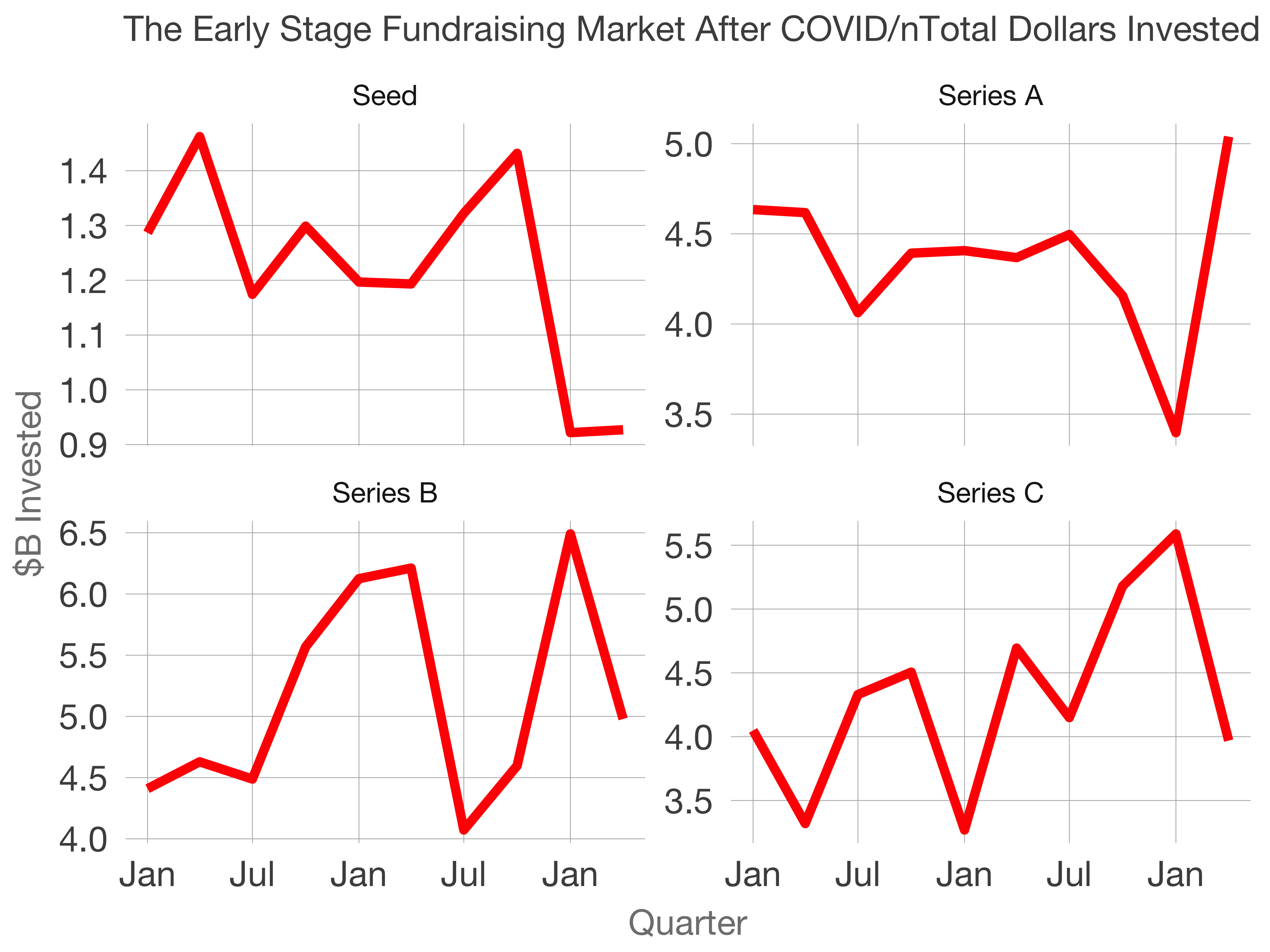
What could happen to the fundraising market in the coronavirus era where organizers cancel events, the financial markets suffer from a bear market, and there is a lot of uncertainty? The most recent event to use as an analogy is the 2008 financial crisis. In 2008, I had just joined the venture industry, and then Lehman fell. So this was a bit of a trip down memory lane. Let’s look at the data.

Read more

Notes from Office Hours with Lisa Lawson

Recently, we welcomed Lisa Lawson to SaaS Office Hours to talk about building a channel go-to-market strategy for SaaS companies. Lisa built the channel at Optimizely, which accounted for a meaningful fraction of new business. I learned quite a bit from the sessions with the five companies who attended the one-on-one sessions. Here are my notes.

Where to Start The first place to start is to learn to sell your startup’s product well. To make a partnership successful, your startup will need to teach another sales team to sell your product. That means understanding your ideal customer profile, developing enablement materials to close those customers, and training new account executives to succeed in that effort consistently.

Read more

What I Expect in the Next Few Months in Startupland

I was on a panel yesterday to speak about the impacts of the coronavirus on financial markets and startups. Later in the afternoon, I read the Sequoia black swan memo. So I figured today, I’ll summarize my outlook on the next few months.

Startup Growth Rates
For startups, things will likely slow down. Longer sales cycles will be the leading indicator. At least, that’s my key metric for startup health over the next few months.

Read more

The SaaS Marketing Scorecard - How Does Your Marketing Operation Rank?

image

The 9 Disciplines of Great SaaS Companies remains one of the most popular posts on marketing on this blog. It’s a wonderful framework by Bill Macaitis, who was the CMO at Zendesk and Slack. Gabe Larsen, the VP of Growth at Kustomer, has a marketing scorecard that goes one level deeper and breaks down some of the key elements of key marketing processes.

The framework breaks down the key marketing operational roles into six buckets. Each bucket has a set of disciplines that the team scores.

Read more