Cloud Data Lakes - The Keystone to the Decade of Data

On January 27-28, Dremio host their second Subsurface conference. Cloud Data Lakes are the future of large scale data analysis, and the more than 5000 registrants to the first conference substantiate this massive wave.

This time, the conference will build on the foundation from last year’s event.

Mai-Lan Tomsen Bukovec, Global Vice President for AWS Storage will deliver one of the keynotes. Also, Tableau’s Chief Product Officer François Ajenstat will discuss the Tableau’s role in the cloud data lake. Plus, leaders from Microsoft PowerBI, Apache Iceberg, Amundsen, Monte Carlo and many others will share their views on the advances they’re seeing in cloud data lakes and the software that’s being built around them.

Read more

The Fastest Growing Sectors of Startup Fundraising in 2020

From time to time, I chart the fastest growing categories of startup investment in the US for seed through Series C. Here are 2015, 2017, This year, I was certain the categories would have been influenced by COVID19.

I analyzed Crunchbase data and looked for the startup categories that grew fastest in terms of funding rounds year-over-year, provided there were at least 10 rounds in that category.

image

Read more

The Art of Doing Science & Engineering

The Art of Doing Science and Engineering is a curious book. Richard Hamming, the author, was a professor of science and engineering at the Naval Postgraduate School and researcher at Bell Labs. He knew quite a bit about science and engineering.

The book is curious because it’s written in the first person and defies categorization. Part memoir, other times, a mathematics lecture on information theory, and yet others a book on life philosophy.

Read more

The Missing Insight Around Software Multiples for Valuing Companies

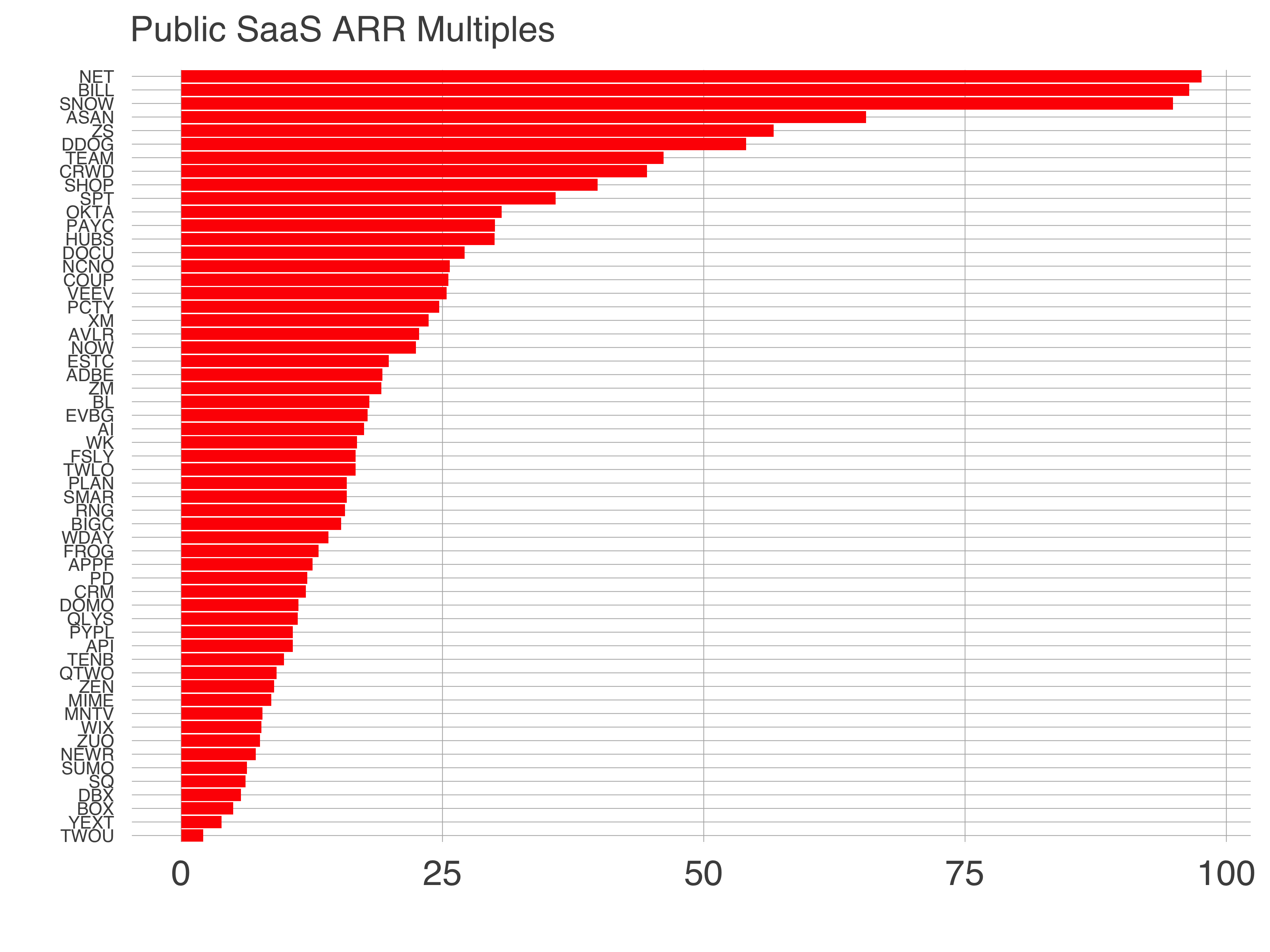
Imagine two public SaaS companies, identical in every respect but one. The first grows revenue twice as fast as the second. How much more valuable should the first be? Twice as valuable isn’t the answer.

Most investors value stocks using multiples, which tend to obscure the underlying drivers of value. Many investors also seek to distinguish between value and growth stocks, which are commonly sorted based on multiples of earnings or book value. The important drivers of value are opaque with these practices, and very few investors have a clear sense of how revisions in expectations for those drivers change multiples.

Read more

Information Cascades - How Many Rational People Can Make Logical Decisions and Yet Still Create a Bubble

When I say bubble, you likely conjure images of people speculating on real estate or stocks or tulips in your imagination. Like me, you might dismiss the folly of these bubbles as the collective action of a multitude of people who lose all rationality when bidding on these assets. But, as I learned from a recent interview with Brian Christian, bubbles can be created even when everyone acts rationally. This phenomenon is called an information cascade.

Read more

The Next Chapter for StackRox

Today, RedHat announced that it has acquired StackRox. By joining forces with RedHat, StackRox, which provides Kubernetes-native security, completes the next step a journey that started six ago, and will become a key part of OpenShift.

The world of container and Kubernetes security evolved enormously during the past six years. Docker burst onto the scene and its containers took the infrastructure world by storm.

Then, there was a scrap for the best orchestration and Kubernetes won out. These two foundational technology shifts ushered in the DevSecOps movement. Today, StackRox enables DevSecOps for many leading companies including Splunk, Zendesk, SumoLogic, UIPath, Supercell, Priceline, Looker and many others.

Read more

Why Remote Work Changes the Nature of Leadership, and the Kinds of Leaders to Recruit in Startups

Erica Brescia, the COO of Github, a company in which 70% of the workforce has worked remotely for a decade, wrote in the Economist about how remote working is different and better. There have been many perspectives shared on remote work, but Erica’s perspective adds an intriguing detail.

Managers tasked with creating a culture of collaboration within a distributed team will find the profile of a leader changes. A recent study found that the skills and traits of successful leaders in an in-person, office-based environment differ from those needed to lead distributed, remote teams. Instead of valuing confidence and charisma, remote teams value leaders who are organised, productive and facilitate connections between colleagues.

Read more

Why Fast Learning Curves are So Important to Startups


Startups are business machines engineered to grow quickly. Once a company hits hypergrowth, the market exerts enormous strain on every aspect of the company. Internal processes and systems break all the time as the company moults into a new skin.

It’s one thing to talk about this idea in the abstract. More tangibly, every lead hired today, whether marketing , sales, engineering or product, will have a very different job nine months from now, much less two years from now.

Read more

5 Predictions for 2021

Every year, I make a list of predictions and score last year’s predictions. 2020 is a year that defines the long tail events, twelve months in which black swan after black swan event seemed to hit the press. Each morning I held my breath as I checked the news wondering what headline could top yesterday’s bombshell.

Here are my predictions for 2021

  1. Working remotely for a year changes how we work forever. Meeting in person remains important for advancing careers, critical meetings, and team cohesion, but the days of the 9-5 daily commute from Monday through Friday are gone for most knowledge workers. Two days per week in the office? Three days per week in the office? Working remotely for a quarter instead of taking 20 days vacation? I’m not sure where it will settle, but working patterns won’t return to pre-2020 behaviors.
  2. 2020 becomes the decade of data. The 2010s were the decade of software and SaaS, the era when Salesforce become the first SaaS company to sail past the $100B market cap mark. The 2020s will be the era of data companies boosting massive markets. Database startups, data movement startups, data quality startups, data lineage startups, machine learning startups will be the zeitgeist of the decade as they shape the next wave of massive innovation.
  3. M&As and IPOs continue at torrid rates. The stated long term, low interest rate policy of the Fed maxes out DCF models, whipping a frenzy around high growth companies. The merry retail investors using Robinhood bolster the passive investment wave, and their market-shaping forces sustain stratospheric multiples in the public markets. Acquirers, emboldened by higher stock prices, brace themselves and outbid each other with premium multiples for high-growth startups.
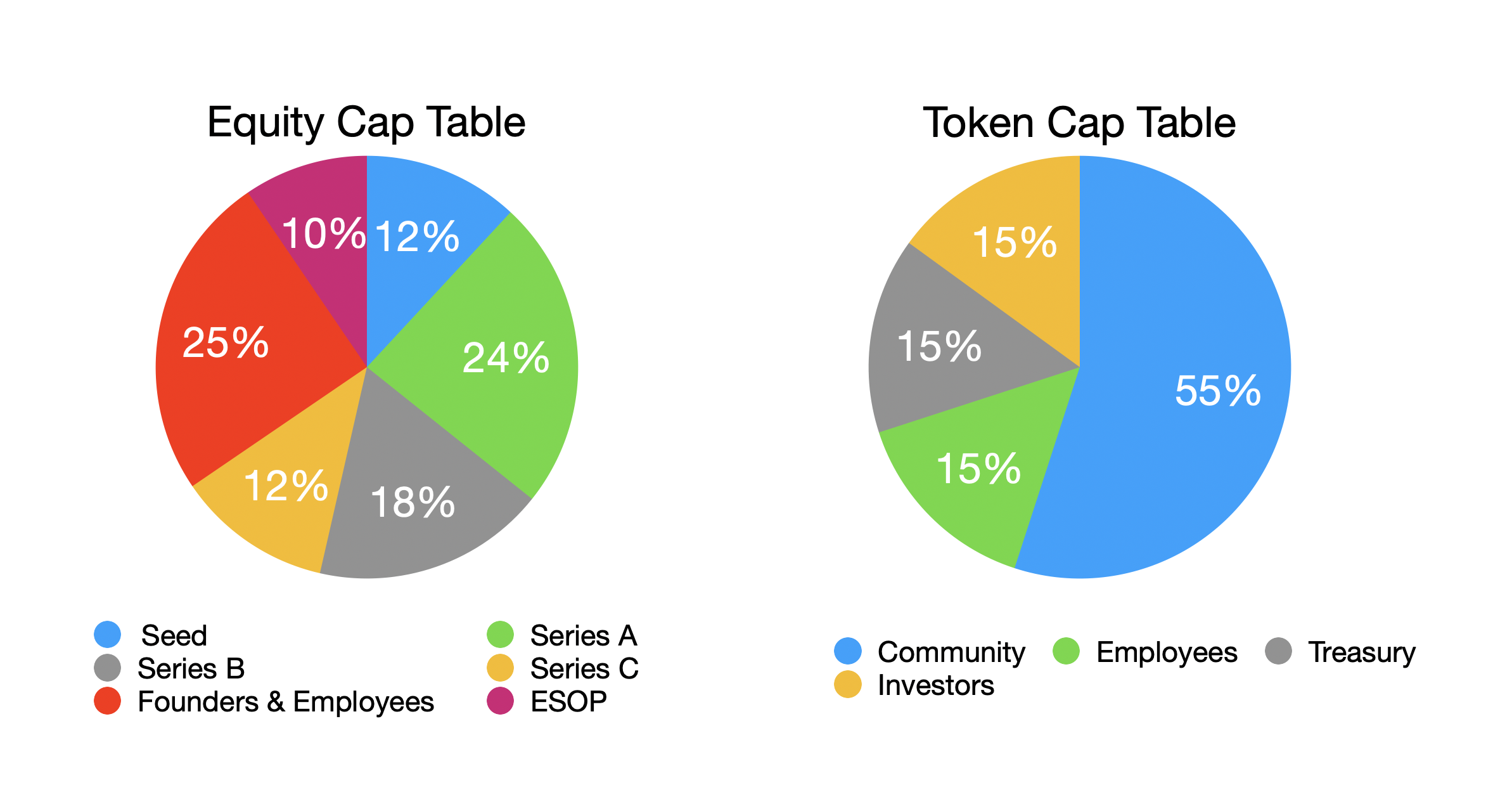
  4. Blockchain technologies become mainstream driven by the adoption of national reserve banks. The US Dollar continues its decline as the global currency of trade. In response, other national reserve banks introduce Blockchain based currency creation and control systems.
  5. Product-led growth becomes the standard GTM for software and infrastructure companies. The path to the enterprise starts in the mid-market which builds a strong foundation for serving the largest customers in the world. More companies adopt the idea of qualifying buyers through a product embracing the benefits of product-led growth including faster sales cycles, greater ARR per employee, and quicker account expansion making PLG the dominant GTM strategy.

Scoring last year’s predictions:

Read more

Do You Lose Sales Opportunities Because of Sales Execution or Product Insufficiency?

You have a good pipeline of prospective customers. You pitch them but things aren’t working out. You can see it in your low close rates. They are below 15-20% conversion from sales accepted lead to closed customer. You need to answer an important question: are you losing these opportunities because of sales execution or product insufficiency?

Those are the two possibilities. Either the company’s sales techniques are failing to persuade customers to buy the product. Or the company hasn’t built the right product to suit the market’s needs.

Read more