Nobody will open Gmail five times a day in five years.
The average knowledge worker receives 121 emails per day.1 That’s one every four minutes during working hours.
The inbox is a conveyor belt that keeps accelerating. You open Gmail. You read. You decide. You respond. One at a time. But the belt doesn’t wait. It just moves faster.
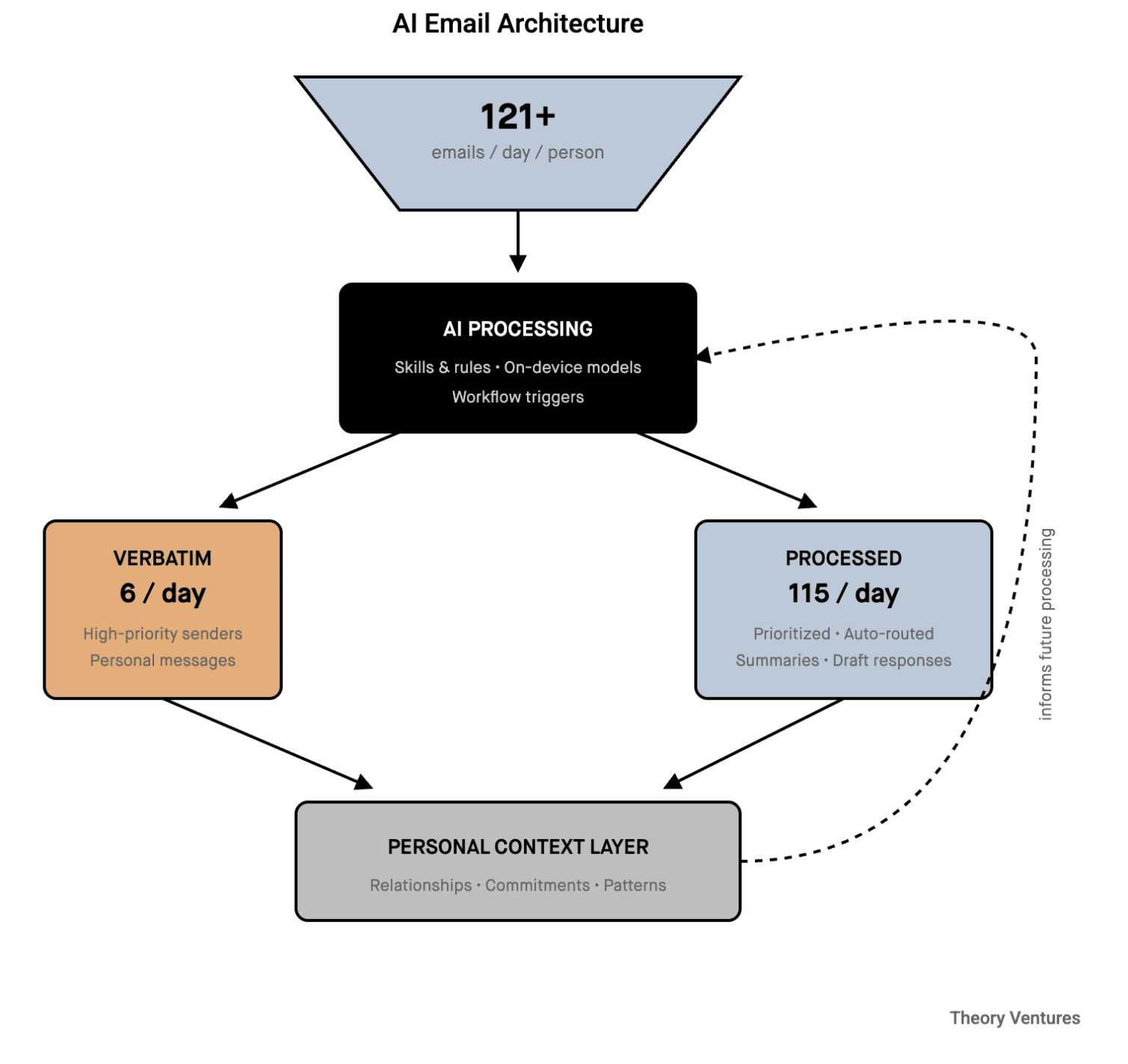
Today’s triage is generic : “This is from your boss. I need to work on that today. Next. Spam. Archive. Spam. Archive. Newsletter, read & archive.” Tomorrow’s is personal. User-defined skills & rules. Programming in English that encodes your priorities, your relationships, your workflow.
A receipt arrives & forwards itself to the expense platform before you see it. An inbound lead hits the CRM, gets scored, & a draft proposal waits in your outbox. The workflow starts the moment the email lands.
Then there’s the archive. Years of context about every relationship, commitment, & decision you’ve made. That history becomes a personal context layer that informs how your AI handles the next message. On-device models process sensitive messages privately.2
The inbox disappears. What remains are the 6 messages that actually matter.