8.9 Million AI Users

8.9 Million AI Users

It all started when I knocked on a door in Palo Alto.

I noticed the little llama icon on the door & remembered how much I loved the product. Michael opened the door & welcomed me in. That is how I became friends with the Ollama founders, Jeff Morgan & Michael Chiang.

Ollama founders

Since then, I have migrated most of my workloads to Ollama ; it turns out I’m not alone.

Read more
The AI Preflight Check

The AI Preflight Check

I still remember when my agent would forget what I said mid-sentence.

Context size is not the ceiling. Memory architecture is.

Diagram of the memory system : a user request flows through a preflight check that loads the right skill from a long-term skills library into the context window, executed by the local Ornith 35B model, with a watchdog reading the trail at the end.

I have been experimenting with a memory architecture that runs preflight instructions. A pilot plans the route before takeoff. My agent does the same.

Read more
The $10B FDE Boom

The $10B FDE Boom

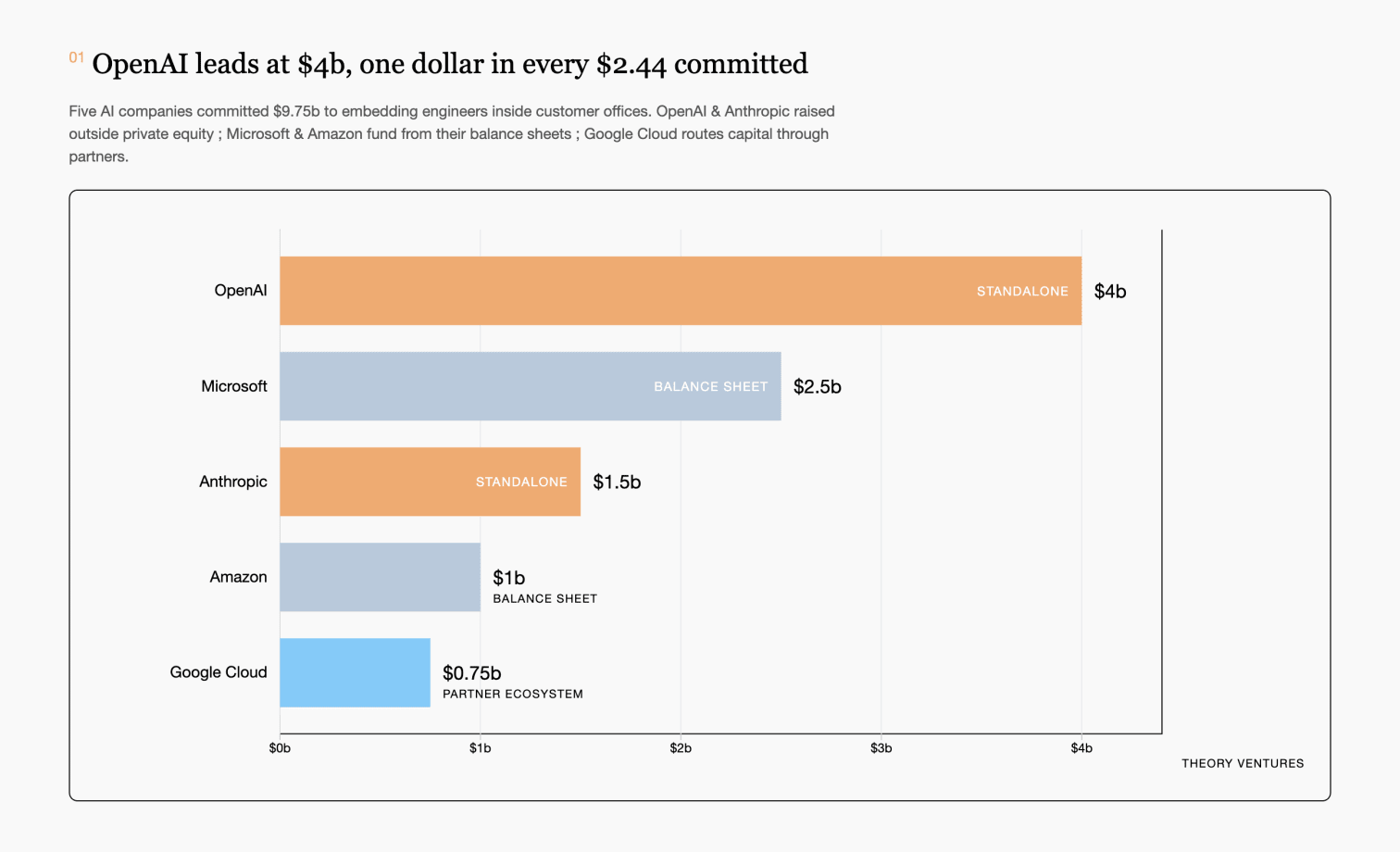
AI companies have committed $9.75b in 12 months to forward-deployed engineering. The FDE model, embedding engineers inside customers to deploy AI, has gone from a Palantir signature to an industry default.

That commitment is one quarter of Accenture’s annual labor cost.1

Bar chart showing FDE capital committed : OpenAI $4b, Microsoft $2.5b, Anthropic $1.5b, Amazon $1b, Google Cloud $0.75b, colored by structure (Standalone, Balance Sheet, Partner Ecosystem)

Three structural models are emerging.

Read more
AI Worldviews

AI Worldviews

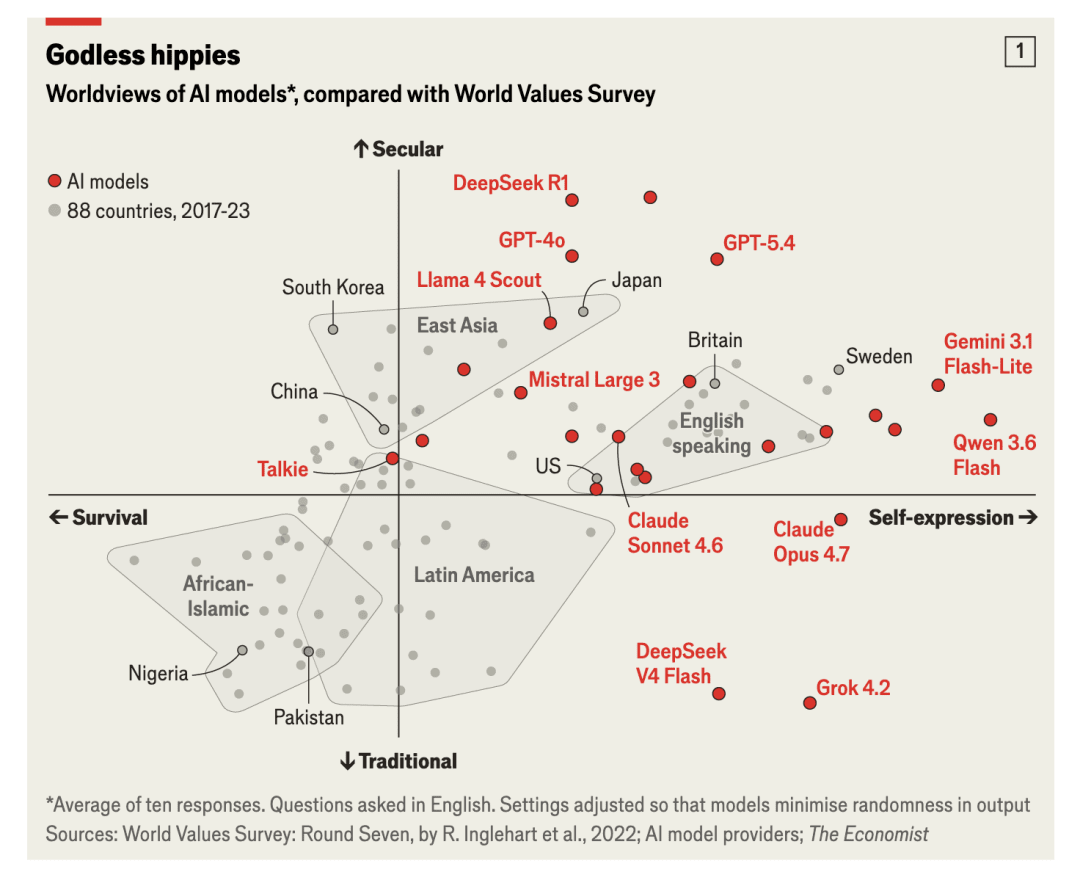
The Economist ran 25 frontier AI models through the World Values Survey1, the questionnaire that has mapped the moral beliefs of 100 countries since 1981. For this 2x2, there are two axes : first, traditional (religious) to secular. Second, survival, with a focus on collective basic needs, to self-expression & individualism.

Most models sit in the self-expression half of the map, which makes sense given the training data.

Scatter plot from The Economist titled Godless hippies showing AI models as red dots clustered in the upper-right secular self-expression quadrant of the World Values Survey, far from most country populations shown as gray dots

Read more
Most AI Work Can Wait

Most AI Work Can Wait

Most teams building agents pick the model first & the architecture second. That is backwards. The model choice is the last decision, not the first.

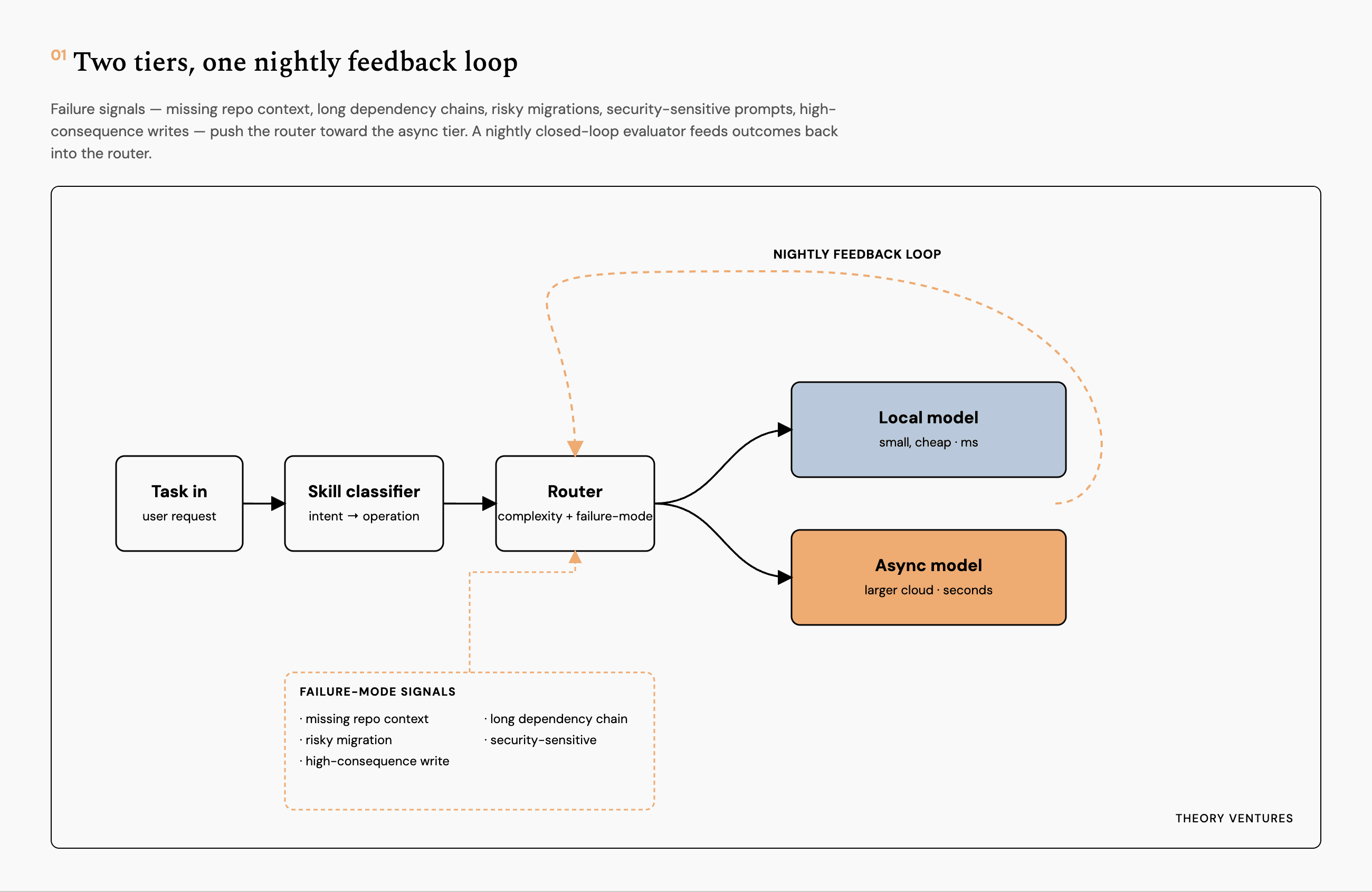
What matters is the router, a small piece of code that decides which tier of model handles each request. Get the router right & 70-80% of traffic runs on local models that cost nothing per call, or on async models1 that reduce AI spend by 90%+.

Read more
The CIO's Choices are Clear in 2026

The CIO's Choices are Clear in 2026

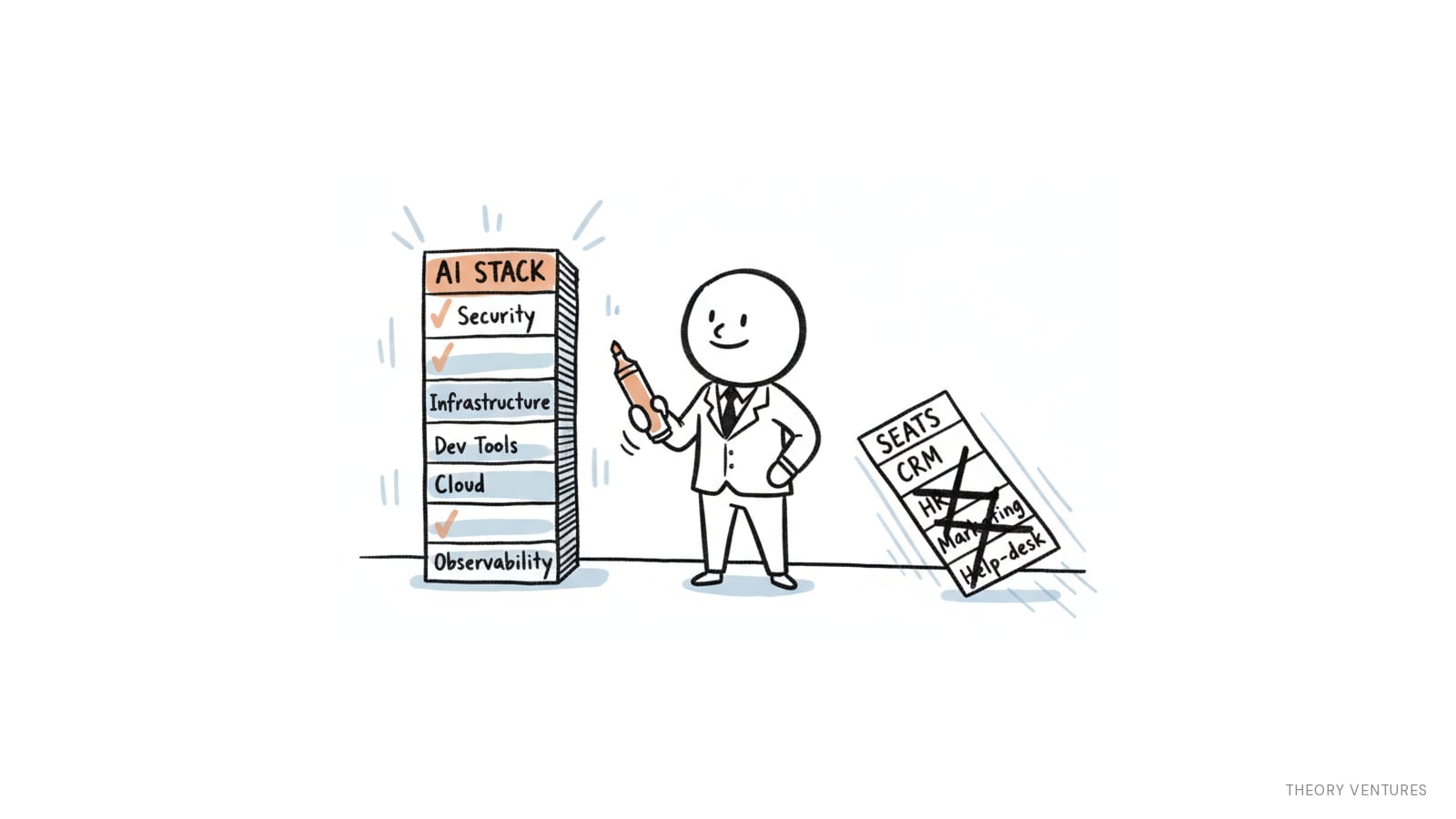
The CIO’s priorities are clear. The public markets reveal them.

A cartoon CIO picking AI stack line items and crossing out seat-based SaaS

Two of five public software sectors are up over the last year. The other three are bleeding. The buying pattern is consistent : fund the AI stack, cut everything else.1

Read more
When AI Costs More Than the Engineer

When AI Costs More Than the Engineer

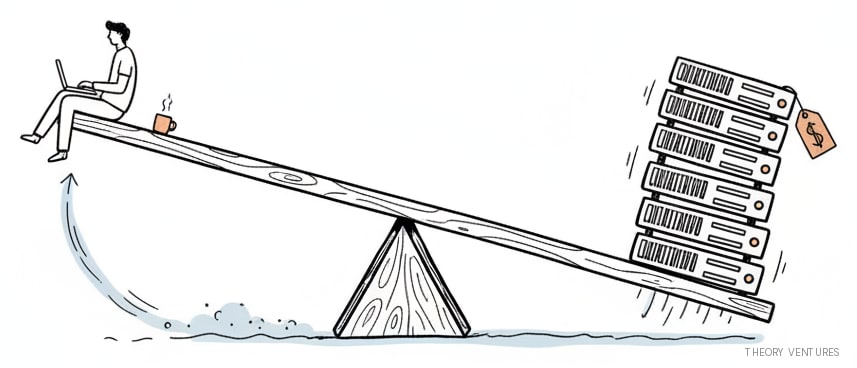
Anthropic spends 2.3x its payroll on compute.1 With ~5,000 employees & roughly $10b in inference & training spend in 2026, that works out to about $2m of compute per employee per year against a likely all-in comp of $500k+.2

The rest of the software market trails. The top 1% of companies spend $89k per engineer per year on AI, 40% of a fully-loaded $224k senior engineer salary3.4 The median spends $137. That is the gap : 2.3x at the frontier, 0.4x at the top of the market, near zero at the median.

Read more
What If There Is No Moat Yet?

What If There Is No Moat Yet?

Every founder receives the question on slide three. What is your moat? They answer with technical differentiation. A model, a dataset, an architecture. At the application layer, that answer dissolves in a year.

What if there is no immediate moat? What if the moat is earned?

Leading moats exist at founding. Technical differentiation, a novel architecture, a proprietary dataset. You can point to them in the seed deck. They are most common at the infrastructure layer, where the product is the technology.

Read more
Full Sail on Asynchronous Inference

Full Sail on Asynchronous Inference

Today all inference is real-time. A human types, a model responds, & the clock starts over. The infrastructure is built for someone waiting on the other end. Every millisecond of latency costs money because the serving stack optimizes for cold-start, not throughput.

As we built internal AI systems at Theory, we embraced queueing. Parallelize ten agents on a single task, let them run for hours, & the productivity gains are enormous. It is the product of token-maxxing,1 pushing every dollar of compute to do more work. But the cost was unsustainable.

sail
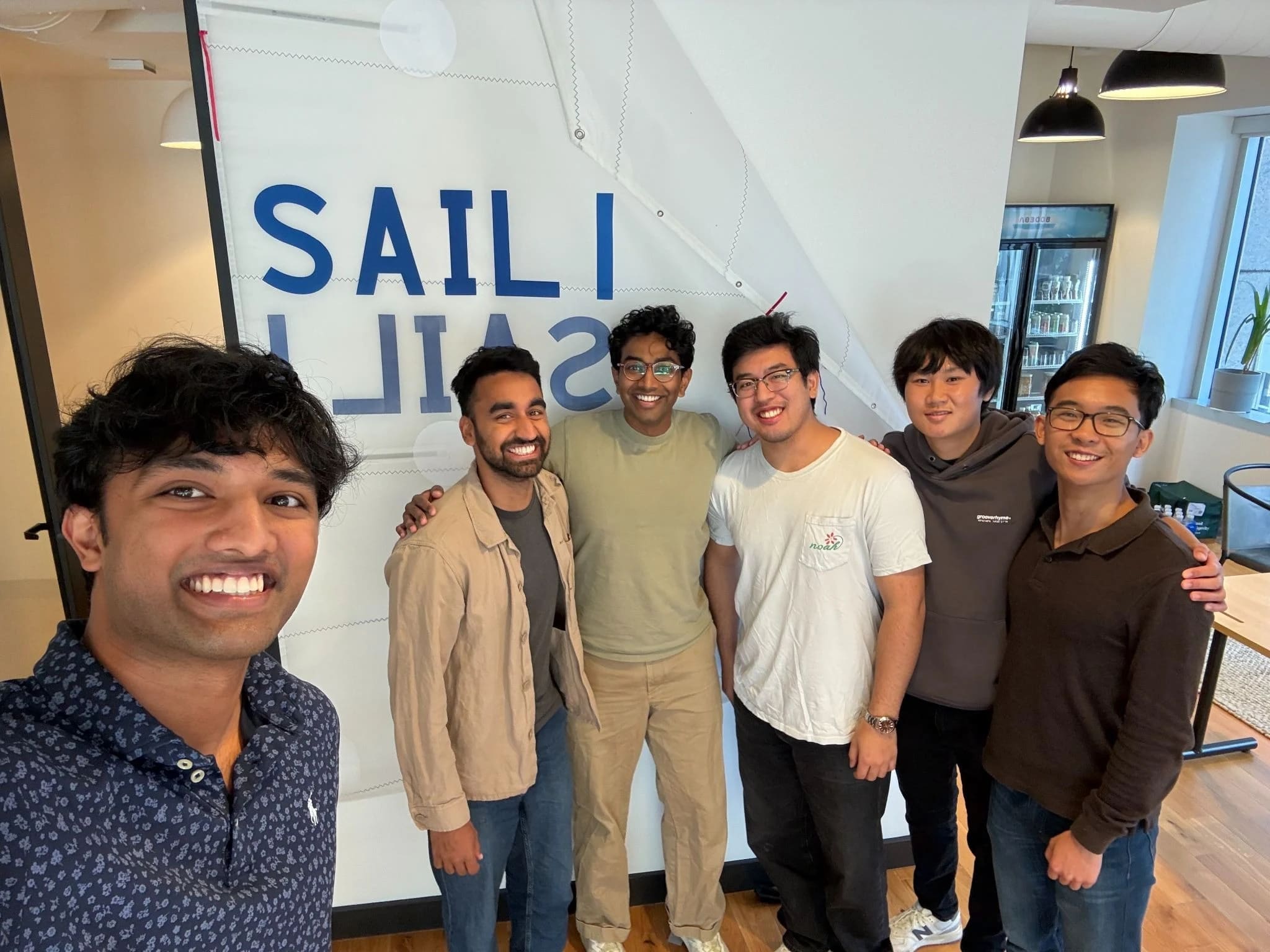
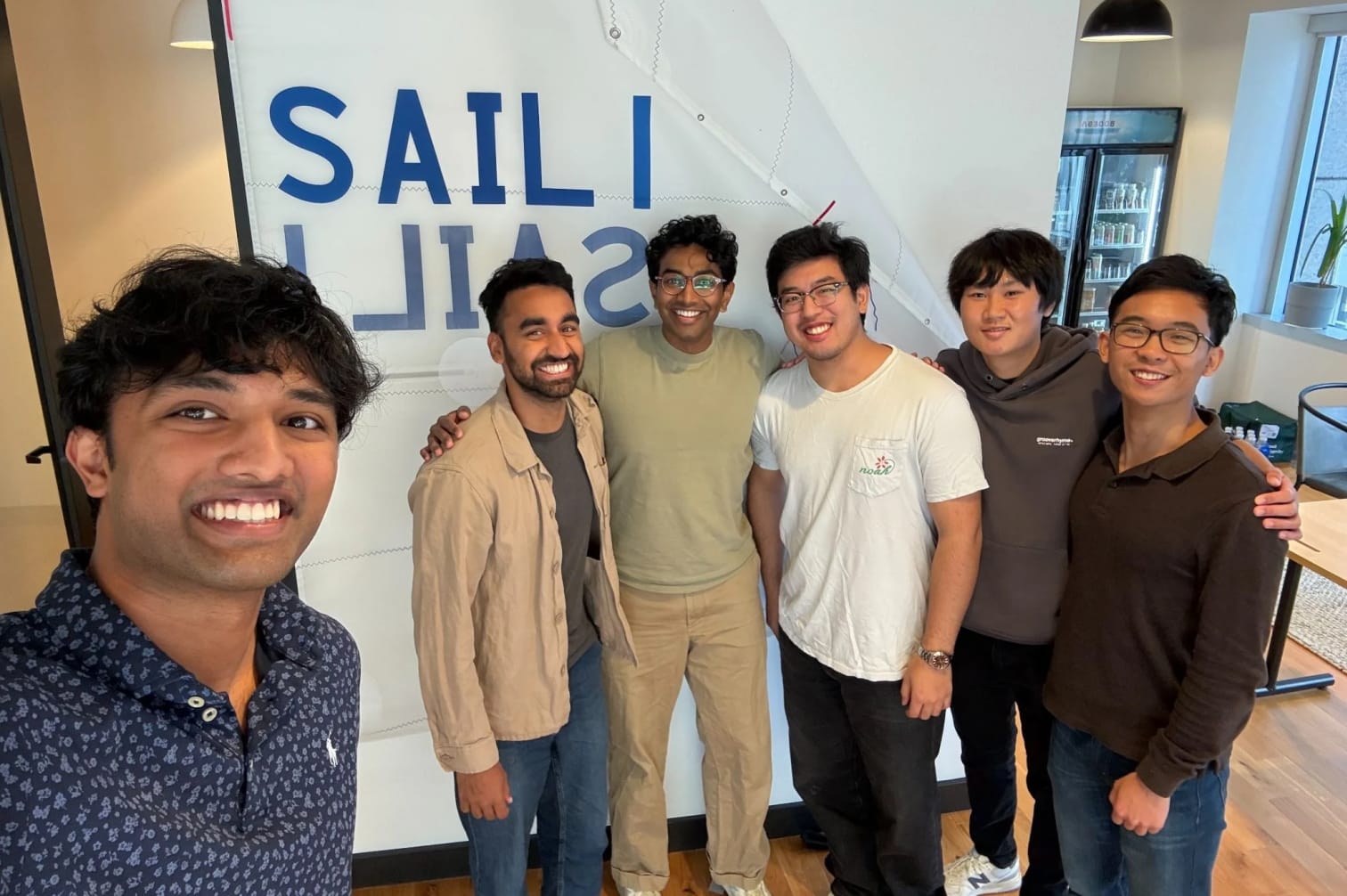
That is when we met Neil Movva & Samir Menon of Sail Research.2

Read more
Defending Against AI-Powered Attackers

Defending Against AI-Powered Attackers

Screenshot 2026-06-24 at 8.54.22 AM

On Thursday, July 9th at 9 AM Pacific / 12 PM Eastern, Office Hours will host Sunil Agrawal, CISO at Glean, for a conversation on what security readiness looks like now.

We’ll talk about :

  • AI compresses the time required to understand a target, map the attack surface, and personalize the first move.
  • The grammar, tone, and context clues that once revealed attacks are disappearing.
  • Deepfake calls and synthetic media change the control plane for approvals, payments, and trust.
  • Security teams will need new processes, tools, and organizational muscle to respond at the pace of model-driven attacks.

The format. 15 minutes online. One topic. Call-in questions live. No slides. No pre-written questions. Just a real conversation.

Read more